
Summary:
How Window Coverings Actually Reduce Energy Costs
Smart management of window coverings can reduce heat gain by up to 77 percent, according to the Department of Energy. But here’s what that actually means for your monthly bills.
When sunlight hits your windows, it doesn’t just bring light—it brings heat that your air conditioning system has to work overtime to remove. Quality window treatments create multiple barriers that stop this heat transfer before it happens.
Energy Star certified window treatments save North Carolina homeowners around $200-$300 per year. For many coastal homes, those savings can be even higher during our brutal summer months.
The Science Behind Heat Control and Insulation
Think of your windows as the weak spots in your home’s thermal envelope. Without proper coverage, they’re basically open doors for heat transfer.
Cellular shades’ honeycomb design traps heat with multiple air pockets creating barriers between your windows and interior space. This isn’t marketing fluff—it’s physics. Those air pockets act like tiny insulators, preventing hot air from moving into your home.
Energy saving window coverings can have insulating values of up to R6, compared to standard blinds and curtains that only provide R-1 insulation. That’s six times more thermal protection.
The key is proper installation. Mount them as close to the glass as possible within the window frame, creating a sealed space. When treatments are installed correctly, they form an insulating air gap that dramatically reduces heat transfer.
But it’s not just about keeping heat out in summer. These same practices can reduce heat loss in the winter, making your heating system more efficient during those occasional cold snaps we get here in coastal North Carolina.
Why North Carolina's Climate Demands Specific Solutions
North Carolina’s unique climate from humid summers to winter chill requires specialized window treatment considerations. Our coastal counties face challenges that homeowners in other regions simply don’t deal with.
North Carolina experiences hot humid summers and moderately cold winters, demanding window treatments that work in both directions—blocking heat during peak summer while trapping warmth in winter. But humidity creates additional complications.
Moisture-resistant materials like faux wood resist warping and are easy to clean in humid climates. Traditional wood blinds might look beautiful initially, but they’ll warp and deteriorate quickly in our coastal environment.
Salt air adds another layer of complexity. Coastal regions deal with high humidity, strong sun, and salt air exposure. Materials that work perfectly inland can corrode or degrade rapidly near the coast.
The intense UV exposure in our area isn’t just uncomfortable—it’s expensive. Controlling heat and sunlight helps protect flooring, furniture, and interior finishes from fading and sun damage. Without proper window treatments, you’re essentially letting the sun slowly destroy thousands of dollars worth of interior investments.
Best Energy Efficient Window Treatments for Coastal NC
Not all window treatments are created equal, especially in our challenging climate. The most effective solutions combine energy efficiency with durability against humidity and salt air.
Cellular shades are considered the most energy efficient due to their air-trapping design, while plantation shutters and insulated curtains also offer strong thermal performance. But choosing the right option depends on your specific situation.
Your home’s orientation, room usage, and aesthetic preferences all factor into which treatment will deliver the best results for your investment.
Cellular Shades: Maximum Insulation for Maximum Savings
Cellular shades are the best option when insulation is your top priority. Their honeycomb structure traps air and reduces heat transfer, making them perfect for keeping rooms cooler in summer.
Here’s why they’re particularly effective in coastal North Carolina: the cellular design creates multiple insulating air chambers that work regardless of humidity levels. Unlike fabric treatments that can absorb moisture and lose effectiveness, cellular shades maintain their insulating properties.
The beauty of cellular shades is their versatility. You can get light-filtering versions that maintain your view while reducing heat, or blackout options for bedrooms and media rooms. In Charlotte and Raleigh, where late-afternoon sun can make west-facing rooms feel like saunas, blackout curtains are a game-changer—and the same principle applies to our coastal rooms.
For maximum efficiency, choose double or triple-cell designs. The additional air pockets provide even more insulation. Some cellular shades can reduce window heat loss by up to 40% compared to bare windows, which translates directly into lower utility bills.
Professional measurement and installation are crucial with cellular shades. Poorly fitting window treatments allow drafts and heat transfer around the edges. We eliminate these gaps, giving your home the proper seal it needs.
Solar Shades and Shutters: Balancing Light and Heat Control
Solar shades are your go-to for blocking UV rays and reducing glare while still allowing natural light in. They’re ideal for living areas where you want to preserve your view but lower the temperature.
Solar shades work by filtering out the heat-producing infrared light while allowing visible light to pass through. This means you can maintain your beautiful coastal views without turning your living room into a greenhouse. They’re particularly effective on east and west-facing windows that get the most intense direct sun.
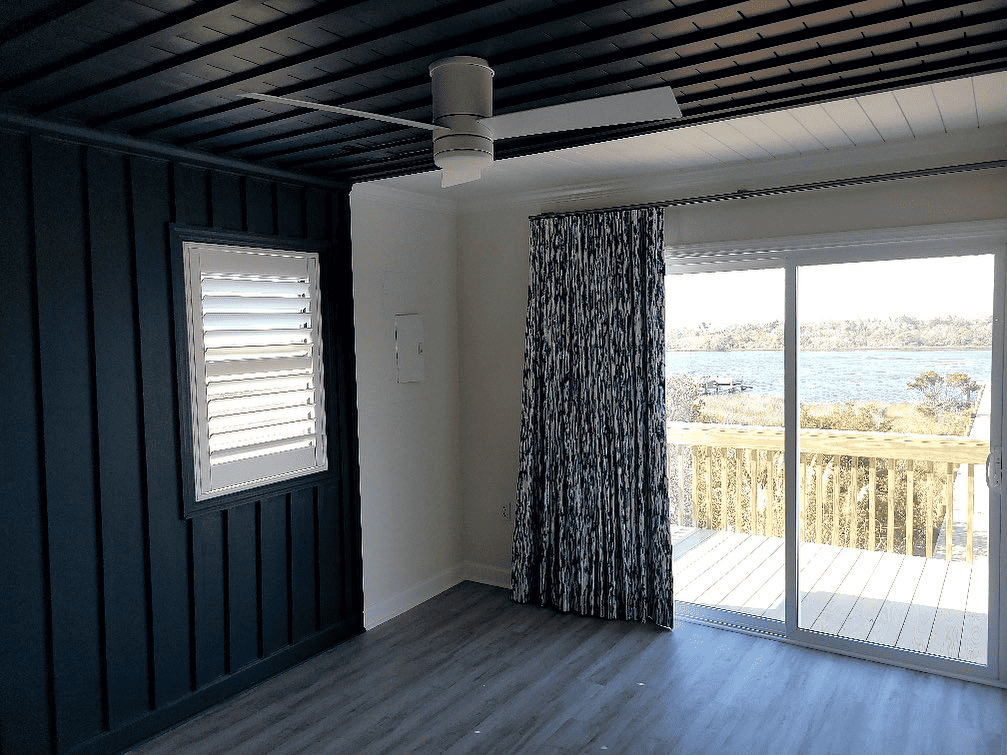
Plantation shutters offer a different approach. Shutters are the most energy-efficient window treatment, and advanced insulation systems make them the best energy saving shutters available. They create an additional barrier between your window and interior space.
The adjustable louvers give you precise control over light and airflow. During the hottest part of the day, you can close them completely for maximum heat rejection. As temperatures cool, you can adjust the louvers to allow light while maintaining privacy.
Quality shutters can be up to 70% more energy efficient than wood shutters and up to 1600% more energy efficient than aluminum blinds. They also handle humidity better than many other treatments, making them ideal for coastal homes.
For rooms with large windows or sliding glass doors, solar shades, plantation shutters, and layered drapery are great choices because they offer wide coverage and effective insulation.
Making the Right Investment in Energy Efficient Window Treatments
Energy efficient window treatments are a smart way to create a more comfortable home and reduce energy costs throughout the year. Whether you choose shutters, cellular shades, Roman shades, or layered drapery, the right style can improve insulation and enhance the look of any room.
The key to maximizing your savings is professional measurement and installation. Working with experts ensures your window treatments are measured for precision, installed properly, and tailored to fit your home’s unique needs.
Your investment in quality window treatments pays dividends through lower utility bills, protected interiors, and improved comfort year-round. For coastal North Carolina homeowners, we provide the expertise and quality products needed to tackle our unique climate challenges effectively.

