








Hear from Our Customers

Bald Head Island sits at the southernmost tip of North Carolina, fully exposed to the Atlantic on its eastern and southern faces. East-facing bedrooms catch direct sunrise light as early as 5:30 AM in summer. If your current window treatments can’t handle that, your guests notice — and they say so in reviews. For vacation rental owners, that’s not a comfort issue. It’s a revenue issue.
Custom blackout blinds measured and installed correctly eliminate that problem entirely. Not “reduce” — eliminate. The difference between a store-bought blind and a custom-fit blackout blind installed with proper outside-mount overlap is the difference between a room that’s almost dark and one that’s actually dark. On an island with this much sun exposure, almost dark doesn’t cut it.
There’s also the sea turtle side of things. The Village of Bald Head Island has a formal light ordinance that requires ocean-facing properties to minimize light visible from the beach between May and October. The Village’s own guidance tells residents to keep ocean-facing blinds closed at night. A properly fitted blackout blind on those windows does both jobs at once — it protects your guests’ sleep and keeps your property in step with the community’s conservation obligations. That’s a combination no other town in Brunswick County can claim.
We’re an owner-operated business serving Brunswick County and the broader coastal North Carolina region. Sal handles every consultation, every measurement, and every installation personally. When he shows up at your Bald Head Island property, you’re not getting a subcontractor reading off a tablet — you’re getting the same person who’s been doing this work for decades.
That matters on an island like this. Salt air, high humidity, and intense UV off the Atlantic aren’t abstract concerns here — they’re the daily reality your window treatments have to survive. Sal has spent 50 years of combined experience selecting materials specifically for coastal NC homes, including properties throughout Brunswick County and on Bald Head Island itself. He knows what holds up and what doesn’t, and he’ll tell you straight.
With over 4,000 completed window treatment services across coastal NC and a registered Graber dealership, the depth of experience here isn’t a marketing line. It’s the reason Bald Head Island property owners keep calling back.
It starts with a free in-home consultation. Sal comes to your Bald Head Island property, brings fabric and material samples, and measures every window that needs treatment. You get a same-day quote on the spot — no waiting for a follow-up call, no second appointment required. Multiple customers have confirmed this in reviews, and it’s especially valuable for property owners who are managing an island home from off-site.
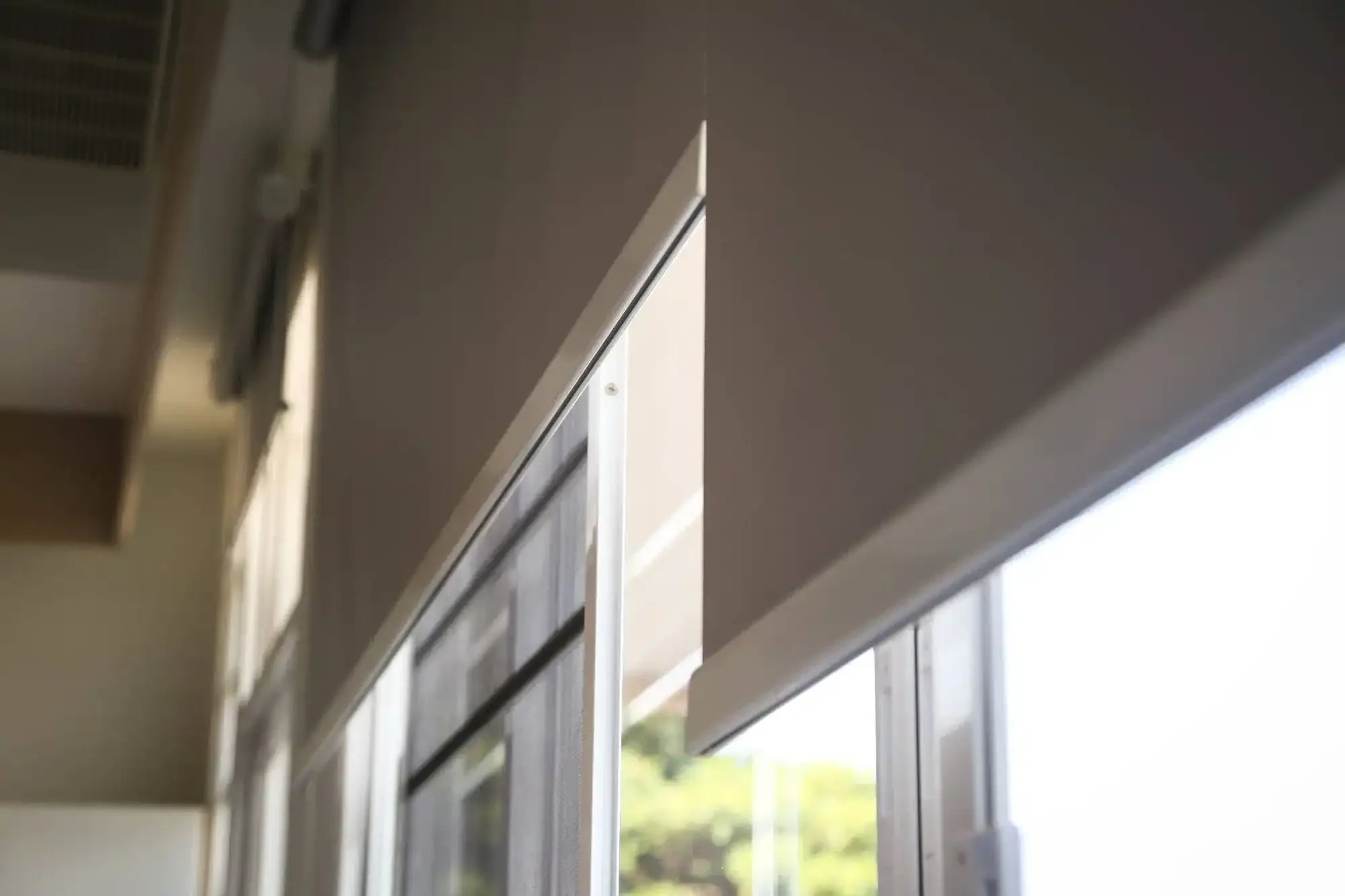
From there, your blackout blinds are custom-fabricated to the exact dimensions of each window. This is where the real difference lives. Ready-made blinds are built slightly undersized by design, which leaves light gaps on both sides of every window. A quarter-inch gap in a room facing the Atlantic at sunrise is immediately obvious. Custom fabrication eliminates that. The blinds are built to your windows, not to a standard box size.
Installation is included free with every custom purchase. Sal handles it himself, using outside-mount installation that overlaps the window frame on all sides — the only reliable way to achieve true blackout performance in a sun-exposed coastal home. If you’re preparing your property for peak rental season, late winter and early spring are the best time to get this done before the island fills back up in May. That’s also when sea turtle nesting season begins, so the timing matters on both fronts.

Ready to get started?
Every blackout blind we install on Bald Head Island is selected with the island’s specific environment in mind. That means fabrics chosen for UV stability and moisture resistance, not just light-blocking percentage. The combination of salt air, Atlantic humidity, and intense coastal sun will degrade the wrong materials faster than most people expect. Getting the material selection right from the start is the difference between a treatment that lasts years and one that fades or warps within a season.
For ocean-facing windows — the ones subject to the Village’s sea turtle light ordinance — the standard recommendation is a blackout roller blind with outside-mount installation, extended two to three inches beyond the window frame on all sides. This configuration delivers the overlap needed for genuine blackout performance and ensures interior light stays off the beach during nesting season from May through October. For bedrooms that face east toward the Atlantic, this setup is particularly critical given how early sunrise hits those rooms in summer.
For media rooms, interior bedrooms, or spaces where aesthetics are the priority alongside performance, we offer blackout cellular shades and blackout Roman shades through the Graber line — all in a range of coastal-appropriate colors and textures that complement the design character of Bald Head Island homes without looking institutional. The consultation is where all of this gets sorted out, room by room, window by window, with Sal present and samples in hand.

Yes — when they’re fitted correctly. The Village of Bald Head Island’s light ordinance requires ocean-facing properties to prevent interior light from reaching the beach during sea turtle nesting season, which runs from May through October. The Village’s own guidance specifically instructs residents to keep ocean-facing blinds and shades closed at night. A properly installed custom blackout blind — fitted with outside-mount overlap that extends beyond the window frame on all sides — blocks interior light from escaping around the edges of the treatment.
The key word is “properly.” A ready-made blind that leaves a quarter-inch gap on each side of the window will still allow light to leak out, which defeats the purpose and potentially puts your property out of compliance with Village standards. Custom-measured blackout blinds installed with the correct overlap are the only reliable way to meet both the spirit and the letter of the ordinance. If you’re a vacation rental owner on Bald Head Island, this also protects you from guest complaints and keeps your property aligned with the community standards the Bald Head Association enforces.
Room darkening blinds typically block somewhere between 95% and 99% of incoming light. That’s enough to significantly reduce glare and make a room noticeably dimmer, but in a direct-sun environment like Bald Head Island — where east-facing windows catch full Atlantic sunrise — that remaining 1% to 5% of light is still visible and still disruptive. True blackout blinds are constructed with a fabric that blocks 99% or more of light, and when installed with proper outside-mount overlap, they eliminate the light gap problem entirely.
For most Bald Head Island applications — especially ocean-facing bedrooms and vacation rental properties where guest sleep quality drives reviews — true blackout is the right call. Room darkening can work well in spaces where some ambient light is acceptable, like a living area or a home office where you want glare reduction without complete darkness. During the consultation, Sal will walk through the specific orientation and use of each room so you’re not over-specifying or under-specifying. It’s a simple conversation, but it makes a real difference in the final result.
It can — if the wrong materials are chosen. Bald Head Island is a barrier island surrounded by salt water, and the combination of salt air, high humidity, and UV exposure off the Atlantic creates one of the more demanding environments for interior window treatments in coastal NC. Fabrics that perform well in an inland home can fade, warp, or degrade noticeably faster when they’re exposed to island conditions year-round.
The solution is material selection that accounts for the environment from the start. Through the Graber product line, we offer blackout fabrics specifically designed for UV stability and moisture resistance — materials that hold their color, their structure, and their light-blocking performance through multiple seasons of coastal exposure. This is one of the core reasons working with someone who has 50 years of combined experience in coastal NC homes matters more on Bald Head Island than almost anywhere else. Generic catalog recommendations don’t account for the island’s specific conditions. The right recommendation comes from someone who’s seen what works and what doesn’t in this exact environment.
The honest answer is that custom blackout blinds cost more upfront than a ready-made option from a hardware store. But the comparison isn’t really fair, because they’re not the same product delivering the same result. A store-bought blind is built slightly undersized by design, which means it will leave visible light gaps on both sides of every window — gaps that are immediately obvious in a sun-exposed room facing the Atlantic. You’re paying for something that won’t fully solve the problem.
Custom-measured blackout blinds are fabricated to your exact window dimensions and installed with the overlap needed for true blackout performance. For a Bald Head Island vacation rental, where a single negative review about light intrusion can affect your booking rate, the return on that investment is straightforward. As a point of reference, a verified customer documented us quoting a skylight shade installation at just over $300 after a national company had quoted over $900 for the same job. Our pricing is honest and based on the actual work involved — not inflated to match the island’s luxury market positioning. Installation is also included free with every custom purchase.
We already serve Bald Head Island — this isn’t a new territory or a special-request situation. Sal makes the crossing from the mainland via the Bald Head Island Ferry out of Deep Point Marina in Southport, and the island is part of our established Brunswick County service area. For property owners who have dealt with mainland contractors unwilling to make the trip or tacking on significant travel fees, that’s a meaningful distinction.
Our shop-at-home model is also well-suited to the island’s logistics. Sal comes to your property with samples, measures on the spot, and provides a same-day quote — so the entire consultation happens in one visit without requiring you to coordinate multiple trips or be present for separate measurement and installation appointments. For Bald Head Island property owners who manage their homes remotely or who visit on a limited schedule, this streamlined process makes the whole project significantly easier to coordinate. One call, one visit, one quote, one installation.
Late winter through early spring — roughly February through April — is the ideal window. Peak rental season on Bald Head Island runs from May through September, and sea turtle nesting season begins in May as well. Getting blackout blinds installed before that window means your property is ready for its highest-occupancy months with treatments that protect guest sleep quality and keep ocean-facing windows compliant with the Village’s light ordinance from day one of nesting season.
Waiting until summer to address light issues is a common mistake for vacation rental owners. By the time a guest complaint shows up in a review, the damage to your rating is already done. Installing before peak season also gives you flexibility — if there are any adjustments needed after installation, there’s time to address them before the island fills back up. That said, blackout blind installation can be done any time of year. If you’re purchasing a property in fall or winter and furnishing it for the first time, there’s no reason to wait. The consultation is free, the installation is included, and the sooner the windows are covered correctly, the sooner the property is performing the way it should.
Other Services we provide in Bald Head Island