Hurricane Shutters Southeastern North Carolina

Storm Season Ends When Your Shutters Go Up

Certified hurricane shutters installed right — so when a storm is named, you're already ready. We serve Pender County and coastal Southeastern North Carolina with systems that work when it matters.

Coastal Hurricane Shutters Southeastern North Carolina

Real Protection Built for This Coast

Southeastern North Carolina isn’t a market where storm protection is optional. Hampstead sits in a very high risk hurricane zone. Pender County alone suffered an estimated $261 million in residential property damage from Hurricane Florence in 2018. Seventy homes in the Cross Creek neighborhood flooded in a single storm. That kind of damage doesn’t happen to people who weren’t paying attention — it happens to people who ran out of time. We install accordion shutters, roll-down systems, storm panels, Bahama shutters, and colonial shutters — each one custom-measured, properly certified, and matched to your home, your HOA requirements, and your lifestyle. Whether you’re a full-time Hampstead resident or a Topsail Island vacation homeowner who needs protection that works whether you’re there or not, we’ll help you figure out exactly what makes sense.

Impact Shutters Southeastern North Carolina

Plywood Is Not a Storm Plan

A lot of homeowners along the Southeastern North Carolina coast still treat plywood as their backup plan. It’s understandable — it’s cheap, it’s familiar, and it feels like doing something. But plywood is heavy, hard to attach correctly, weakens the moment it gets wet, and does not satisfy North Carolina’s building code requirements for rated opening protection in wind-borne debris regions. It also won’t get you a discount on your homeowners insurance. And if you’re two states away when a storm is named, it doesn’t help at all. Certified impact shutters are engineered and tested to withstand hurricane-force winds and windborne debris — not improvised. Products meeting ASTM E1886 and ASTM E1996 standards go through both large-missile impact testing and pressure cycling before they’re approved. That’s the level of protection that actually satisfies NC code, supports your insurance documentation, and holds when it matters. Plywood is a last resort. Certified shutters are a real plan.


Accordion Hurricane Shutters Southeastern North Carolina

The Right Shutter Depends on Your Life

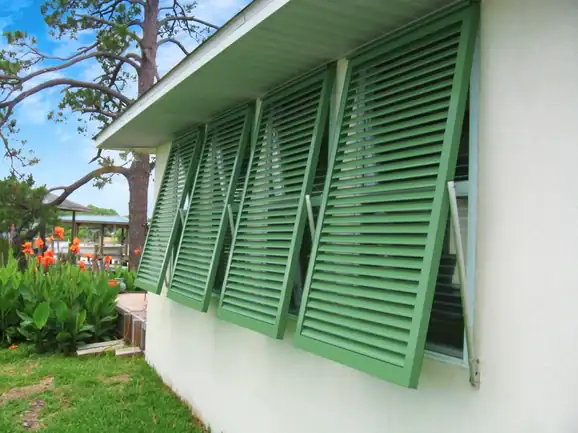
There’s no single best hurricane shutter for every home in Southeastern North Carolina. The right choice depends on how you use the property, what your HOA allows, what your budget is, and how quickly you need to be able to close up and leave. Accordion hurricane shutters are permanently mounted and fold out along a track in seconds — no storage, no tools, no pre-storm labor. They’re the most popular choice for full-home protection in coastal NC for good reason. Roll-down shutters sit above the window and retract out of sight when not in use — ideal for vacation homes, especially when paired with motorization. Storm panels are the most affordable entry point but require storage space and manual deployment. Bahama and colonial shutters offer year-round aesthetic appeal and fold down for storm protection when needed. We walk through every option with you during your in-home consultation — no pressure, no upselling, just a straightforward conversation about what actually fits your home and how you live in it.
Hurricane Shutters FAQs

Common questions about our Hurricane Shutters services

Costs vary depending on the type of shutter and the number and size of openings you’re protecting. In the Southeastern North Carolina market, accordion hurricane shutters generally run between $15 and $35 per square foot. Roll-down and motorized systems tend to fall in the $25 to $60 per square foot range. Aluminum storm panels are the most affordable option, typically starting around $7 to $15 per square foot. The best way to get an accurate number for your specific home is through a free in-home consultation — we measure every opening and give you a real quote before you commit to anything.
They can, and in coastal Southeastern North Carolina, the savings are worth understanding. When you have certified hurricane shutters installed, a licensed inspector can complete a wind mitigation inspection that documents your home’s rated opening protections. Insurers use that report to calculate wind mitigation discounts. If wind represents a significant portion of your total premium — which it often does for Pender County and Topsail Island properties — a 20% credit on the wind portion can translate to roughly a 12% reduction on your total bill. The key is having proper certification documentation, which we provide at the time of installation.
Both are permanently installed and offer strong hurricane protection, but they work differently and suit different situations. Accordion hurricane shutters fold out from both sides of the window along a track — they deploy in seconds with no tools and nothing to store. They’re a popular choice for primary residences where speed and convenience matter. Roll-down shutters sit in a housing unit mounted above the window and roll down to cover the opening — they’re nearly invisible when retracted, which makes them appealing for homes where appearance is a priority. Motorized roll-down shutters can also be operated remotely, which is a significant advantage for vacation homeowners on Topsail Island or Surf City who may not be able to get to the property before a storm arrives.
It depends on when you call. Custom hurricane shutters are fabricated to the exact dimensions of your windows and doors, and lead times can run anywhere from six to twelve weeks or longer during peak season. Hurricane season officially opens June 1, which means homeowners who wait until May or early June — let alone until a storm is named — often can’t get protection installed in time. After Hurricane Florence hit near Wrightsville Beach in September 2018, installation backlogs across Pender County stretched for months. The homeowners who were protected that season were the ones who had called earlier in the year. If you’re thinking about it, the time to move is before the rush, not during it.
In most cases, yes. Permitted hurricane shutter installations in North Carolina require a licensed general contractor — this isn’t a DIY project, and it can’t be handled by an unlicensed handyman. Proper permitting ensures your installation is inspected, code-compliant, and documented correctly. It also matters for your insurance: improperly installed shutters that haven’t been permitted or inspected may not satisfy wind mitigation inspection requirements, which means you’d lose out on potential premium discounts. We handle the paperwork and process as part of the installation, so you’re not left figuring it out on your own.
Most HOAs in Southeastern North Carolina do allow hurricane shutters, but many have specific requirements around style, color, and appearance — particularly in communities on Topsail Island, Surf City, and in planned Hampstead subdivisions. Bahama and colonial shutters are often favored in HOA communities because they blend into the architecture and look intentional rather than utilitarian. Accordion shutters in approved colors are also widely accepted. Because we work extensively throughout Pender County and the surrounding coastal communities, we’re familiar with the requirements that come up most often and can help you choose a system that protects your home without creating friction with your association.

Leave Us a Review!

Our Clients Love Us!

graber logo
home advisor sticker 3 years warranty
hunter douglas logo
homeadvisor sticker
elite service
homeadvisor top rated
hartmann and forbes logo

Hurricane Protection Shutter Installation Process

From First Call to Fully Protected Home

Free In-Home Consultation

We come to you with samples and measuring tools — you see every option in your own home and get a quote on the spot.

Custom Measurement and Fabrication

Your shutters are built to the exact dimensions of your openings — not generic sizing, not approximations. Proper fit is what makes them work.

Professional Installation, Full Documentation

We install everything at no extra charge and hand you the certification paperwork your insurer and building department will need.