







Hear from Our Customers

Living on Pleasure Island means water on both sides — the Atlantic to the east, the Cape Fear River and Myrtle Grove Sound to the west. That’s not just a selling point for your home. It’s also why your rooms can feel completely washed out by midday, and why your floors, furniture, and finishes are taking a beating from UV you can’t always see coming.
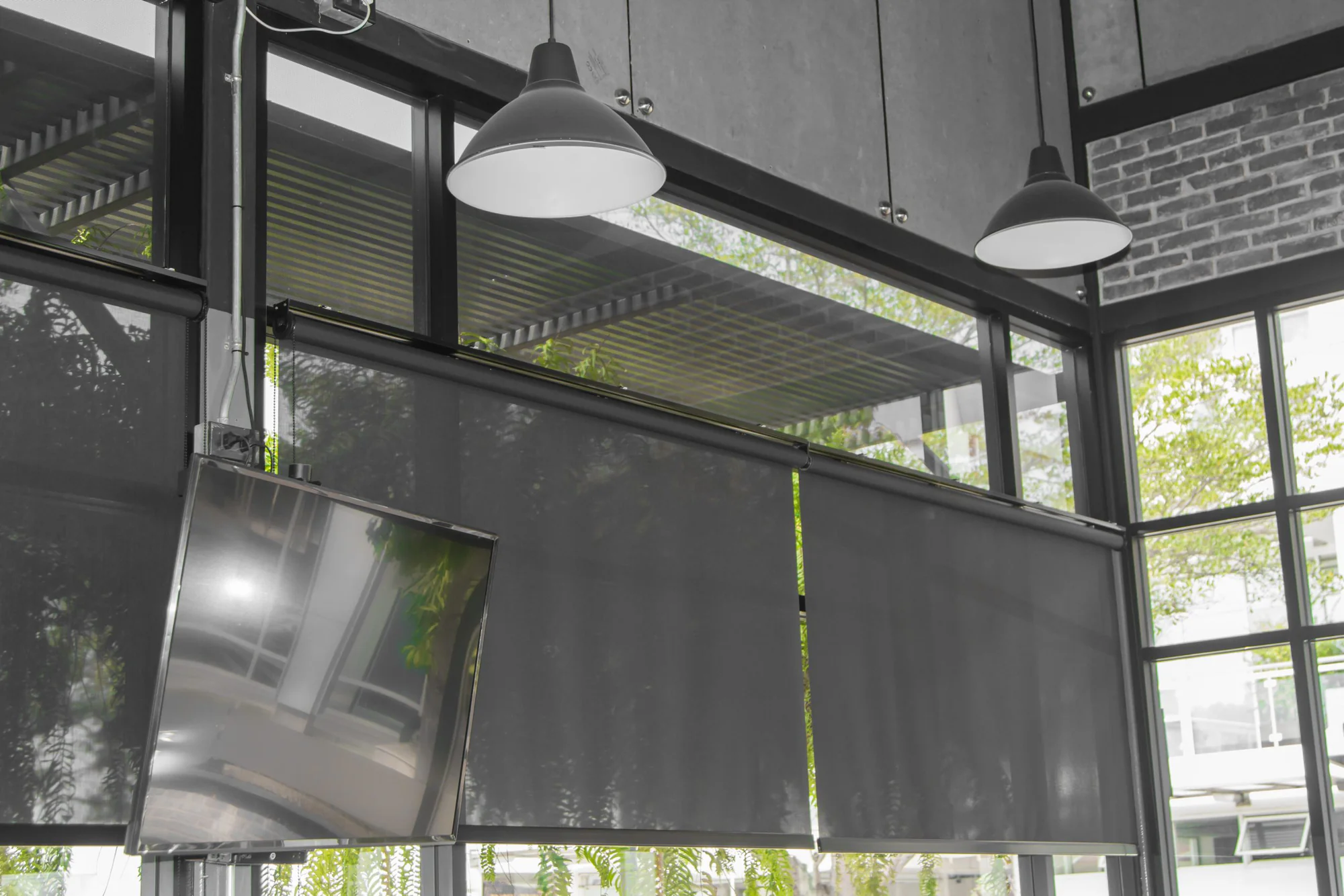
Solar roller shades in Carolina Beach are built for exactly this. They cut the glare without cutting the view. They block 90–99% of UV rays while letting in the light you actually want — the kind that makes a coastal home feel open, not closed off. And because heat gain through glass is real in a humid subtropical climate where summers run long and air conditioning runs hard, the right fabric can take a meaningful bite out of your cooling costs too.
For vacation rental owners on the island, there’s another layer to this. Guests expect blackout roller shades in bedrooms. It’s not a luxury anymore — it’s the baseline. A well-fitted set of blackout shades photographs better, gets better reviews, and keeps your property competitive in a rental market where the bar keeps rising.
We’ve been serving homeowners along the North Carolina coast since 2017, operating out of Hampstead and covering the full coastal corridor — including Carolina Beach and the rest of Pleasure Island. This isn’t a franchise running consultations through a call center. It’s a locally owned business where the owner handles your consultation personally and knows what coastal conditions actually do to window treatments over time.
When Sal comes to your home in Carolina Beach, he brings an extensive fabric library so you can see every option in your actual space — under the same light that comes through your windows every day. You get a firm price before he leaves. No follow-up quote three days later. No installation fee added at the end. What you hear during the consultation is what you pay.
For homeowners in New Hanover County and along the Pleasure Island corridor, that kind of straightforward process is exactly what makes the difference between a vendor you trust and one you’re second-guessing.

It starts with a free in-home consultation. Sal comes to your Carolina Beach home with fabric samples so you can evaluate every option in the room where the shades will actually live. For oceanfront and sound-front homes on the island, this matters more than it might seem — the quality and direction of light in a coastal home is different from what you’d see in a showroom 20 miles away, and the right fabric choice depends on that.
During the consultation, every window gets measured precisely. Whether you’re working with the oversized view windows common in newer elevated construction on pilings, the non-standard dimensions of an older beach cottage, or a condominium unit with specific privacy considerations, the measurements are taken on-site — not estimated. You also get your price right then, so there’s no waiting and no uncertainty.
Once your custom roller shades are ready, we handle installation at no additional cost. Our installer knows the product and the mounting conditions, which matters on a barrier island where elevated homes, high transoms, and non-standard wall surfaces are the norm rather than the exception. No permits are required for interior roller shade installation in Carolina Beach — it’s a straightforward interior improvement with no regulatory friction on your end.

Ready to get started?
Roller shades aren’t a single product — they’re a category, and the right choice depends entirely on what your windows face, how you use the space, and what the room needs to do. In Carolina Beach, those variables are more specific than most places.
Solar roller shades are the most common choice for living areas and rooms with ocean or sound views. They manage glare and UV without blocking what you’re looking at. Light-filtering roller shades soften the light further while maintaining privacy during the day — a good fit for rooms that get intense afternoon exposure from the west-facing sound side of the island. Blackout roller shades in Carolina Beach are the go-to for bedrooms, whether you’re a year-round resident who wants real sleep quality or a vacation rental owner whose guests expect a fully dark room regardless of the season.
Motorized roller shades are worth a serious look for any home with high or hard-to-reach windows — which is common in the elevated coastal construction you’ll find throughout Pleasure Island. They’re controllable by remote, app, or voice, and for property owners who aren’t always on the island, they can be scheduled and managed remotely. Cordless options are available across the full fabric line and are the practical choice for rental properties where guest-proof operation matters. Every shade is custom-measured, and installation is included — no exceptions.

This is one of the most important questions to ask, and the honest answer is: it depends on what you buy and how it’s installed. Standard window treatment hardware that isn’t specified for coastal conditions can corrode and degrade within a season or two in an environment like Carolina Beach, where salt air, sustained humidity, and UV exposure from the water on both sides of the island are constant factors.
The fabrics and hardware we recommend during your in-home consultation are selected with coastal durability in mind — not pulled from a generic catalog and handed to you without context. Solar and light-filtering fabrics designed for coastal environments resist moisture and UV degradation significantly better than standard interior fabrics. The same applies to the brackets, mechanisms, and mounting hardware. Getting the right product specified correctly from the start is what separates a roller shade that lasts years from one that starts showing wear before the next rental season.
Solar shades are woven fabrics that reduce glare and block UV while still letting you see through them — the openness factor varies by weave density, but even a tighter weave preserves the view better than most people expect. They’re the most popular choice for living rooms and spaces where the view is a priority, which covers a lot of ground in Carolina Beach.
Light-filtering shades diffuse the light rather than blocking it. They soften the room without darkening it, and they provide daytime privacy without making the space feel closed off. Blackout roller shades block virtually all light — they’re the right call for bedrooms where sleep quality matters, and they’re increasingly a non-negotiable for vacation rental properties where guests are paying for a comfortable stay regardless of what time the sun comes up. During a consultation, the fabric selection process takes your specific windows, room orientation, and use case into account so you’re not guessing.
For most vacation rental owners on Pleasure Island, yes — and for a few specific reasons. Elevated homes with high or hard-to-reach windows are common in Carolina Beach’s newer construction, and motorized roller shades make those windows fully functional without requiring guests to figure out a manual system or call you for help. Cordless and motorized options also eliminate the cord-related damage and tangling that’s a real maintenance issue when a property turns over frequently between rental seasons.
There’s also a remote management angle that matters if you’re not always on the island. Motorized shades can be scheduled and controlled remotely, which means you can keep your property protected from UV and heat gain even when it’s sitting vacant between bookings. In a rental market where Carolina Beach properties can generate $30,000 to $90,000 a year for a three-bedroom home, the investment in durable, easy-to-operate window treatments pays for itself in reduced maintenance calls and better guest reviews.
The consultation is completely free, and we come to you. Sal arrives at your Carolina Beach home with a full fabric library — solar, light-filtering, blackout, and motorized options — so you can evaluate every choice in the actual room where the shades will go. This is a meaningful difference from visiting a showroom, especially for coastal homes where the light quality, direction, and intensity are specific to your windows and your orientation on the island.
During the visit, every window gets measured on-site. You’ll walk through the fabric options together, talk through what each room needs, and get a firm price before the consultation ends. There’s no follow-up quote, no waiting period, and no pressure. If you decide to move forward, installation is included in the price you’re given — no separate labor fee added later. If you’re not ready to commit that day, that’s fine too. The goal is to give you enough information to make a confident decision.
They can, and the impact is more noticeable in a coastal climate than many people expect. Carolina Beach summers are long, humid, and intense — average humidity hits 77% during peak months, and the combination of direct sun and water reflection from both the ocean side and the sound side of the island means your windows are working against your air conditioning for a significant portion of the year.
Solar roller shades reduce solar heat gain through glass by up to 60%, which translates directly to less work for your cooling system. The savings vary depending on how many windows you’re treating, which direction they face, and what fabric openness factor you choose — a tighter weave blocks more heat but also more view. During the consultation, those tradeoffs get mapped to your specific home and your priorities, so you’re not making a blind guess about which fabric will actually move the needle on your energy bill.
For oceanfront homes on the east-facing side of Pleasure Island, the morning sun comes in hard and early. A solar shade with a 3–5% openness factor gives you strong UV and glare control while still preserving the view — which is the whole point of an oceanfront home. If the view matters more than maximum heat reduction, a slightly more open weave in the 5–10% range is a reasonable tradeoff that still blocks the majority of UV.
For rooms where you want privacy at night — or for bedrooms where guests or family members need to sleep past sunrise — a dual-shade setup with a solar shade for daytime and a blackout roller shade for nighttime is a practical solution that many Carolina Beach homeowners use. The fabrics we recommend are selected for coastal performance, not just aesthetics, so the recommendation you get during the consultation reflects what actually holds up in a salt air, high-humidity environment — not what looks good in a catalog photo.
Other Services we provide in Carolina Beach