







Hear from Our Customers
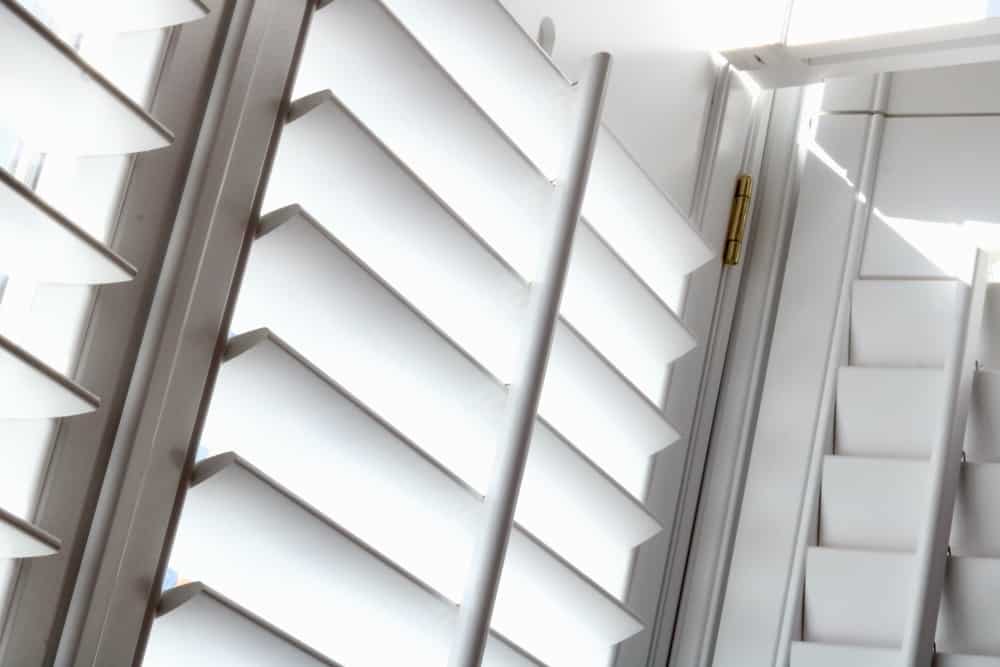
The first thing most Wilmington homeowners notice is how much better their rooms feel. Light comes in on your terms. Privacy isn’t a compromise. Unlike fabric blinds or cheap faux wood that warps within a season or two of coastal humidity, our custom plantation shutters stay put no bowing, no cupping, no finish peeling off after a wet summer.
If you’re in Landfall, Porters Neck, or one of the newer builds out in Riverlights, your windows are probably doing a lot of architectural work. Large panes, tall frames, rooms that face the water or catch afternoon sun off the sound. The right interior plantation shutter installation doesn’t just cover those windows it completes them. The louvers give you full control over how much light and air moves through without sacrificing the look you paid for when you bought the home.
For homes closer to the waterfront or in areas with direct ocean exposure, the material choice matters more than most people realize. Wilmington’s salt air deposits actual particles on every surface it touches, and over time that accelerates finish degradation in materials that weren’t rated for coastal environments. Quality faux wood plantation shutters with UV-stable finishes handle that. Real wood shutters, used in the right rooms climate-controlled living spaces, dining rooms, home offices bring a warmth that composite materials approximate but don’t fully match. Knowing which material belongs where is the difference between shutters that look great for a decade and ones you’re replacing in three years.
We’re based in Hampstead the town directly north of Wilmington which means this isn’t a company dispatching crews from Myrtle Beach or managing installs remotely from a factory in High Point. I handle every part of the process myself: the consultation, the measurements, the installation. No subcontractors. No handoffs. The person who walks you through your options is the same person who shows up on install day.
With more than 4,000 completed window treatment installations across coastal North Carolina, our track record here is real. We carry Norman Window Fashions products one of the most established window covering manufacturers in the world which means you’re getting manufacturer-backed quality, not a generic import. In the Wilmington market, Norman authorization is a recognized credential. Local competitors advertise it because buyers here know what it means.
The free in-home consultation is how it starts. I bring samples to your home louver sizes, finishes, material options so you can see everything in your actual light before you commit to anything.
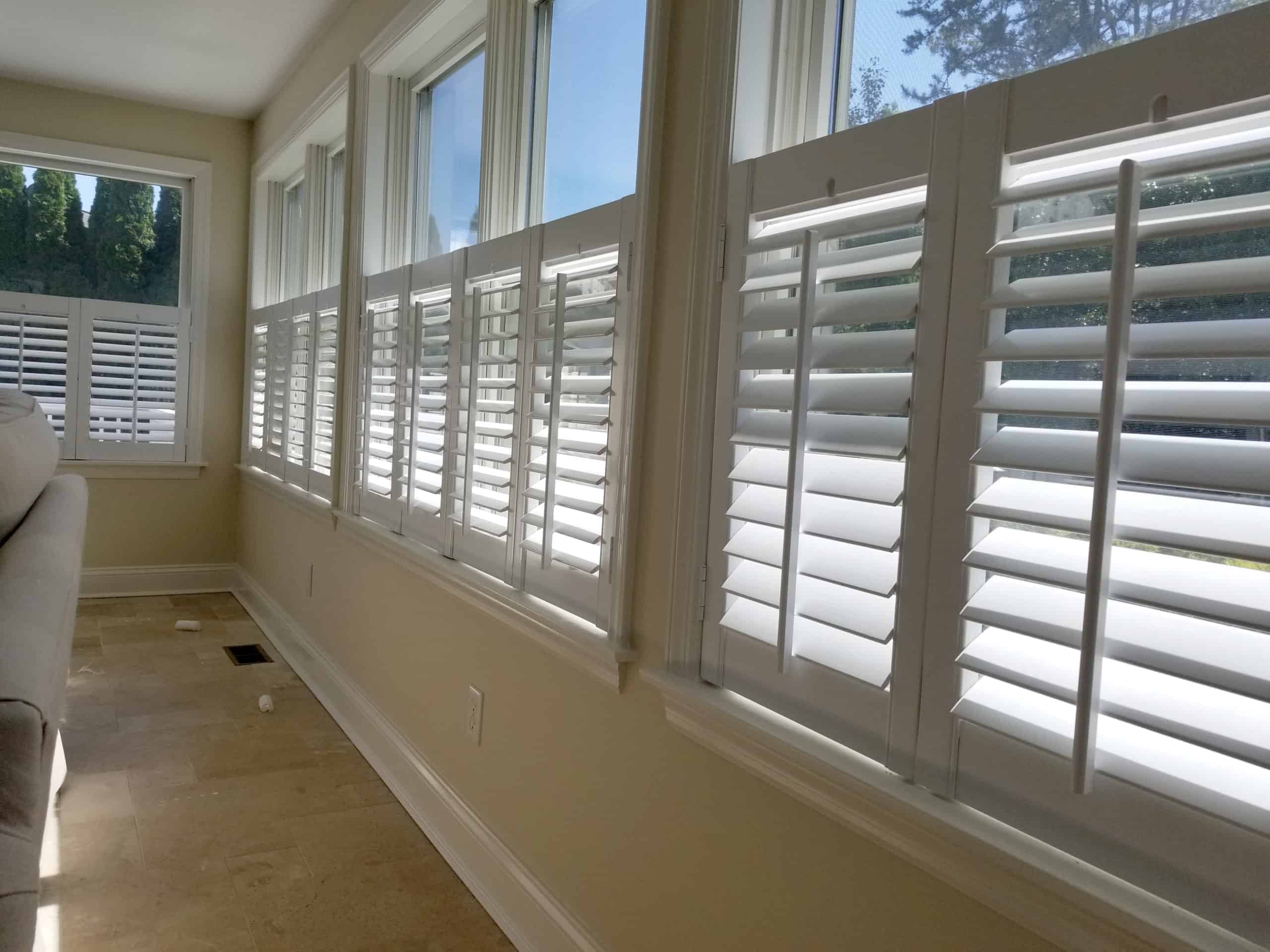
It starts with a free in-home consultation. I come to your home in Wilmington whether you’re in Ogden, the Historic District, Mayfaire, or anywhere else in New Hanover County and bring physical samples so you can evaluate materials and louver sizes in your actual space. There’s no showroom trip, no pressure, and no obligation. You’re just getting a real look at what works for your windows before anything is decided.
From there, every window gets measured precisely. Custom plantation shutters aren’t cut from a standard size they’re built to fit your exact frame dimensions, which matters especially in older homes, historic district properties, and custom builds where window openings don’t always follow standard sizing. One thing worth knowing for homeowners in Wilmington’s downtown historic district: interior plantation shutters are not subject to exterior historic design review. They’re an interior modification, which means no permit process, no city approval, and no committee just shutters that happen to look exactly right in a 19th-century home.
Once your shutters are fabricated, I schedule the installation and handle everything myself. The job gets done cleanly and correctly, and when I leave, the space is ready. Most Wilmington homeowners find the spring window March through June books up fastest, so if you’re planning ahead for summer, earlier is better.
Ready to get started?
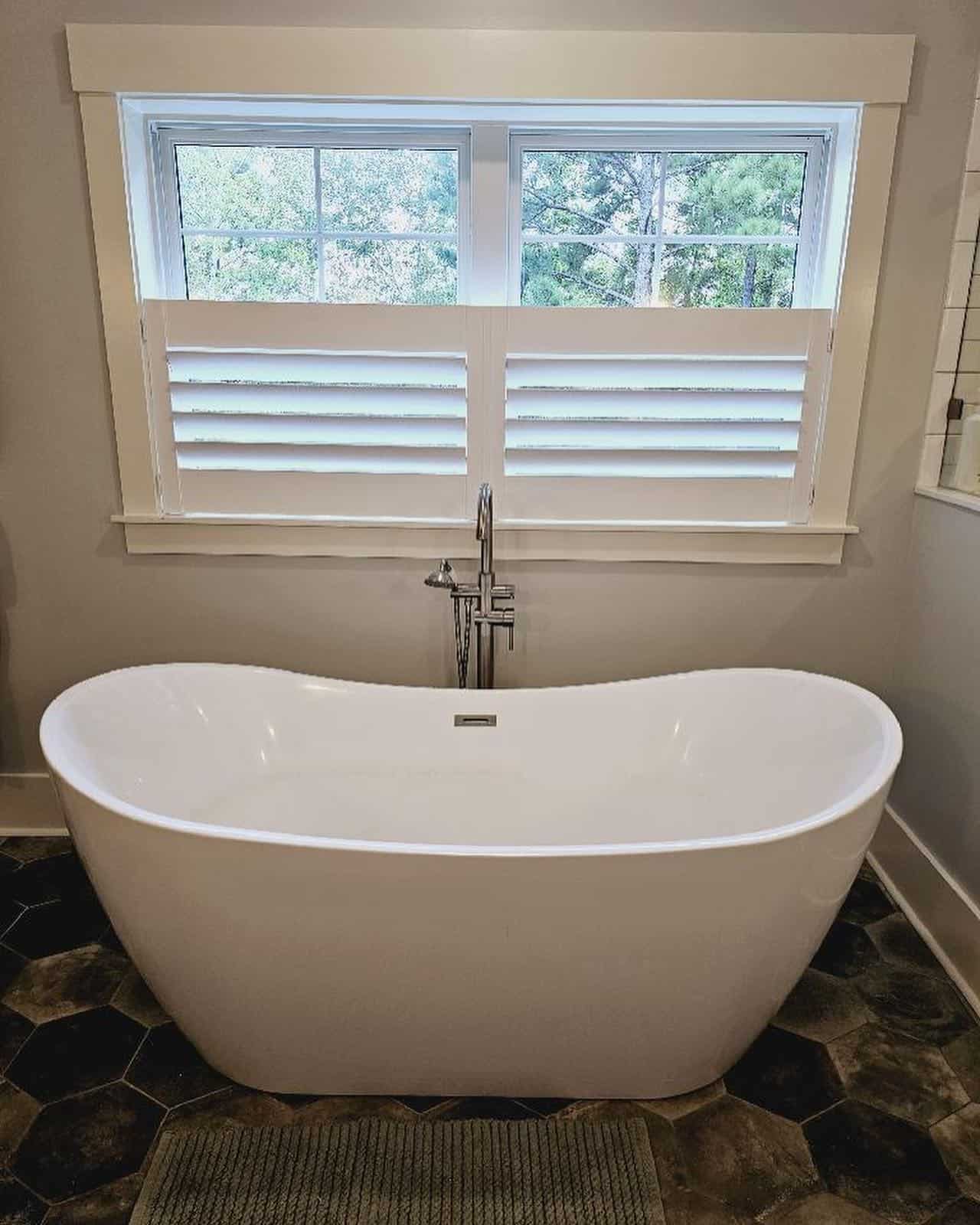
Not every room in a Wilmington home faces the same conditions, and the material recommendation changes based on where the shutter is going. For bathrooms, kitchens, laundry rooms, and any space with regular moisture exposure, faux wood plantation shutters are the right call. The solid-core construction not hollow with aluminum reinforcement on wider panels and a UV-stable finish means they hold their shape and color even when humidity climbs past 70%, which it does regularly here from late spring through fall.
For climate-controlled interior rooms a living room in Porters Neck, a dining room in Autumn Hall, a home office in a Landfall property real wood plantation shutters are a genuine option. They offer a texture and warmth that faux wood gets close to but doesn’t replicate. I’ll walk you through the tradeoffs for your specific rooms so you’re not guessing at what belongs where.
Every shutter in the Norman product line comes with the manufacturer’s quality backing, and the installation itself is covered by our own workmanship guarantee. For second-home and beach property owners in the Wilmington area who aren’t always on-site to monitor conditions, the durability of these materials isn’t a luxury it’s practical. You want window treatments that handle the coastal environment without requiring your attention every season.
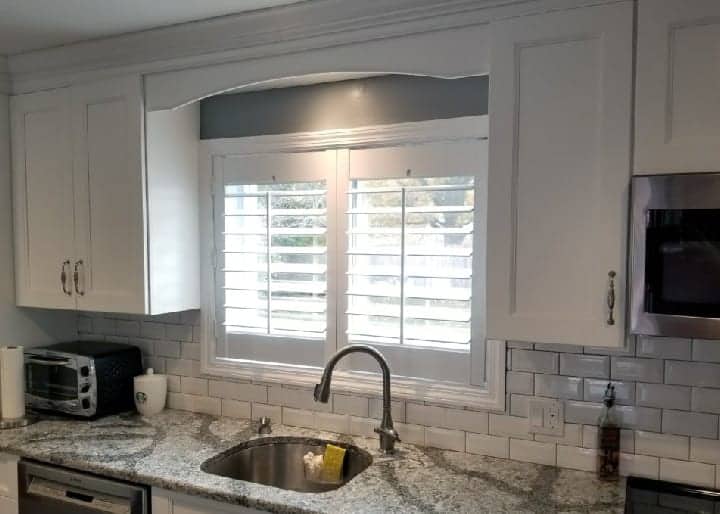
For most rooms in a Wilmington home, faux wood plantation shutters are the stronger choice from a durability standpoint. Wilmington’s humidity regularly climbs above 70% from late spring through early fall, and real wood while beautiful can expand, contract, and eventually warp or cup when it’s exposed to that level of sustained moisture. Bathrooms, kitchens, sunrooms, and any room with direct coastal exposure are especially vulnerable to this.
That said, real wood plantation shutters aren’t off the table entirely. For climate-controlled interior rooms a living room, a formal dining room, a home office where humidity is managed and the window doesn’t face direct outdoor moisture exposure, wood is a perfectly viable option and delivers a warmth and texture that faux wood approximates but doesn’t fully match. The right approach is a room-by-room conversation, not a blanket recommendation. That’s exactly what the in-home consultation is for.
Yes and this is something a lot of downtown Wilmington homeowners don’t realize until they ask. Interior plantation shutters are not subject to the City of Wilmington’s exterior historic design review. They’re an interior modification, which means no permit application, no historic preservation committee review, and no approval process. You can move forward without any of that friction.
What makes interior plantation shutters a particularly good fit for historic district homes is that they’re architecturally appropriate. Plantation shutters have been a feature of Southern architecture for centuries they’re not a modern workaround, they’re a period-correct choice. Whether your home is antebellum, Victorian, or a later historic-era build along the Cape Fear corridor, custom shutters fit the character of the space rather than fighting it. The custom fabrication process also matters here: older homes in the historic district often have non-standard window openings, and custom-built shutters are measured and cut to fit your actual frames not forced into a standard size that doesn’t quite work.
Pricing for custom plantation shutters in Wilmington depends on a few variables: the number of windows, the size of each opening, the material you choose (faux wood or real wood), and the louver size. For a single room, you might be looking at a few hundred dollars. For a full home with larger windows the kind you’d find in Landfall or a waterfront property in Greenville Loop the total investment can reach several thousand.
The framing that tends to resonate with Wilmington homeowners is the long-term value comparison. Custom plantation shutters are classified as permanent fixtures, similar to hardwood floors or granite countertops. Industry data supports a resale return of up to 75% of the purchase price, and in a Wilmington housing market where average home values are holding near $418,000 to $495,000, that’s a meaningful number. Compare that against replacing cheap blinds every few years in a coastal environment, and the math shifts. The in-home consultation includes a straightforward quote no hidden costs, no pressure so you know exactly what you’re looking at before any decision is made.
The core difference is in how they’re made and how they fit. Norman Window Fashions is one of the largest window covering manufacturers in the world, with more than 30 years of product development behind their shutter lines. Their products are engineered to specific tolerances the louver mechanisms, the finish quality, the hardware in a way that off-the-shelf box store shutters simply aren’t.
The bigger practical issue with big box shutters is sizing. Standard-size shutters are built to approximate common window dimensions, which means they’re shimmed, trimmed, or forced to fit rather than built for your actual opening. In Wilmington homes especially older properties, custom builds, and anything in the historic district windows don’t always follow standard sizing. A Norman plantation shutter installed by an authorized dealer like us is custom-fabricated to your exact measurements. The fit is clean, the operation is smooth, and the finish holds up over time in a way that a mass-produced alternative typically doesn’t, especially in a coastal environment where materials are under more stress year-round.
The spring window roughly March through June is when demand peaks in Wilmington. Homeowners are preparing properties for summer, second-home buyers are getting beach properties ready before the season starts, and new construction buyers who moved in over the winter are finally getting to the window treatments. Lead times stretch during this period, so if you’re planning a spring or early summer installation, booking earlier in the year gives you more flexibility on scheduling.
Fall and winter are quieter, which works in your favor if timing is flexible. Lead times are shorter, my schedule has more room, and you can often move from consultation to installation faster than you’d be able to in peak season. For homeowners in Ogden, Porters Neck, or the northern Wilmington corridors who are doing broader home improvement projects, the off-season can be a smart time to get shutters on the calendar without competing with everyone else doing the same thing in April. Either way, the process starts with a free in-home consultation no commitment required to get a look at your options and a real quote.
They do, and the reason comes down to how they’re classified. Custom plantation shutters are installed directly into the window frame they’re not a removable accessory like blinds or curtain rods. That makes them a permanent fixture in the eyes of appraisers, similar to built-in cabinetry or hardwood floors. In Wilmington’s housing market, where buyers are comparing well-finished homes across a wide price range and average values are holding near $418,000 to $495,000 in many neighborhoods, the presence of quality permanent window treatments is something buyers and agents notice.
Industry data puts the resale return on custom plantation shutters at up to 75% of the purchase price, which compares favorably to a lot of other home improvement investments. For homeowners in neighborhoods like Mayfaire, Autumn Hall, or Riverlights where presentation plays a real role in how quickly a home sells and at what price shutters contribute to the overall finish level of the home in a way that generic window treatments don’t. They’re not a guaranteed dollar-for-dollar return, but they’re one of the few window treatment investments that appraisers and buyers actually factor in.