Summary:
If you’ve moved to Brunswick County recently — or you’ve owned a home here long enough to watch a set of blinds warp, fade, or corrode — you already know that window treatments aren’t a one-size-fits-all purchase. The humidity alone will expose a bad material choice faster than anything else. Add salt air, amplified UV from sunlight bouncing off the water, and the occasional named storm, and the stakes get higher.
A home decorator who knows this coast can save you real money and real headaches. Here’s what that actually looks like in practice.
Roman Shades for Windows in Coastal Homes: What Works and What Doesn't
Roman shades are one of the most requested treatments we see in Brunswick County homes — and for good reason. They’re clean, they layer beautifully with other treatments, and they work in almost every room. But not every roman shade holds up in a coastal environment, and that distinction matters more here than it would in Charlotte or Raleigh.
The fabric is everything. Standard cotton and untreated linen absorb moisture and can develop mildew over time in a climate where humidity regularly pushes past 70%. Performance fabrics — polyester blends, solution-dyed acrylics, and moisture-resistant linen weaves — handle the coast without issue. When we bring samples to your home, we’re not just showing you colors. We’re steering you toward materials that will still look right two or three years from now.
Cordless Roman Shades: The Practical Choice for Beach Homes and Rentals

Cordless roman shades have become the standard recommendation for most of the homes we work in along the coast — and especially for vacation rental properties on Oak Island, Holden Beach, and Ocean Isle Beach. The reason is simple: cords are a liability. They tangle, they break, and in a rental setting, they’re one more thing guests can damage between bookings.
Cordless mechanisms are also the safer choice for homes with children, which matters for the growing number of young families relocating to Leland and Shallotte as Brunswick County’s population continues to expand. The operation is smooth, the look is cleaner, and there’s genuinely nothing to maintain or replace as frequently.
From a durability standpoint, cordless systems also tend to hold up better in high-humidity environments because there are fewer moving parts exposed to moisture. The lift mechanism is internal, which protects it from the kind of salt air corrosion that can affect exposed metal hardware over time. For coastal homes, that’s not a minor detail — it’s the difference between a treatment that lasts a decade and one you’re replacing in three years.
If you’re outfitting a vacation rental or a second home that sits vacant for stretches of time, cordless roman shades are worth the modest additional investment. They require less attention, they photograph well for rental listings, and they give guests a clean, intentional look that reads as quality without being fragile.
Blackout Roman Shades and Linen Roman Shades: Knowing Which Room Needs Which
This is one of the most common questions we field during in-home consultations, and it’s worth addressing directly because the answer depends entirely on how the room is used — not just how it looks.
Blackout roman shades eliminate light almost completely. They’re the right call for bedrooms, especially in beach communities where sunrise comes early and hits hard off the water. If you’re on the east side of Oak Island or in a Southport home with morning sun pouring through the bedroom windows, a blackout shade gives you genuine control over when your day starts. They’re also the first thing vacation rental guests notice — and appreciate — because sleeping well in an unfamiliar place is harder when the room lights up at 6 a.m.
Linen roman shades do something different. They filter light rather than block it, softening the brightness of a coastal afternoon without cutting off the view or making the room feel closed off. The texture of linen also reads as intentional and relaxed — which fits the aesthetic of most coastal interiors in Brunswick County, whether you’re in a newer build in Carolina Shores or a cottage closer to the water in Sunset Beach.
The practical consideration with linen in a coastal climate is fabric weight and treatment. Lighter, untreated linens can feel limp in high humidity and may show moisture over time. We typically recommend heavier linen weaves or linen-blend fabrics with a moisture-resistant backing for homes within a few miles of the water. It gives you the look without the vulnerability. And when you’re seeing the actual fabric sample in your own home — in your own light, against your own walls — that difference becomes obvious in a way it never would from a photo online.
Solar Shades and Blackout Shades: Managing Light on the North Carolina Coast
Sunlight in Brunswick County is not the same as sunlight inland. When it reflects off the Atlantic or the Intracoastal Waterway, UV intensity increases significantly — which means your furniture, flooring, and window treatments take a harder hit than they would anywhere else in the state. Over time, that kind of exposure fades fabrics, damages hardwood floors, and breaks down materials that weren’t designed for it.
Solar shades address this directly. They’re engineered to block UV rays — some options block up to 99 percent — while keeping your view intact. That’s the key distinction that surprises a lot of homeowners: solar shades don’t darken a room. They filter the harmful spectrum of light without turning your ocean view into a wall.
Room Darkening Shades vs. Blackout Shades: What's the Actual Difference?
These two terms get used interchangeably in a lot of showrooms and online listings, but they’re not the same thing — and the difference matters when you’re choosing treatments for specific rooms.
Blackout shades are designed to block virtually all incoming light. They use a tightly woven or coated fabric that doesn’t allow light transmission, and when paired with proper side channels or a close-fit mounting, they can make a room genuinely dark even in the middle of a bright coastal afternoon. For bedrooms in vacation rentals, media rooms, or any space where full darkness is the goal, blackout is the right specification.
Room darkening shades reduce light significantly but don’t eliminate it entirely. They’re made with heavier fabrics that block most of the light while still allowing a soft ambient glow at the edges. For living rooms, dining areas, and spaces where you want privacy and glare reduction without full blackout, room darkening is typically the better fit. It’s a more livable option for rooms you spend time in during the day.
The confusion usually happens because both options look similar in a sample swatch. The difference shows up in installation — specifically in how the shade mounts and how much gap exists at the frame edges. A professional installation accounts for this. A DIY installation often doesn’t, which is why homeowners sometimes end up with a “blackout” shade that still lets in noticeable light around the sides. Getting the mounting right is as important as choosing the right fabric, and it’s one of the reasons professional measurement and installation genuinely changes the outcome.
Interior decorator cost per hour varies widely depending on the scope of work and the market. Nationally, hourly rates for decorators run from $75 to $250 per hour, with full-service interior designers charging considerably more. For most homeowners in Brunswick County who need window treatments — not a full home redesign — the relevant cost is the treatment itself plus professional measurement and installation.
Here’s what surprises most people: custom window treatments from us are frequently less expensive than what national companies charge for standard, off-the-shelf products. We’ve seen customers come to us after being quoted over $900 by an out-of-state company for a single skylight shade. We quoted the same job for just over $300. That’s not a rare exception — it reflects the difference between a local business with lower overhead and a national company with franchise pricing built into every quote.
Custom also means made specifically for your windows. Standard sizes from big-box retailers rarely fit well, and a poor fit is immediately visible — gaps at the edges, treatments that don’t close fully, or mounting that pulls away from the wall over time. Custom measurement eliminates those problems before they start. When you factor in the cost of replacing a poor-fit treatment in two years versus a well-made custom piece that lasts a decade, the math shifts considerably.
For Brunswick County homeowners who are new to the area and haven’t yet built a network of trusted contractors, our free in-home consultation removes the financial risk of the first step entirely. You see the samples, get the measurements, and receive a clear quote — before you commit to anything.
Finding the Right Home Decorator in Brunswick County, NC
Brunswick County is the fastest-growing county in North Carolina — which means thousands of homeowners are right now figuring out what their windows need for the first time. Whether you’ve just closed on a new build in Leland, inherited bare windows in a beach cottage on Holden Beach, or finally decided to replace the warped blinds that came with your Shallotte home, the process doesn’t have to be complicated.
A good home decorator doesn’t just sell you a product. We ask about how you use the room, which direction the windows face, whether you rent the property out, and whether you have kids or pets. We bring samples to your home so you can see the actual material in your actual light. And we measure correctly the first time so nothing has to be redone.
We offer free in-home consultations throughout Brunswick County — including Oak Island, Shallotte, Leland, Southport, and Bald Head Island — with no pressure and no guesswork. Reach out and we’ll bring the samples to you.
—
FREQUENTLY ASKED QUESTIONS
**What does a home decorator do differently than an interior designer?** An interior designer typically holds a formal degree and may handle structural or architectural decisions in a space. A home decorator focuses on the aesthetics of an existing space — furniture, window treatments, textiles, color, and accessories. For most homeowners in Brunswick County who need window treatments, a decorator is exactly the right fit. We cost less than a full designer and focus specifically on what you’re actually trying to accomplish.
**How much does an interior decorator cost per room in Brunswick County?** For window treatment services specifically, costs vary depending on the number of windows, the treatment type, and the complexity of the installation. In Brunswick County, where coastal conditions require specific materials and sometimes more involved mounting, a professional consultation helps you understand the full scope before you commit. We offer free in-home consultations throughout the county so you can get an accurate quote without any upfront cost.
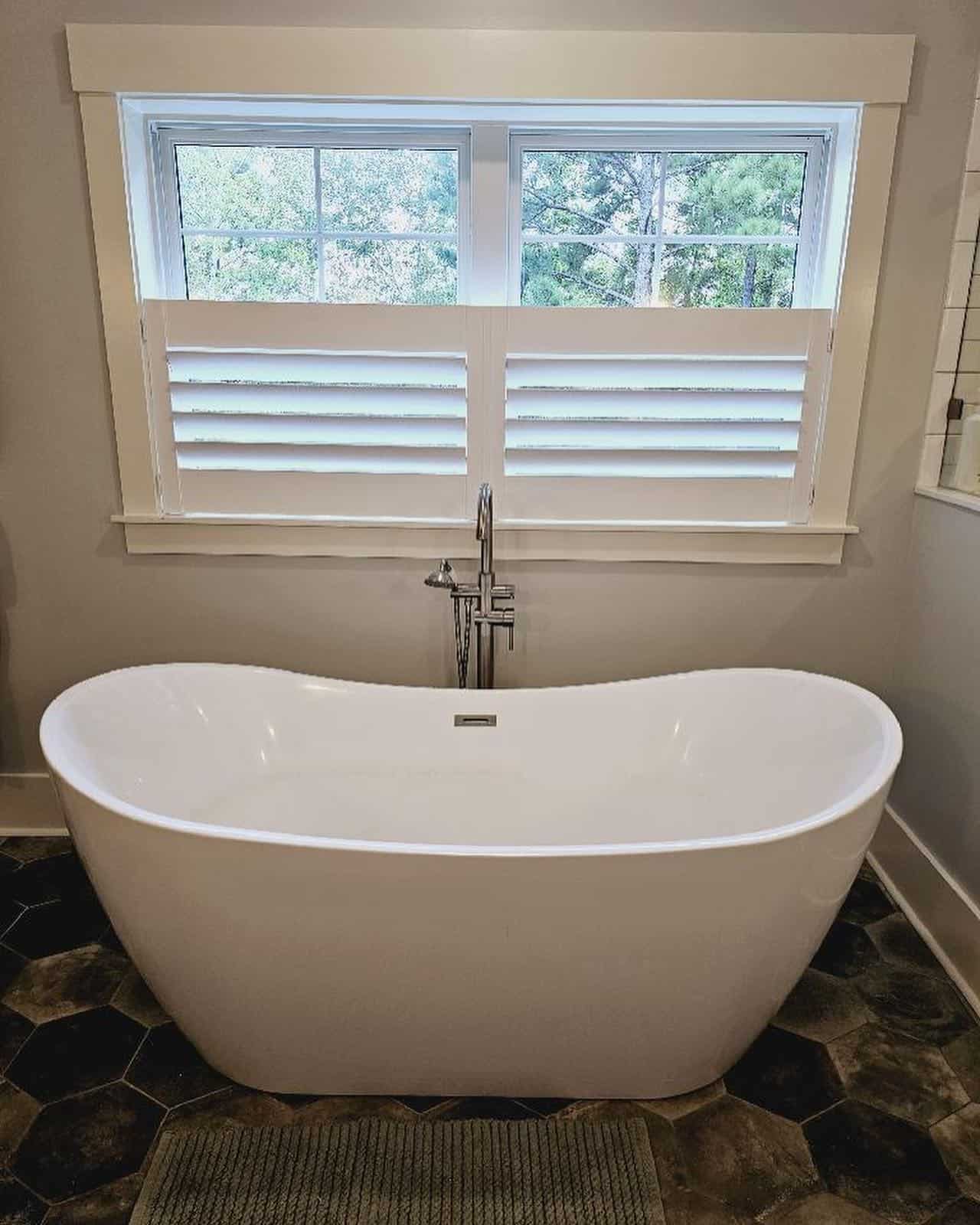
**What are the best window treatments for a coastal home in NC?** For Brunswick County specifically, the materials that hold up best are faux wood, poly shutters, and vinyl for hard treatments, and performance fabrics for soft treatments like roman shades. Real wood warps in high humidity. Standard metal hardware corrodes in salt air. The right material choice depends on how close you are to the water, how the room is used, and whether the property is a primary residence or a vacation rental — all things worth discussing during a consultation with us.
**How long does it take to get custom window treatments installed?** Custom window treatments require a manufacturing period after the order is placed. Our typical timeline is 10 to 21 days from order to installation. We’ll give you a specific estimate when we measure, so you can plan around it — especially useful if you’re preparing a rental property for peak season or moving into a new home on a defined timeline.
**Do plantation shutters actually provide storm protection?** Plantation shutters offer meaningful wind resistance for standard coastal storms and add a layer of protection for your windows in high-wind events. For full hurricane protection in Brunswick County — which sits in a direct hurricane corridor and has been affected by Florence, Dorian, and Isaias in recent years — dedicated hurricane shutters are the more reliable solution. We install both, and we can walk you through which combination makes sense for your home and its exposure level.