Summary:
Most interior design advice wasn’t written with Brunswick County in mind. It doesn’t account for what salt air does to wood blinds, how aggressively the coastal sun fades hardwood floors, or what happens to your windows when a tropical storm rolls through. If you’ve lived here for more than a season or two, you already know the difference. The design choices that hold up inland don’t always hold up here. We’ve built our approach around interior design solutions that are actually engineered for coastal conditions — what to look for, what to avoid, and how to get it right the first time.
Interior Design Fundamentals for Brunswick County Coastal Homes
Coastal interior design starts with one honest question: what is this environment actually going to do to my home? In Brunswick County, the answer involves salt-laden air that accelerates corrosion, UV exposure intense enough to fade furniture and flooring within a few years, and a hurricane season that runs nearly half the calendar year. Good design here isn’t just about aesthetics — it’s about making choices that hold up.
The window is where most of these forces converge. It’s where the light enters, where the heat builds, where the storm pressure tests your home’s envelope, and where the view either gets blocked by a treatment that’s already warping or enhanced by something built to last. Getting the window right is the single highest-leverage interior design decision you can make in a coastal home. Everything else in the room follows from it.
Simple Interior Design Approaches That Actually Work for Beach Houses
There’s a version of coastal design that looks effortless — clean lines, natural light, a sense of calm that makes a room feel like it belongs near the water. That look isn’t accidental, but it’s also not complicated. It comes from a few deliberate choices made well, rather than a lot of choices made quickly.
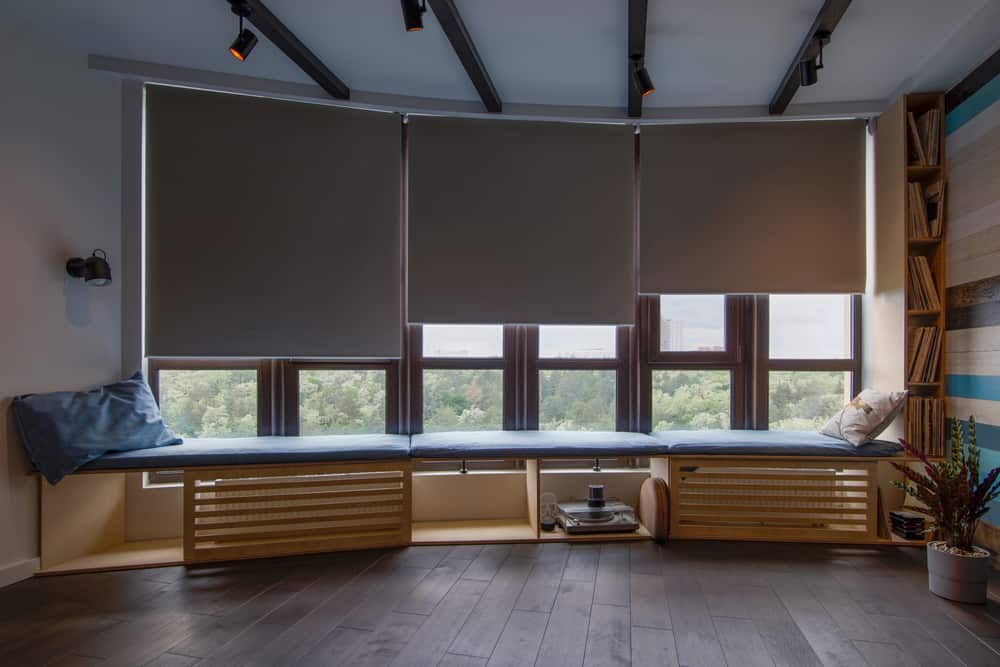
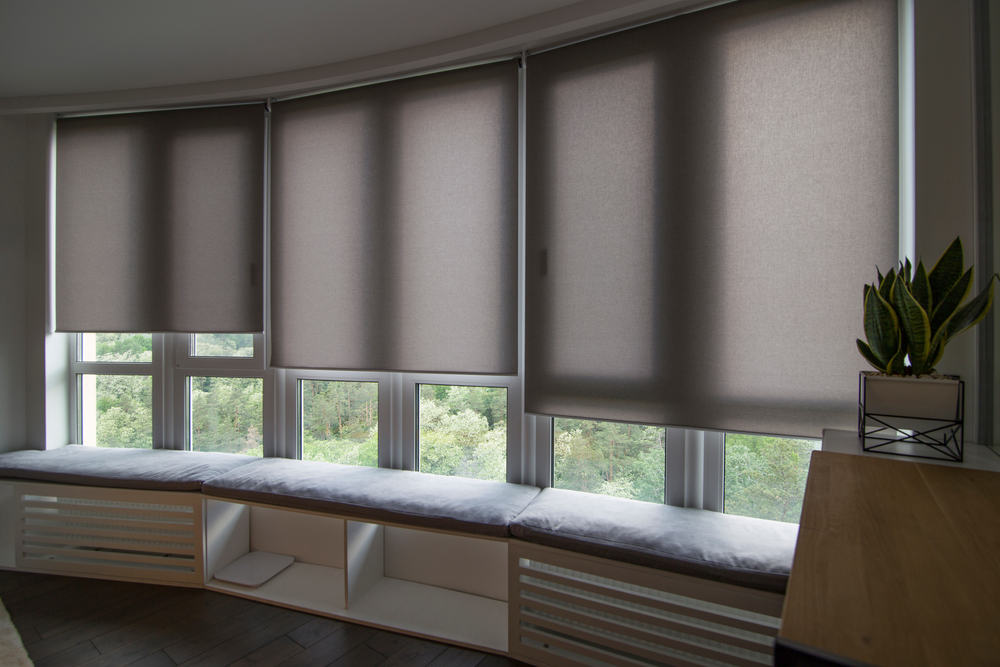
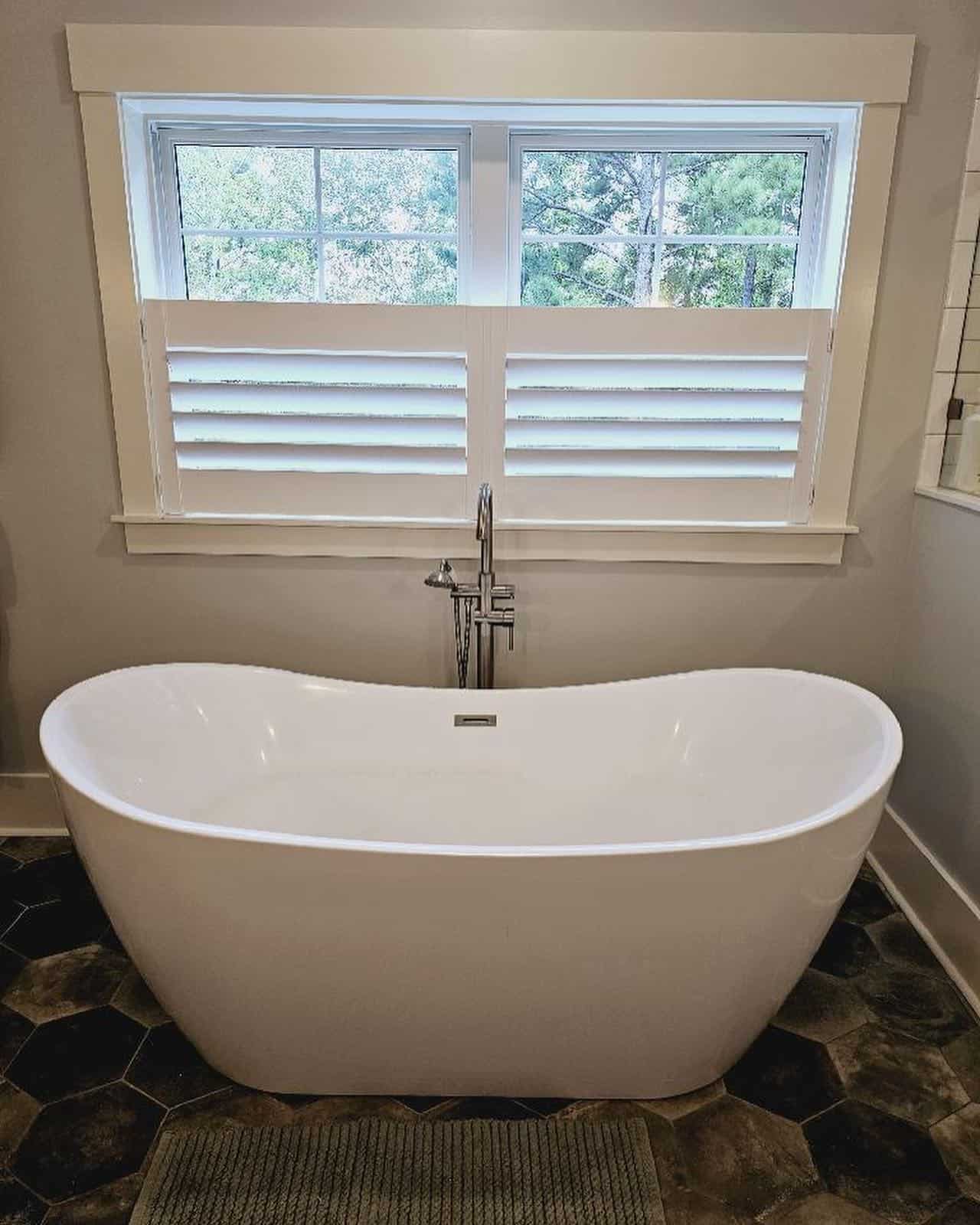
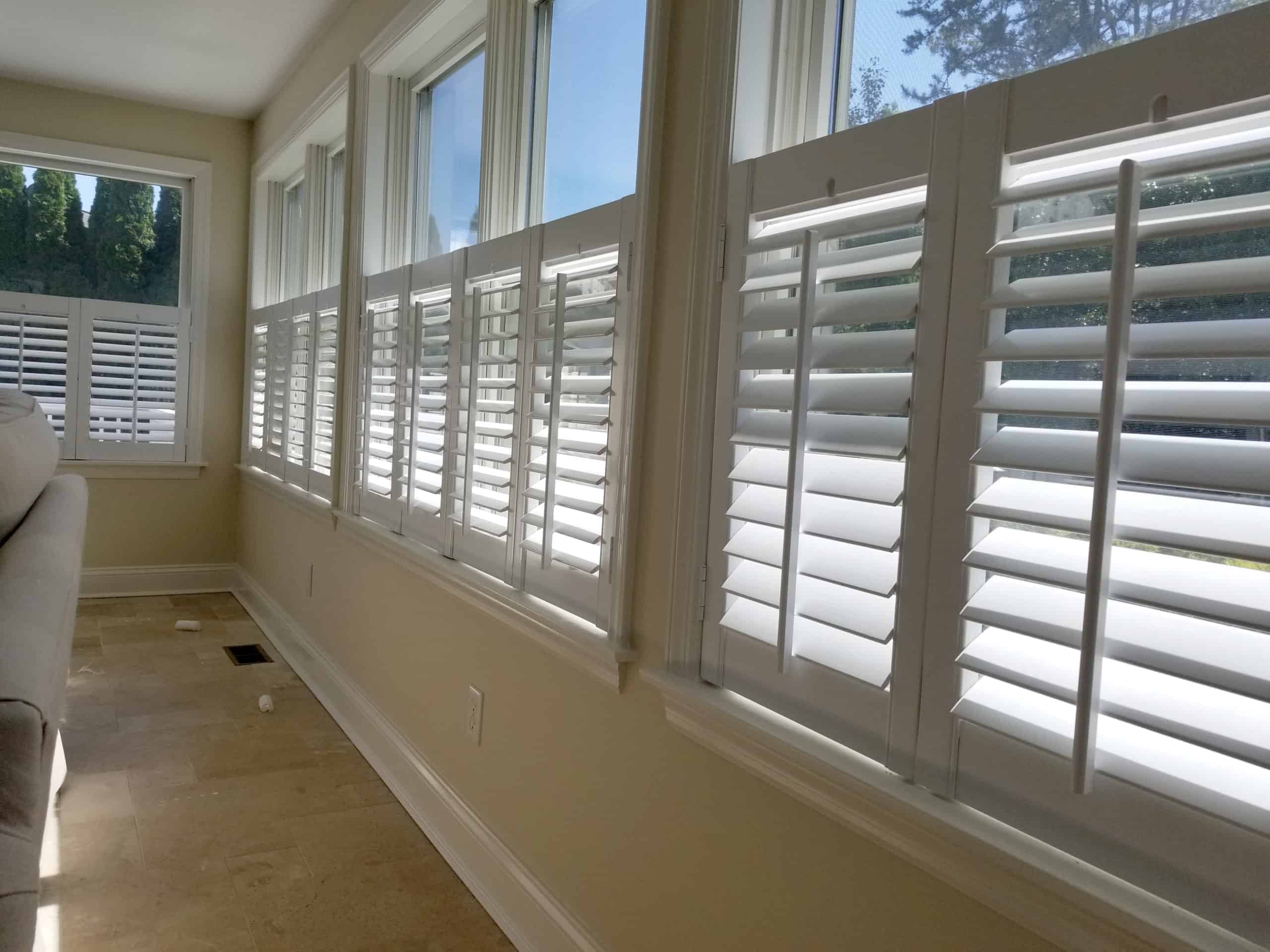
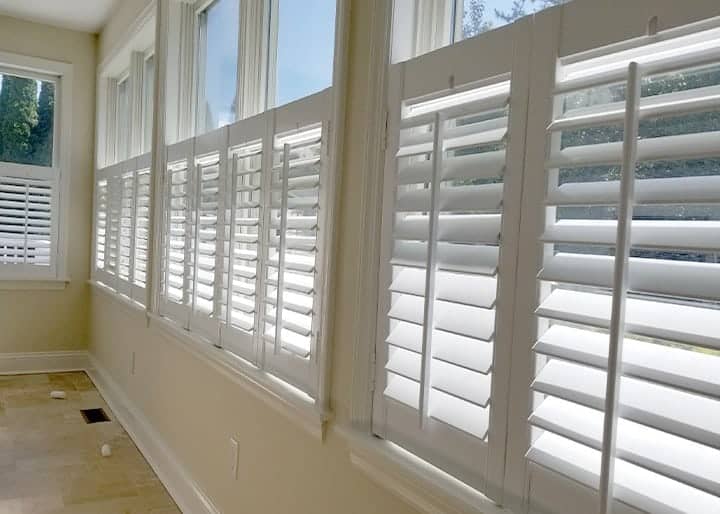
For window treatments, simple coastal design usually means light-filtering over room-darkening, natural textures and neutral tones over heavy patterns, and materials chosen for the environment rather than just the catalog. Faux wood blinds, poly plantation shutters, and quality cellular shades all fit this approach. They read as clean and intentional, and more importantly, they’re built to survive what a coastal environment throws at them. Real wood warps. Standard aluminum corrodes. Faux wood and poly don’t — and in a Brunswick County beach house that sees high humidity year-round, that matters more than most people realize until they’re replacing treatments for the second time.
Simplicity also applies to the process of choosing. Bringing a hundred samples into a showroom and trying to imagine how they’ll look in your actual home is genuinely difficult. Seeing those same samples in your living room, in your specific light, against your actual walls — that’s a different experience entirely. It’s also how decisions get made with confidence rather than guesswork. For homeowners in Southport, Leland, or Oak Island, where the quality of natural light varies significantly from room to room and floor to floor, that in-home context isn’t a luxury. It’s the only reliable way to get it right.
One thing worth saying plainly: simple coastal design doesn’t mean cheap. The treatments that look the most effortless are usually the ones that were selected most carefully — and installed with enough precision that they disappear into the room rather than calling attention to themselves.
Coastal Valances and Layered Window Treatments for NC Beach Homes
Coastal valances get overlooked more often than they should. They’re one of the more versatile tools in a coastal design scheme — they add a layer of visual softness to a window without blocking light, they can tie together a room’s color palette, and they work well in spaces where a full drapery panel would feel too heavy. In beach houses and waterfront properties along the Brunswick County coast, where rooms are often designed to feel open and connected to the outdoors, that balance matters.
The key with coastal valances is proportion and material. A valance that’s too deep or too structured reads as formal in a space that’s meant to feel relaxed. Something lighter — a simple fabric valance in a linen or cotton blend, or a structured cornice in a neutral tone — tends to work better. The goal is to frame the window without competing with the view.
Layering is where coastal window design gets interesting. A sheer roller shade or light-filtering cellular shade paired with a valance gives you privacy and light control during the day while keeping the room feeling open. Add a heavier panel or shade for nighttime privacy, and you’ve built a treatment that’s functional across different times of day and different seasons. That kind of layering is especially useful in vacation rental properties on Holden Beach or Ocean Isle Beach, where guests have different preferences and the property needs to work well for everyone.
What most people don’t realize is that layered window treatments also perform better thermally. Windows account for 25 to 30 percent of a home’s heating and cooling load. A well-layered treatment — particularly one that includes a cellular or honeycomb shade — can reduce summer heat gain by up to 40 percent. On a west-facing room in a Sunset Beach cottage in July, that’s not a small number. It’s the difference between a comfortable room and one you avoid after noon.
Window Treatment Solutions Built for Brunswick County's Specific Challenges
Brunswick County isn’t just a coastal market in the general sense. It’s one of the fastest-growing counties in North Carolina, with thousands of new homes going up in communities like Leland and Shallotte, a large and active vacation rental economy across its beach towns, and a real hurricane history that includes Florence in 2018 and Dorian in 2019. Interior design solutions here need to account for all of that — not just the aesthetic side.
The window treatments that perform best in this environment share a few common traits. They’re made from materials that resist moisture, salt air, and UV degradation. They’re installed with enough precision that they seal and operate correctly for years, not months. And they come from manufacturers who actually engineer products for high-humidity, high-UV coastal conditions — not companies that simply list “moisture resistant” as a feature without backing it up.
How to Choose Hurricane-Ready Window Treatments for Coastal NC Homes
Hurricane season runs from June through November, which means for almost half the year, Brunswick County homeowners are living with some level of awareness about their windows. Windows and doors are among the most vulnerable points in a home during a storm — FEMA and the Insurance Institute for Business & Home Safety have both documented this extensively. The good news is that modern hurricane-rated window solutions have come a long way from the plywood-boarding approach that most people picture.
Hurricane shutters installed as part of a thoughtful interior design plan can integrate cleanly into a home’s aesthetic. They don’t have to look industrial or temporary. Done well, they’re part of the home — present and functional when you need them, unobtrusive when you don’t. For homeowners in coastal Brunswick County communities like Ocean Isle Beach, Holden Beach, and Sunset Beach, where storm exposure is a genuine annual consideration, this kind of integrated approach is worth understanding before hurricane season arrives. The time to evaluate your window protection options is not when a storm is 48 hours offshore.
Beyond shutters, impact-resistant and reinforced window treatments offer an additional layer of protection for homes that want to address storm risk without the footprint of full shutter systems. The right solution depends on the home’s construction, window size, and your priorities — which is exactly the kind of conversation that’s easier to have in person, with someone who knows the local conditions, than it is to navigate from a product website.
Window protection and interior design aren’t competing priorities. The same investment that protects your home during a storm can also improve energy efficiency, reduce UV exposure, and contribute to the overall design of the space. These aren’t separate decisions — they’re the same decision made thoughtfully.
What Brunswick County Vacation Rental Owners Should Know About Window Treatments
If you own a rental property on Oak Island, Holden Beach, or anywhere along the Brunswick County coast, your window treatments are doing more work than they would in a primary residence. They’re being opened and closed by guests who don’t always handle things carefully. They’re exposed to the same salt air and intense sun as any other coastal home, but with less consistent maintenance. And they show up in your listing photos — which means they affect your booking rate whether you’ve thought about that or not.
The most common mistake vacation rental owners make with window treatments is buying cheap and replacing often. It feels like the conservative financial choice, but it rarely is. Off-the-shelf treatments from big-box stores typically last one to three years in a coastal environment before they start warping, discoloring, or failing mechanically. Custom treatments from quality manufacturers like Hunter Douglas and Norman Shutters are engineered to last a decade or more, even under heavy use. The per-year cost of doing it right is almost always lower than the per-year cost of doing it cheap and replacing it repeatedly.
There’s also the guest experience angle. Treatments that operate smoothly, look clean and intentional, and actually control light and privacy the way guests expect contribute to better reviews. A rental property that photographs well and functions well earns more — it’s not complicated, but it does require making the right choices upfront. That includes choosing materials that are easy to clean, mechanisms that are intuitive for guests who’ve never used them before, and styles that photograph neutrally rather than dating the space.
For investment property owners managing multiple units in Brunswick County — whether in Brunswick Forest, St. James Plantation, or one of the beach communities — working with us means you get someone who understands the rental context and can handle the installation efficiently across multiple properties. This isn’t a one-size-fits-all situation, and the decisions that make sense for a three-bedroom beach cottage on Ocean Isle Beach are different from what works for a condo near Southport’s waterfront.
Finding the Right Interior Design Solutions for Your Brunswick County Home
The coastal environment in Brunswick County is specific enough that generic interior design advice only goes so far. Salt air, intense UV, storm season, high humidity — these aren’t abstract concerns. They’re the conditions your home lives in every day, and the window treatments you choose either account for them or they don’t.
The right solution starts with understanding what your home actually needs — not just what looks good in a showroom. That means the right materials for your environment, the right installation for your window type, and the right products for how you actually use the space, whether that’s a primary residence in Leland, a retirement home in Brunswick Forest, or a rental cottage on Holden Beach.
We offer free in-home consultations with samples brought directly to your home. Reach out and let’s figure out what actually works for your space.