
Summary:
You bought blinds labeled “blackout.” You installed them. And now there’s still a strip of light creeping in at 6 AM. Sound familiar? It’s one of the most common frustrations we hear from homeowners across Brunswick County — and the fix usually isn’t a new product. It’s understanding what “blackout” actually means, what “room darkening” actually delivers, and why the gap between those two things matters more than most people realize. By the time you finish reading this, you’ll know exactly which option fits your space — and what it takes to make either one actually work.
Room Darkening Blinds: What They Actually Do
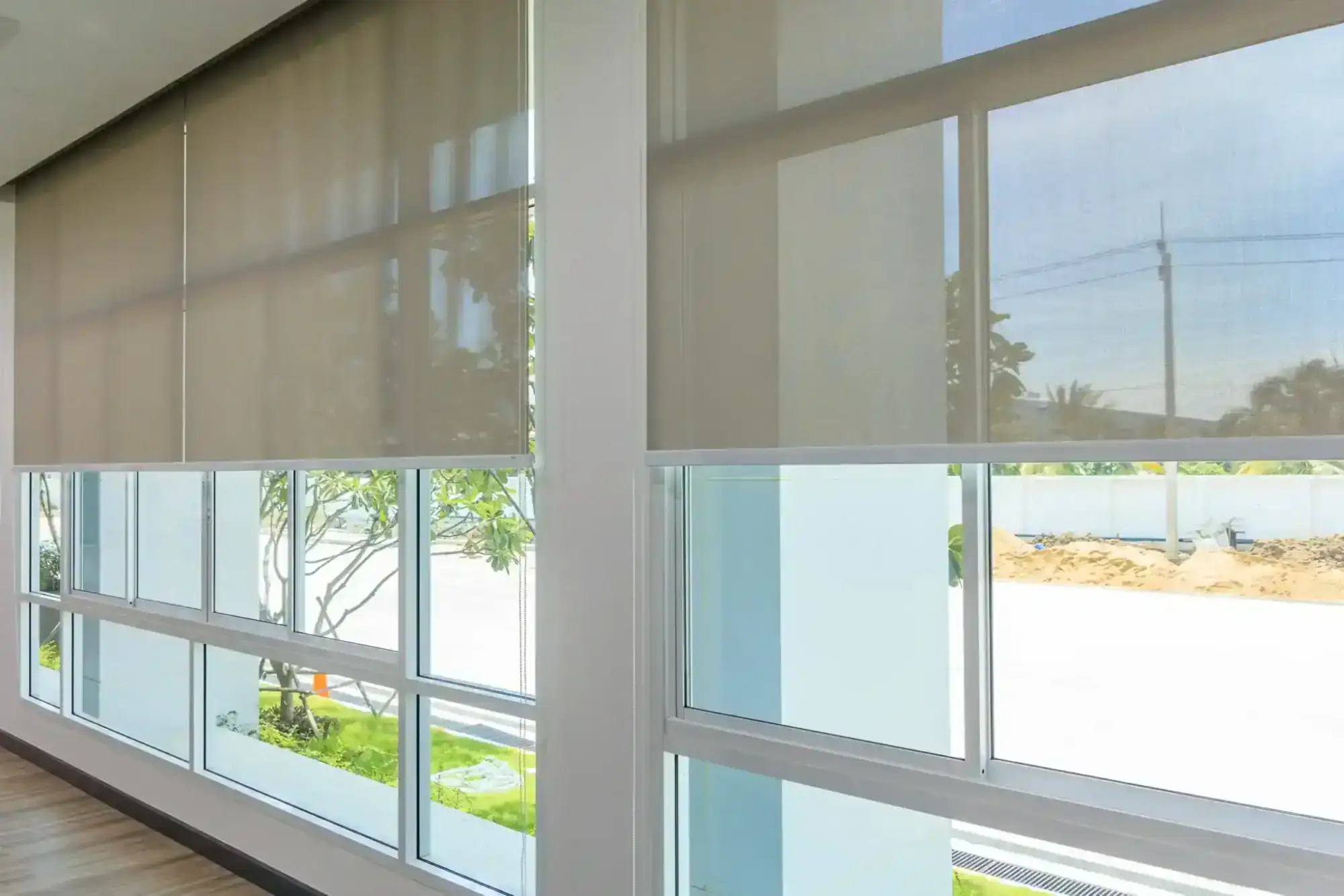
Room darkening blinds block somewhere between 95% and 99% of incoming light. That’s a lot — but it’s not everything. In a bright coastal bedroom in Brunswick County facing east toward the Atlantic, that remaining sliver of light is enough to pull you out of a deep sleep at sunrise. For a living room, a home office, or a guest room where you just want to cut glare and add privacy, room darkening is often the smarter choice. It gives you a noticeably darker space without sealing out every trace of light, which can feel more livable during the day.
The terminology gets confusing because retailers use “room darkening” and “blackout” almost interchangeably on packaging. They’re not the same. Room darkening fabrics are designed to reduce light significantly — not eliminate it. That distinction matters a lot depending on what you’re trying to solve.
Blackout Roller Blinds: How They Work and Where They Fall Short

Blackout roller blinds use a single layer of opaque, tightly woven or coated fabric that blocks 99% to 100% of light through the material itself. Roll them down, and the fabric does its job. The problem is that the fabric is only part of the equation.
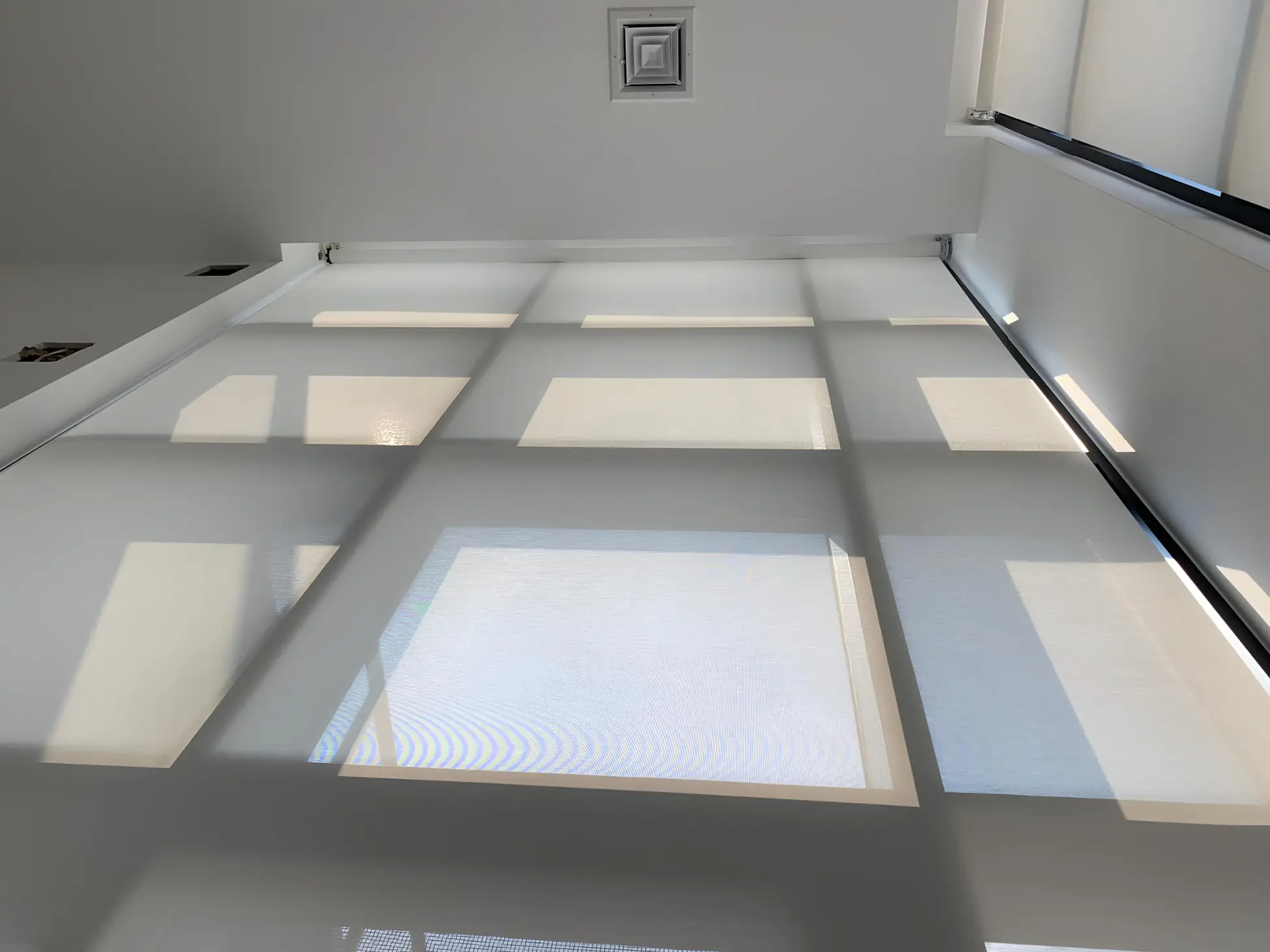
Here’s what most product listings don’t tell you: light doesn’t just come through the blind — it comes around it. The top, the bottom, and especially the sides of a roller shade are where light sneaks in, and this is almost always an installation problem, not a product problem. A blackout roller blind installed with a standard inside mount on a shallow window casing will leave visible gaps on both sides. You paid for a blackout blind and you’re getting a room-darkening result because the shade isn’t sealing against the window frame the way it needs to.
The fix involves a few things working together. First, the shade needs to be sized correctly for your specific window — not a standard retail size that approximates your opening. Second, the mount type matters. An outside mount, where the shade extends two to three inches beyond the window frame on each side, is often the better choice for true light blocking. Third, premium blackout roller blinds are available with side channel systems — a track that runs along both edges of the shade and physically closes off the gap between the fabric and the wall. That’s the difference between a shade that blocks most light and one that actually delivers the dark room you were expecting.
For homeowners on Ocean Isle Beach or Sunset Beach with east-facing master bedrooms, this isn’t a minor detail. Sunrise hits hard and early in the summer months. Getting the installation right is what makes a blackout blind actually blackout.
Cellular Blinds for Light Control and Energy Efficiency in Coastal Homes
Cellular blinds — also called honeycomb blinds — are built differently from rollers. Instead of a single flat panel of fabric, they’re constructed with a series of folded air pockets that run horizontally across the shade. Those pockets do two things at once: they filter or block light depending on the fabric opacity you choose, and they trap air between the window and the room, creating an insulating barrier.
When you choose a blackout fabric in a cellular shade, you get the light-blocking performance of a true blackout product combined with insulation that a roller shade simply can’t match. The U.S. Department of Energy has found that tightly installed cellular shades can reduce solar heat gain through windows by up to 60% in cooling seasons — and in Brunswick County, where air conditioning runs for the better part of eight months, that’s a number worth paying attention to. Double-cell construction, where there are two layers of honeycomb pockets instead of one, pushes the insulating value even higher, with R-values reaching R-5.0 or more. For context, a standard double-pane window sits at about R-1.8. A quality cellular shade can nearly triple that.
This matters especially for newer construction in Leland and Carolina Shores, where open floor plans and large windows create beautiful, light-filled spaces that can also turn into heat traps by early afternoon. Blackout cellular shades let you control both problems with one product — keeping the room dark when you need it and dramatically reducing the load on your cooling system year-round.
The other benefit that often goes unmentioned is UV protection. Quality blackout cellular shades block 99% to 100% of UV rays, which are the primary cause of hardwood floor fading, upholstery bleaching, and rug deterioration over time. If you’ve invested in quality flooring or furnishings in a coastal home with significant sun exposure, this protection alone justifies the upgrade.
Choosing the Right Blind for Your Brunswick County Home
The right choice between blackout and room darkening depends less on personal preference than most people think — and more on how the room is actually used, which direction it faces, and what the home’s primary purpose is. A year-round residence in Shallotte has different needs than a vacation rental on Holden Beach with six bedrooms that need to satisfy guests arriving from all over the country.
Getting this decision right the first time means not having to replace treatments in two years because they didn’t perform the way you needed. That’s a conversation worth having before you buy anything.
What Brunswick County's Coastal Climate Does to Standard Window Treatments
Salt air and humidity are not kind to standard window coverings. Real wood blinds that look beautiful in a showroom can warp, crack, and deteriorate within a season or two in a home close to the water. It’s one of the most common replacement stories we hear from homeowners on Bald Head Island and Oak Island — they bought something that looked great and didn’t last.
For blackout and room darkening applications in Brunswick County, the material matters as much as the light-blocking performance. Blackout cellular shades made from moisture-resistant polyester hold up far better in high-humidity environments than fabric-heavy alternatives. Faux wood and vinyl options are similarly built for this climate — they won’t absorb moisture, they won’t warp, and they maintain their appearance and function through years of coastal conditions.
This is also why custom sizing is especially important here. Older homes near the water often have non-standard window openings — windows that aren’t perfectly square, casings that have shifted slightly over time, or depths that don’t accommodate standard inside-mount products. A shade that fits correctly from day one, measured and manufactured to your actual window dimensions, is going to perform and last significantly better than something pulled off a shelf and trimmed down to approximate fit.
We select materials specifically for coastal durability — not just aesthetics — and that’s a distinction that shows up in how your treatments perform five and ten years from now.
Blackout Blinds for Vacation Rentals: What Guests Actually Expect
If you own a short-term rental property in Brunswick County — on Oak Island, Ocean Isle Beach, Holden Beach, or anywhere along the coast — your guests are sleeping in a bedroom that faces the ocean or the sound, and sunrise starts before 6 AM in the summer. Guests who can’t sleep leave reviews that say so. And in a competitive rental market, those reviews directly affect your occupancy rate and your income.
Blackout blinds in every rental bedroom aren’t a luxury amenity at this point — they’re a baseline expectation for guests booking coastal properties. The question is whether your current treatments actually deliver on that expectation or just approximate it.
There’s also a durability consideration specific to rental properties. Vacation rental window treatments take more wear than a primary residence — guests operate them multiple times a day, often without the same care a homeowner would use. Cordless and motorized options reduce mechanical stress significantly and eliminate the broken-cord complaints that show up in rental reviews more often than property owners expect. Motorized blackout shades, in particular, are increasingly popular in rental properties because they’re intuitive for guests, durable under heavy use, and controllable remotely if you manage the property from a distance.
We’ve worked with investment property owners throughout Brunswick County who needed treatments for multiple rooms across multiple properties — and we understand that the calculus for a rental is different from a primary home. Durability, ease of use, and guest experience all factor into our recommendations. Getting it right the first time is worth more than saving a few dollars on a product that needs to be replaced after two rental seasons.
Which Blackout Blind Is Right for Your Home in Brunswick County?
Here’s the short version: room darkening blinds work well for living spaces where you want reduced glare and added privacy without total darkness. Blackout blinds — whether roller or cellular — are the right call for bedrooms, nurseries, media rooms, and vacation rental spaces where light control is the whole point. And in either case, the fabric is only half the story. Proper sizing, the right mount type, and quality installation are what determine whether your blinds actually perform the way they’re supposed to.
Brunswick County’s climate adds another layer to the decision. Salt air, intense summer sun, and high humidity mean that material selection and durability matter as much as light-blocking performance — and that getting a professional measurement before you buy anything is the single best thing you can do to avoid replacing treatments before their time.
If you’re ready to stop guessing and get it right, we bring samples directly to your home, measure every window, and walk you through exactly which option fits your space. Reach out to schedule your free in-home consultation.