








Hear from Our Customers

If you’ve already tried blackout blinds and they didn’t work, the problem probably wasn’t the fabric. It was the fit. Ready-made blinds are manufactured slightly narrower than their headrails, which means light leaks in at both sides no matter what the label says. In Hampstead, where the sun is up before 6 a.m. in June and reflects off the Intracoastal Waterway straight into east-facing bedrooms, that gap is the difference between real rest and waking up exhausted.
For the Marines and sailors commuting north on Highway 17 to Camp Lejeune or MCAS New River, this isn’t a comfort upgrade — it’s a sleep health issue. A night-shift schedule doesn’t care that the sun rises early on the Carolina coast. Your bedroom needs to perform like a cave at 7 a.m., and a room-darkening shade that lets in 5% of light won’t cut it. True blackout performance means outside-mount installation with enough overlap on all four sides to eliminate the light ring entirely.
The energy side matters here too. Hampstead summers push the heat index close to 99°F, and homes along the water deal with amplified solar gain through large, open windows. A properly installed blackout or light-blocking blind acts as a thermal barrier — reducing the load on your air conditioning during the months it runs hardest. Homes with insulated window treatments can cut energy costs by up to 25% annually. That’s not a minor benefit when you’re running your system through a Hampstead July.
We’re located at 16406 Highway 17 N — the same road every Hampstead resident drives every day. Our owner Sal brings 50 years of combined design, measurement, and installation expertise to every home he visits, and he has completed more than 4,000 window treatment projects across coastal NC. He knows the window sizes common in WyndWater and Crown Pointe. He knows the waterfront exposure challenges in Sanctuary at Forest Sound. He knows which blackout fabrics hold up to coastal humidity and which ones don’t last a full season.
This isn’t a franchise routing your call to a subcontractor from another county. When you book a consultation, Sal comes to your Hampstead home, measures every window on-site, brings a full wall of fabric samples, and gives you a quote before he leaves. No follow-up calls, no waiting on a regional office. Just a straightforward answer from someone who has been doing this work in Pender County long enough to know exactly what your home needs.
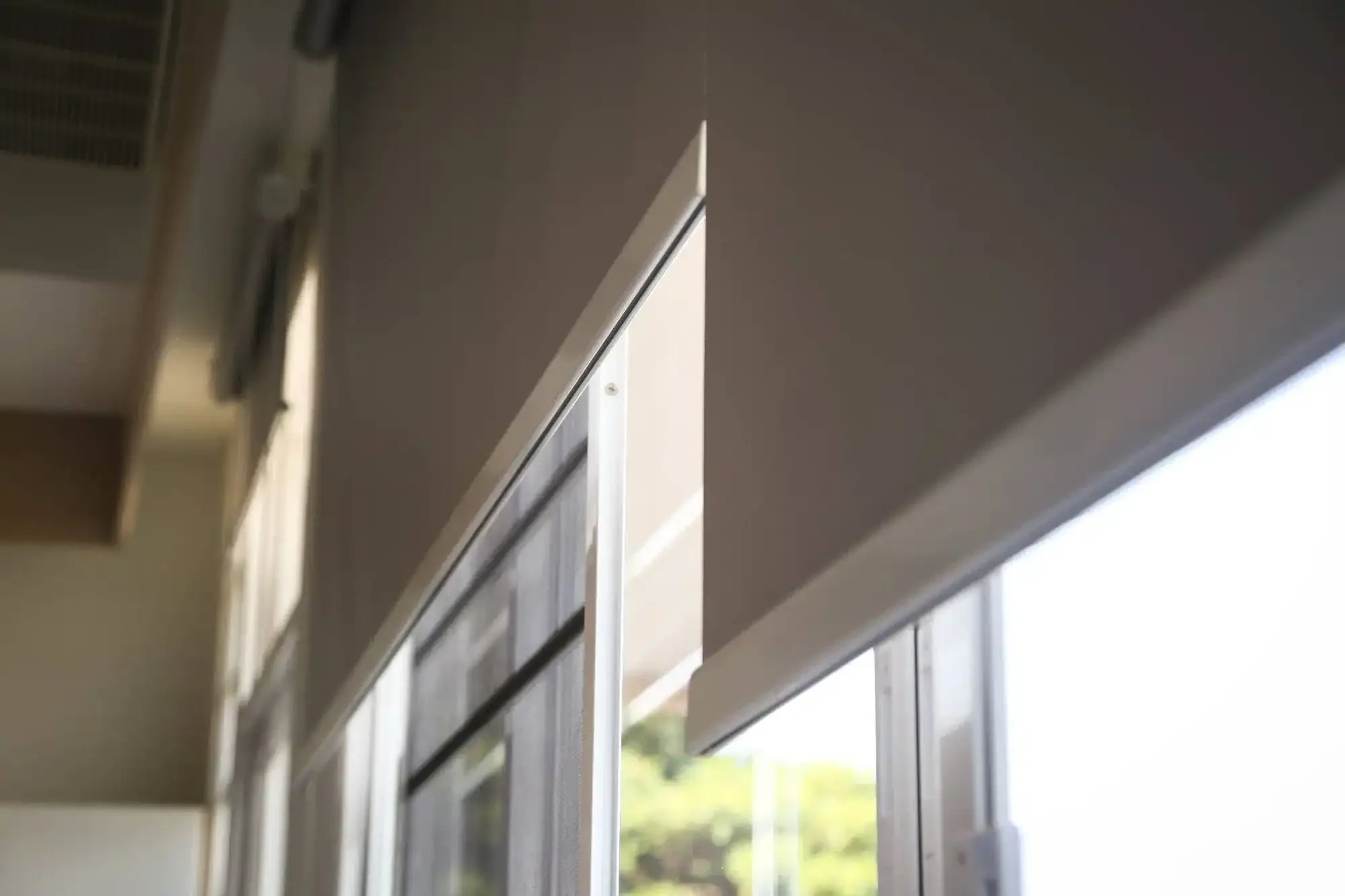
It starts with a free in-home consultation. Sal comes to your Hampstead home, measures every window you want treated, and walks through your fabric and style options with samples in hand. You can see exactly how your chosen blackout blind will look in your actual room, with your actual light, before anything is ordered. If you’re in a newer community like Pecan Grove or WyndWater and your home has non-standard window sizes from the builder, that precision measurement step is especially important — it’s what eliminates the fit problems that make store-bought blinds fail.
Once you’ve chosen your product, your custom blackout blinds are ordered to your exact dimensions. When they arrive, Sal handles the installation — and that installation is free with every custom purchase. Outside-mount installation with the proper overlap on all sides is standard, not an upsell. That’s the method that eliminates the light gap and halo effect that most ready-made blinds can’t avoid.
If your Hampstead neighborhood is governed by an HOA — and most of them are — it’s worth mentioning that during the consultation. Many HOAs have requirements about what window treatments look like from the exterior, typically requiring neutral or white liners visible from the street. Sal is familiar with these requirements and factors them into material selection so your finished installation looks right from both inside and out.

Ready to get started?
Every blackout blind we install in Hampstead is custom-measured and custom-ordered. There are no standard sizes pulled from a warehouse shelf. That matters in a market where homes range from new construction in master-planned communities to older waterfront properties with non-standard windows along Topsail Sound — and where a quarter-inch measurement error creates a visible ring of light around the blind that defeats the entire purpose.
We’re a registered Graber dealer, which means the products come with manufacturer backing and are built to perform in coastal environments. Graber’s blackout and room-darkening fabrics are available in a full range of colors and textures — white, cream, soft gray, and warm coastal tones — so your blackout blind looks like a design choice, not a sleep solution you’re hiding. When it’s raised, the room looks completely normal. When it’s lowered, it performs.
Installation is included at no additional charge with every custom purchase. Sal handles the mounting, the alignment, and the overlap sizing that makes outside-mount blackout installation actually work. For Hampstead homeowners upgrading from builder-grade treatments that came with their 2005 or 2010 build, the difference is immediate and obvious. And for anyone who has been quoted $800 or $900 by a national company for a single window — Sal has quoted the same scope for roughly one-third of that price, with the same or better materials.

The difference comes down to how much light gets through. True blackout blinds block 99% or more of incoming light. Room-darkening shades block somewhere between 95% and 99%. That gap sounds small, but in practice it’s significant — especially in Hampstead, where summer mornings are bright early and coastal sun is intense. For a nursery, a shift worker’s bedroom, or a home theater room, that remaining 1%–5% is enough to disrupt sleep or wash out a screen.
The bigger issue isn’t always the fabric rating — it’s the installation. A blackout-rated fabric installed with a poor fit will still let light in around the edges. That’s the halo effect, and it’s the most common complaint from people who bought blackout blinds and felt like they didn’t work. Outside-mount installation with 2–3 inches of overlap on all sides is what actually seals the window. That’s the standard we use on every Hampstead installation, and it’s the reason custom-installed blinds outperform anything you’d find on a shelf at a big-box store.
This is the most common frustration people bring to a consultation, and the answer is almost always the same: the blind isn’t wide enough for the window. Ready-made blackout blinds are manufactured slightly narrower than their labeled size to allow for easy installation. That creates a gap — sometimes as small as a quarter inch, sometimes closer to a full inch — on each side of the window. In a room with direct coastal sun exposure, that gap is immediately visible and disruptive.
The fix is an outside-mount installation with proper overlap. Instead of mounting the blind inside the window frame where gaps are unavoidable, an outside-mount blind is attached to the wall above and around the window, extending 2–3 inches past the frame on all sides. The blind is custom-ordered to cover that full footprint. For homes in Hampstead with east or south-facing bedrooms — common in communities along the Intracoastal Waterway — this installation method is the only one that delivers true darkness. It’s standard practice for us, and it’s included in the installation at no extra cost.
For most Hampstead homeowners, yes — and the case is stronger here than in a lot of other markets. New construction in communities like WyndWater, Pecan Grove, and Hawthorne at Hampstead often features large windows and open floor plans that let in generous amounts of natural light. That’s a selling point in a listing, but it creates real challenges for sleep, energy efficiency, and daily comfort. Builder-grade blinds — the ones that came with the house — are designed to meet a price point, not a performance standard. They’re typically thin, poorly fitted, and inadequate for the intensity of coastal NC sun.
Upgrading to custom blackout or light-blocking blinds in a newer Hampstead home addresses several problems at once. You get actual darkness when you need it, reduced solar heat gain during the long summer months, and UV protection for flooring and furniture that takes direct sun exposure in open-plan rooms. The investment pays back faster in a climate like Hampstead’s than it would in a milder or cloudier region — and because Sal measures and installs on-site, the fit is right the first time.
Custom blackout blinds vary in price depending on the size of the window, the fabric selected, and the number of windows being treated. For a single standard window, custom blackout roller blinds typically start in the range of $150–$400. Larger windows, motorized options, or premium fabrics will run higher. For a whole-home installation across multiple rooms, most Hampstead homeowners are investing somewhere between $800 and $2,500 depending on the scope.
What’s worth knowing is that installation is included at no additional charge when you purchase a custom product through us. That’s a real cost difference compared to national chains or franchise operators, where installation is often quoted as a separate line item. Sal has documented cases where a national company quoted over $900 for a single skylight shade — and he came in at just over $300 for the same job with comparable materials. The free in-home consultation means you get an exact, on-the-spot quote before committing to anything. There’s no pressure and no obligation.
They do, and the impact is more significant in Hampstead than in most inland markets. The combination of a humid subtropical climate, a July heat index that can reach nearly 99°F, and intense coastal sun means that unprotected windows are actively working against your air conditioning all summer long. Homes with properly installed insulating window treatments can reduce energy costs by up to 25% annually, with the biggest gains coming in the months when solar heat gain through glass is at its peak.
For waterfront homes in communities like Crown Pointe or Sanctuary at Forest Sound, water-reflected sunlight amplifies the problem further — east and south-facing windows that overlook the Intracoastal Waterway or Topsail Sound can receive significantly more solar energy than their orientation alone would suggest. Outside-mount blackout or room-darkening blinds with proper overlap act as a thermal barrier, blocking that radiant heat before it enters the room. The result is a more comfortable home and a lower cooling bill, without sacrificing the ability to open the blinds and enjoy the view when conditions are right.
Yes, and it’s a question worth asking early in the process. Most of Hampstead’s established subdivisions — including gated communities like Delamar and Salters Haven, as well as newer master-planned developments — are governed by HOAs, and many of those HOAs have requirements about how window treatments appear from the exterior. The most common rule is that window coverings must present a neutral or white appearance when viewed from the street. It’s less about what’s on the inside and more about maintaining a consistent look across the neighborhood from the outside.
We account for this during the consultation. Blackout fabrics are available with white or neutral backing liners that satisfy the typical HOA exterior-appearance requirement while still delivering full blackout performance on the interior-facing side. Sal will ask about your HOA during the in-home visit and factor those requirements into the fabric selection. If you’re not sure whether your community has specific rules, it’s worth checking your HOA documents before the consultation — but even if you haven’t, Sal can walk you through the options that work in virtually every Hampstead HOA context.