








Hear from Our Customers

If you’ve tried store-bought blinds and still woke up to a room full of light, the problem wasn’t the brand — it was the fit. Ready-made blinds leave gaps on the sides, sometimes a quarter inch or more, and that’s all it takes to turn a bedroom into a lantern at sunrise. Our custom blackout blinds are measured to your actual window and installed with an outside-mount overlap that seals those edges. You get real darkness — not “mostly dark.”
St. Helena sits inland in Pender County, which means your home doesn’t catch the coastal breeze that cools down properties closer to the water. Afternoon heat builds up fast, especially in west-facing rooms. Our blackout roller blinds and insulating cellular shades do more than block light — they cut down on heat transfer, which means your AC isn’t working as hard. Homes with properly insulated window treatments can reduce energy costs by up to 25% annually, and that investment typically pays for itself in under two years.
For families in the 28425 zip code — whether you’re a shift worker trying to sleep during the day, a parent whose toddler won’t nap in a bright room, or just someone tired of waking up before your alarm — the difference a properly fitted blackout blind makes is immediate. You feel it the first morning.
We’re based in Hampstead and serve homeowners throughout Pender County — including St. Helena and the surrounding Burgaw Township area. Sal brings 50 years of combined design, measurement, and installation experience to every home he visits, and with over 4,000 completed window treatment projects across coastal North Carolina, he’s seen just about every window configuration and every problem that comes with it.
This isn’t a franchise with a territory rep reading from a product catalog. When you book a consultation with us, Sal shows up at your St. Helena home, measures your windows, and gives you a quote on the spot — no callbacks, no waiting on a scheduler. In a small community like St. Helena, where word of mouth still matters more than any advertisement, that kind of personal accountability means something.
We’re also a registered Graber dealer, which means you’re getting a nationally recognized brand with manufacturer warranty support — not a generic product sourced from wherever was cheapest that week.
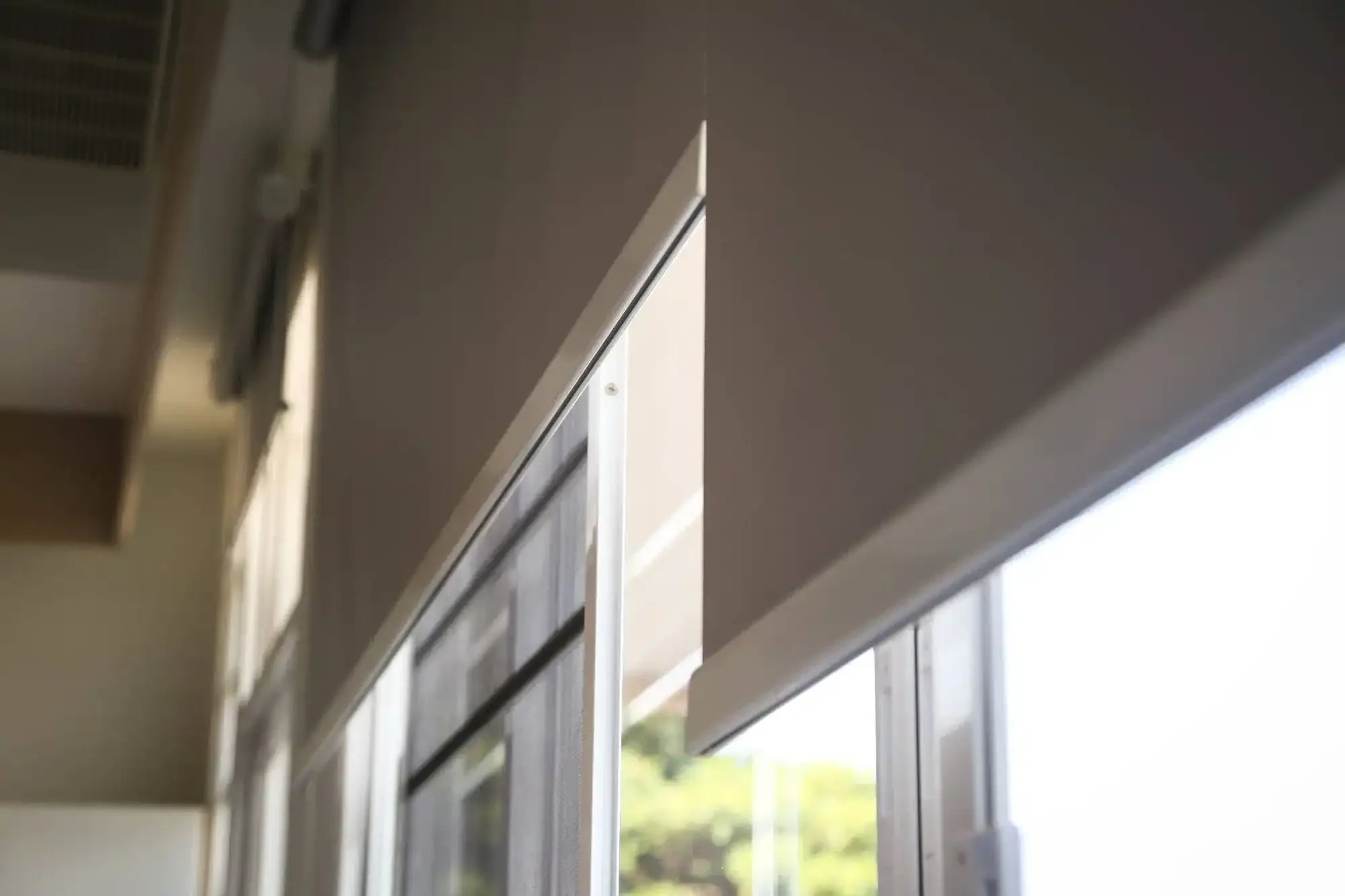
It starts with a free shop-at-home consultation. Sal comes to your St. Helena home with fabric samples and everything needed to measure your windows properly. You don’t drive anywhere, you don’t sit in a showroom, and you don’t wait for a quote to arrive by email three days later. The measurement happens during that first visit, and so does the quote.
Once you’ve selected your blackout blind — whether that’s a blackout roller blind, a light blocking blind with a specific fabric weight, or a cellular shade designed to insulate as well as darken — your order goes in as a custom build. Every blind we create is made to the exact dimensions of your windows, not cut down from a standard size. That precision is what eliminates the light gaps that off-the-shelf products can’t avoid.
Installation is included free with every custom product purchase. Sal handles the mounting, the hardware, and the final check to make sure every blind sits flush and performs the way it should. Pender County’s humidity runs high in summer — regularly 70 to 90 percent — so fabric selection during the consultation also accounts for moisture tolerance, especially in bathrooms or any room with direct sun exposure. You leave the consultation knowing exactly what you’re getting and what it costs.

Ready to get started?
Every job starts with a free in-home consultation and ends with free professional installation — that’s not a limited-time offer, it’s just how we operate. What happens in between is a process built around getting the fit right, because a blackout blind that doesn’t fit isn’t a blackout blind — it’s an expensive room-darkening shade with a gap problem.
During the consultation, Sal measures each window individually and walks you through fabric and product options that match both your light-blocking needs and the specific conditions in your home. For St. Helena homeowners dealing with intense afternoon sun on west-facing walls, or older homes in the Burgaw Township area where window frames aren’t always perfectly square, that individual measurement step matters more than most people realize. Standard sizing assumes your windows are standard. Custom measurement assumes they’re yours.
The blackout window blind options we offer include blackout roller blinds, light blocking blinds in a range of fabric weights and colors, and room darkening blind configurations for spaces where full blackout isn’t necessary but significant light reduction is. All products are sourced through Graber, so you have manufacturer warranty backing on every install. There are no subcontractors, no surprise charges after the fact, and no upsell pressure during the consultation. The quote Sal gives you on the first visit is the number you pay.

Room darkening blinds block roughly 95 to 99 percent of incoming light — enough to reduce glare and make a room feel dimmer, but not enough to create true darkness. If you’ve tried room darkening shades and still noticed a visible glow around the edges or through the fabric, that’s the gap between “darkening” and “blackout.” True blackout blinds use a fabric construction that blocks 99 percent or more of light, and when we install them with an outside-mount overlap that extends two to three inches beyond the window frame on all sides, the light gap problem disappears almost entirely.
In St. Helena and the broader Pender County area, where the sun is above the national average at 215 days per year and summer mornings arrive early and bright, that distinction matters. For shift workers, light-sensitive sleepers, or parents trying to keep a nursery dark during afternoon nap time, room darkening often isn’t enough. If you’ve already tried the store-bought route and been disappointed, the answer isn’t a different brand of the same product — it’s a custom-fitted blackout blind installed to cover the full window opening.
The honest answer is that it depends on the number of windows, the product type, and the fabric you select — but our custom blackout blinds are consistently priced well below what national franchise chains charge for the same product. A verified customer found that a national competitor quoted over $900 for a single skylight shade. Sal quoted just over $300 for the same job using brand-name Graber materials. That’s not an isolated case — it reflects the difference between a local, owner-operated business and a franchise model built around territory fees and corporate overhead.
For a typical St. Helena home, a single custom blackout roller blind might run anywhere from $150 to $400 depending on window size and fabric selection, with the full installation included at no additional charge. Multi-room projects come in at a total cost that most homeowners find significantly lower than they expected, especially compared to what they were quoted elsewhere. The best way to get an accurate number is to schedule the free in-home consultation — Sal measures your windows and gives you a real quote on the spot, so you know exactly what you’re working with before you commit to anything.
Yes — and this is one area where St. Helena homeowners have a real advantage over coastal buyers who sometimes assume ocean proximity takes care of the heat. It doesn’t, not for inland properties. St. Helena sits in the interior of Pender County without the moderating effect of sea breezes, which means west-facing and south-facing rooms can build up significant heat during summer afternoons. Standard window glass does very little to block solar heat gain on its own.
Our blackout roller blinds and insulating cellular shades create a barrier between the glass and the room that reduces heat transfer measurably. Cellular shades in particular trap air in their honeycomb pockets, which acts as an additional insulating layer. The combined effect — blocking radiant heat from direct sun exposure plus reducing conductive heat transfer through the glass — can lower cooling costs by up to 25 percent annually in homes that previously had no window treatment or only lightweight curtains. Given that Pender County averages higher temperatures than both the state and national average, that’s a real number with a real impact on your monthly utility bill.
We come to you. We offer a free shop-at-home consultation service, which means you don’t need to drive to Hampstead or Wilmington to see samples or get a quote. Sal arrives at your St. Helena home with fabric samples, takes precise measurements of every window you want covered, and gives you a quote before he leaves. The whole process — from seeing your options to knowing your price — happens during that first visit.
This matters practically for St. Helena residents who are already commuting to Wilmington for work and don’t want to add another trip to a showroom on top of that. It also means Sal is measuring your actual windows, in your actual home, with your actual lighting conditions — not estimating from dimensions you emailed in. That’s the step that makes the difference between a blind that fits and one that doesn’t. There’s no obligation to purchase after the consultation, and there’s no charge for the visit.
Humidity is a real consideration in Pender County, where summer months regularly push 70 to 90 percent relative humidity. Certain fabrics and materials that perform fine in drier climates will warp, sag, or develop mildew issues in sustained high humidity — particularly in bathrooms, laundry rooms, or any east- or west-facing room that gets direct sun and holds heat. This is one of the reasons that professional guidance on material selection is genuinely useful here, not just a sales pitch.
For high-humidity spaces, we typically recommend moisture-resistant synthetic fabrics or PVC-backed blackout roller blinds that won’t absorb moisture or lose their shape over time. Faux wood blinds with a blackout liner are another option that holds up well in humid conditions while giving a more traditional look. Natural fabric options can work in climate-controlled bedrooms but aren’t the right call for spaces that see real humidity swings. During the in-home consultation, Sal walks through which materials make sense for each room based on its actual conditions — not a one-size recommendation applied to every window in the house.
For a lot of people, the big-box route feels like the logical first step — you grab a set of blinds, you hang them yourself, and you find out a few days later that the light is still getting in around the edges. That’s not a product failure, it’s a fit problem. Ready-made blinds are built to standard dimensions, and standard dimensions don’t account for the small variations in window frame size, shape, and depth that exist in real homes — especially in older properties like many of the established homes in St. Helena and the Burgaw Township area, where window frames aren’t always perfectly square or uniform.
Custom blackout blind installation means your blinds are built to your windows, not to a manufacturer’s guess about what most windows look like. The outside-mount installation method, with overlap extending beyond the frame on all sides, is what actually produces the light-blocking result you’re paying for. Add in the fact that installation is included free with every custom purchase from us, and the price difference between the DIY route and the professional route is often smaller than people expect — especially once you factor in the cost of replacing store-bought blinds that didn’t do the job.
Other Services we provide in St. Helena