







Hear from Our Customers

Most homes in the Northwest area were built around 1998. That means original window treatments — if they haven’t been touched since — are pushing 25 years old. Faded slats, stuck mechanisms, fraying cords, and styles that belong in a different decade. Replacing them isn’t just cosmetic. It’s functional.
New Hanover County summers are no joke. Heat index values regularly climb past 100°F, and your AC runs from May through October. The Department of Energy estimates that roughly 30% of a home’s heating and cooling energy is lost through windows. Quality cellular shades can cut that window heat gain by 40% or more — which means your new blinds aren’t just a home upgrade, they’re working against your utility bill every single summer.
And because Northwest sits in a coastal Carolina climate — not on the water, but still dealing with humidity levels that regularly hit 65–70% in summer — material choice matters more than most people realize. Real wood blinds that look great in a showroom can warp and split in this environment within a few years. Knowing which products actually hold up here, in this specific climate, is the difference between a purchase you’re happy with and one you’re replacing again in three years.
Coastal Window Fashions NC is based in Hampstead — just up the road from Northwest along the coastal Carolina corridor. This isn’t a franchise dispatching someone from a regional hub. When you call, you get Sal. When he shows up, it’s the same person who measured, ordered, and is now installing your blinds.
Sal has completed more than 4,000 window treatment services across coastal North Carolina, holds a 4.9 out of 5 rating on HomeAdvisor, and is a registered Graber dealer — meaning the products we install are manufacturer-backed and warrantied, not generic imports. Fifty years of combined design, measurement, and installation experience backs every single job.
For Northwest homeowners — whether you’re in a quiet cul-de-sac off Gordon Road or in one of the larger homes near Porters Neck — you’re getting someone who already understands what these homes need, not someone learning on your windows.

It starts with a free in-home consultation. Sal comes to you — no showroom trip, no measuring on your own, no hoping the dimensions you pulled off a YouTube tutorial are right. He brings samples for the full product range, so you’re looking at actual materials against your actual walls, in your actual lighting. Not under a fluorescent showroom bulb.
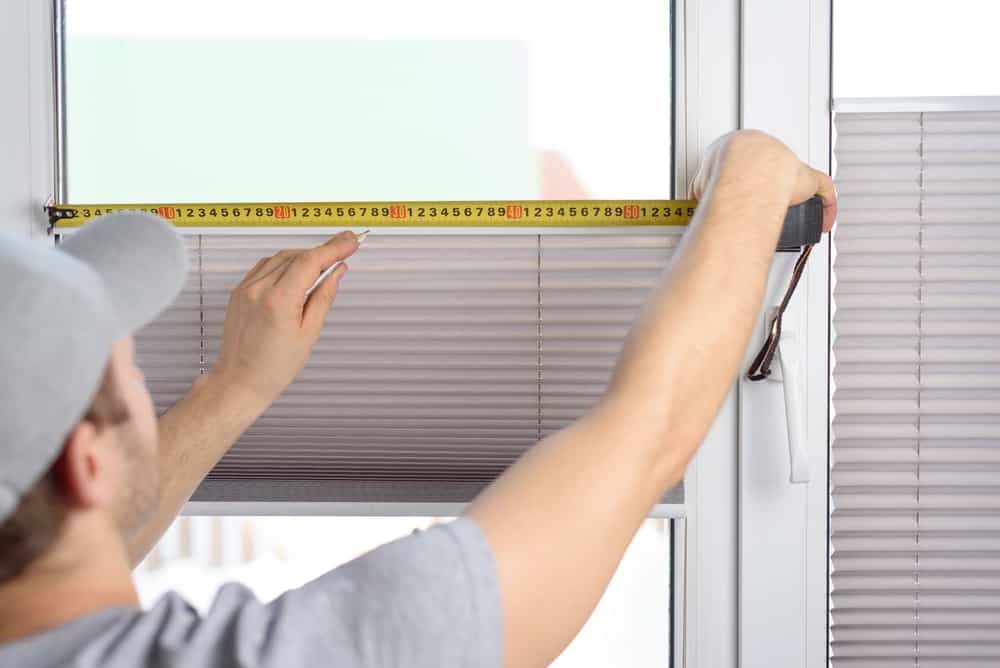
From there, every window gets measured precisely. Custom blinds are made to order, and a measurement error — even a fraction of an inch — means a blind that doesn’t hang right or leaves a gap. Northwest homes, like most established single-family homes in New Hanover County, often have windows that are slightly out of square or non-standard in size. That kind of detail matters, and it’s handled before anything is ever ordered.
Once your order is placed, Sal keeps you updated throughout the process — from production through delivery and installation. No radio silence after the deposit. When the blinds arrive, he comes back to install everything properly. Interior window treatment installation in New Hanover County doesn’t require a building permit, so there’s no waiting on approvals or paperwork. Just a clean, finished result.

Ready to get started?
We carry a full range of custom window blinds and treatments — horizontal blinds, faux wood blinds, wood blinds, vertical blinds, mini blinds, cellular shades, roller shades, Roman shades, woven wood and bamboo shades, plantation shutters, and motorized options. One consultation covers the whole house. You don’t need to schedule multiple appointments or visit multiple providers to outfit a bedroom differently than a living room or a home office.
For Northwest homes specifically, a few product categories come up more than others. Faux wood and moisture-resistant composite blinds are the smart call for rooms that deal with humidity — kitchens, bathrooms, and any space that gets afternoon sun and holds heat. Light-filtering blinds work well in living areas where you want to manage glare without going dark. And for families with young children or pets, cordless and motorized options aren’t just a cleaner look — they meet the new CPSC safety standards that took effect in June 2024, which now require most window coverings to be cordless or have inaccessible cords.
If you’re in one of the larger homes near Porters Neck or Blue Point within the 28411 zip code, plantation shutters and motorized blinds are worth a serious look. These aren’t impulse upgrades — they’re long-term investments that hold up, look right, and add real value to a home in this price range. Sal will walk you through what makes sense for each room without pushing you toward anything you don’t need.

The biggest climate factor in Northwest isn’t rain — it’s humidity and heat. Summer humidity regularly sits at 65–70%, and UV index values hit the “Very High” range from June through August. That combination is hard on certain materials, especially real wood. Wood blinds can warp, crack, and discolor faster in this environment than most homeowners expect, particularly in rooms with direct afternoon sun exposure.
Faux wood blinds and moisture-resistant composite options hold up significantly better in New Hanover County’s conditions. For light control and energy efficiency, cellular shades are one of the most practical choices — they create an insulating pocket of air at the window that reduces heat gain in summer and heat loss in winter. If you want something more open and natural-looking, woven wood and bamboo shades work well in rooms that don’t face direct afternoon sun. During your consultation, we assess each room individually and recommend products based on the actual exposure and conditions — not just what looks good in a catalog.
The honest answer is that it depends on the number of windows, the product type, and the size of each opening — but you won’t be left guessing. We provide a clear, itemized quote after measuring your windows, so you know exactly what you’re getting and what it costs before anything is ordered.
What’s worth knowing is that custom blinds from a local provider are often more competitively priced than people expect. One customer in the coastal NC area was quoted over $900 by a national out-of-state company for a single skylight shade. We installed the same job for just over $300. National franchise operators carry overhead — franchise fees, regional management layers, sales commissions — that gets passed on to you. A local, owner-operated business doesn’t carry that structure, and the pricing reflects it. For a typical Northwest home with multiple bedrooms and common areas, the in-home consultation is the best way to get a real number without any pressure attached.
No. Interior window treatment installation — blinds, shades, shutters — does not require a building permit in New Hanover County. Northwest is an unincorporated community governed at the county level, and the county’s Unified Development Ordinance doesn’t apply permit requirements to interior home improvement work of this kind. You can schedule your consultation, place your order, and have your blinds installed without any permit process or approval delays.
The one thing worth checking if you live in an HOA-governed community — like portions of the Porters Neck area within the 28411 zip code — is whether your community’s covenants have any guidelines about window treatment colors or styles that are visible from the street. Most HOA rules in this area are minimal on this front, but it’s a quick check worth doing before you finalize a choice that faces the exterior. We’re familiar with this area and can flag it if it’s relevant to your specific address.
The in-home consultation itself typically takes under an hour, even for a full house. Sal measures every window, walks through product options with you, and gives you a quote before he leaves. There’s no pressure to decide on the spot — but most customers are ready to move forward by the end of the visit because they’ve already seen the samples in their actual space.
After the order is placed, production and delivery timelines vary by product, but we keep you updated throughout — which is something customers specifically call out in reviews. Once the blinds arrive, installation is scheduled and completed in a single visit for most homes. For a typical Northwest home with three or more bedrooms plus common areas, the full installation usually takes a few hours. There’s no mess left behind, no return trips needed, and no adjustments to figure out on your own — everything is set up and functioning correctly before we leave.
The core difference is fit and durability. Big-box blinds come in standard sizes, which means they’re cut to approximate your window — not made for it. On a window that’s slightly out of square or non-standard in size (which is common in homes built in the late 1990s, like most of the housing stock in the Northwest area), a standard-size blind will either leave a visible gap, not operate smoothly, or simply look off. Custom blinds are manufactured to the exact measurements of your specific window, so they hang correctly and function the way they’re supposed to.
Beyond fit, the product quality is different. As a registered Graber dealer, we provide access to manufacturer-warrantied products from a nationally recognized brand — not the kind of blinds that fade out or break within a year of installation. The materials are engineered for longevity, and in a climate like New Hanover County’s, where UV exposure and humidity are constant factors, that difference in quality shows up quickly. A cheap blind that costs less upfront often costs more when you’re replacing it two years later.
Yes — and as of June 2024, it’s not just a preference. New federal CPSC safety standards now require most window coverings sold in the U.S. to be cordless or have inaccessible cords. If you’re replacing older blinds in a Northwest home where children or pets are part of the picture, going cordless isn’t an upgrade — it’s the current standard.
Beyond safety, cordless and motorized blinds are genuinely more convenient for everyday use. No tangled cords, no loops to manage, no hardware that snags. Motorized options — including smart home-compatible systems — let you adjust every window in a room from your phone or a remote, which is particularly useful in rooms with hard-to-reach windows or in a home where you’re managing light across multiple exposures throughout the day. For a busy household in a community like Northwest, where most residents are commuting to Wilmington and managing full schedules, that kind of low-friction daily operation adds up. We carry a full range of cordless and motorized options across multiple product categories and can walk you through what fits your home and your budget.
Other Services we provide in Northwest