






Hear from Our Customers

If you own a home on Holden Beach — whether it’s your full-time place, a second home, or a rental you manage from a few hours away — you already know what the sun does to this island. Homes along Ocean Boulevard face direct southern exposure from sunup to sundown. That kind of sustained UV doesn’t just heat up your living room. It fades furniture, bleaches flooring, and degrades anything inside that isn’t protected. The right custom window shade blocks the UV without killing the view you paid for.
The humidity here runs between 74 and 81 percent month over month. Salt air is constant. That combination is hard on anything that wasn’t built for it — and that includes cheap window treatments that look fine in a showroom but start failing within a season on a barrier island. We select custom shades built for coastal conditions and install them correctly the first time, so they last significantly longer and perform better from day one.
For vacation rental owners, this is also a straightforward investment in your property’s income potential. Furniture and flooring that stay in good condition show better in listing photos, hold up through high-turnover guest use, and don’t require costly replacement every few years. A well-shaded, well-lit rental space photographs better, books more consistently, and gets better reviews.
Coastal Window Fashions NC is owned and operated by Sal, who personally handles every consultation, every measurement, and every installation. There are no subcontractors. No crews you’ve never met showing up at your property. When you schedule a job, Sal is the one who shows up — and that’s been true for every single customer across every review platform, from HomeAdvisor to Angi to Google.
That matters in a place like Holden Beach, where most homeowners aren’t on the island year-round and a lot of property decisions get made remotely. You need to know the person you’re trusting with your home is actually accountable. We’ve built our reputation in Holden Beach one job at a time, and we stand behind every installation we complete.
As an authorized Graber dealer, the products we bring to your home are professional-grade and backed by manufacturer warranties. Not off-the-shelf. Not ordered online and hoped for the best.

It starts with a phone call that Sal actually answers. From there, an in-home consultation gets scheduled at your convenience — whether you’re on the island or coordinating from out of town. During the visit, we measure every window, walk through your options, and give you a quote on the spot. No waiting a week for an emailed estimate. No follow-up calls to chase down a number. You leave the consultation knowing exactly what you’re getting and what it costs.
Once you move forward, custom shades are typically ordered and ready for installation within about ten days. For Holden Beach property owners working around a rental calendar — trying to get a property updated before a specific booking window or before peak season photography — that turnaround matters. The installation itself usually wraps up in under an hour, which means minimal disruption whether you’re on-site or having a neighbor check in.
One thing worth noting for oceanfront properties: if you’re looking at blackout shades for south-facing rooms during turtle season (May through October), that’s a conversation worth having during the consultation. Holden Beach’s turtle sanctuary designation means nighttime light management is a real consideration for oceanfront homeowners, and the right shade selection makes that easy to handle without compromising how your home functions day-to-day.

Ready to get started?
Holden Beach homes aren’t all the same. Oceanfront properties on Ocean Boulevard deal with full southern exposure and need strong UV protection without losing the view. Canal homes on the Intracoastal Waterway side face different light angles and often prioritize privacy alongside glare control. Elevated stilt construction — standard throughout the island due to coastal flood requirements — frequently means high ceilings, hard-to-reach windows, and large glass panels that are impractical to manage with a standard pull cord. Every one of these situations calls for a different approach.
The full range of custom window shade options we offer includes solar shades, light filtering shades, blackout shades, cellular shades, roller shades, Roman shades, and woven wood. Motorized options are available for windows that are difficult to reach manually — a practical choice for the clerestory windows and oversized glass panels common in Holden Beach’s larger vacation rental homes. Cordless options are also available, which tend to hold up better in high-traffic rental environments where cords take more wear.
Every product we select is part of our authorized Graber dealer relationship, which means the materials and hardware are rated for the conditions your Holden Beach home actually experiences — sustained humidity, salt air exposure, and direct coastal UV — not just standard residential use. The difference shows up over time, and in a rental property that needs to look and function well season after season, that durability is what makes the investment worth it.

Yes, and it’s one of the more practical reasons oceanfront homeowners on Holden Beach invest in blackout shades. From May 1 through October 31, Holden Beach enforces lighting restrictions tied to its Turtle Sanctuary designation and the Holden Beach Turtle Watch Program. The goal is to prevent artificial light from reaching the beach at night, which can disorient nesting loggerhead sea turtles and their hatchlings. For homes with south-facing windows — which describes most of the oceanfront properties along Ocean Boulevard — interior lighting that escapes through windows at night is a real concern during the entire rental season.
Blackout shades on oceanfront-facing windows give you a simple, functional solution. When they’re closed at night, interior light stays interior. You’re not sitting in the dark, you’re not constantly managing curtains, and you’re not worrying about whether your property is in compliance during a season when your home is likely rented out to guests who may not know the local rules. It’s a practical fix that also happens to improve sleep quality and reduce morning glare — which guests tend to notice and appreciate in reviews.
The short answer is: products that were specifically selected for coastal conditions, not just whatever looks good in a showroom. Salt air is corrosive to metal components over time, and sustained humidity — Holden Beach averages between 74 and 81 percent relative humidity month over month — accelerates the degradation of fabrics, cords, and mechanisms that aren’t rated for that environment. A shade that performs fine in an inland home can start showing wear within a single season on a barrier island.
The materials and hardware that hold up best in this environment are those selected by someone who understands what coastal exposure actually does to a product over time. As an authorized Graber dealer, we work with professional-grade products built with coastal durability in mind — not off-the-shelf options that weren’t designed for this climate. The specific recommendation for your home will depend on which windows you’re covering, how much direct sun exposure they get, and whether the space is a primary residence or a vacation rental with high guest turnover. That conversation happens during the in-home consultation, where Sal can look at your actual windows and give you a straight answer.
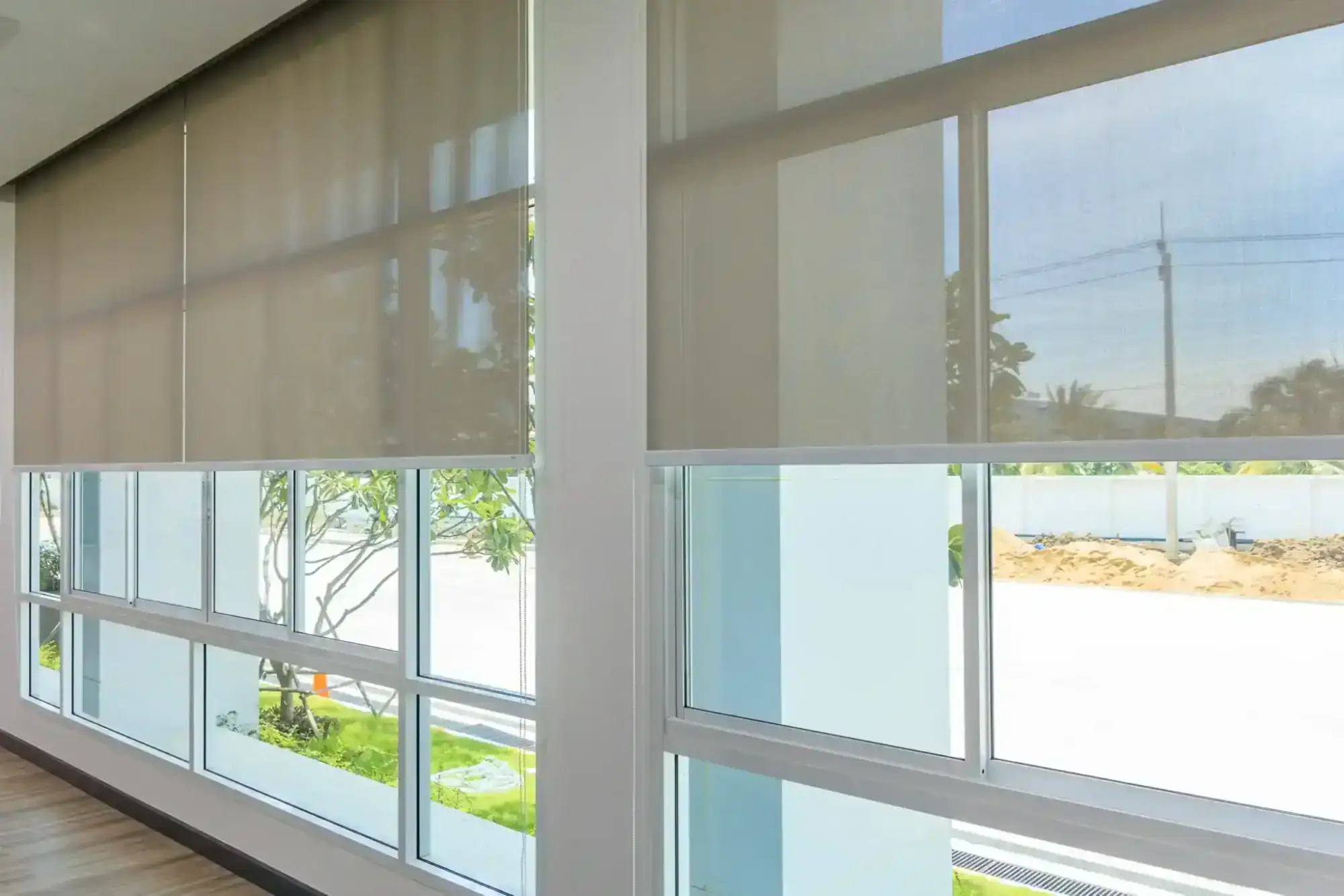
Solar shades are designed to filter light and block UV rays while keeping your view largely intact — which makes them a strong choice for the south-facing windows that define most oceanfront homes on Holden Beach. Because the island faces directly south onto the Atlantic, those windows receive full-day direct sun exposure during summer months. Without any treatment, that sun drives up interior temperatures significantly and accelerates fading of furniture, flooring, and upholstery.
A solar shade works by using an open-weave fabric that reduces glare and blocks a substantial portion of UV radiation — often up to 99 percent when closed — while still allowing natural light in and preserving your sightlines to the water. The openness factor of the fabric (typically ranging from 1 percent to 14 percent) determines how much light and visibility passes through. A tighter weave means more UV and heat control; a more open weave means more visibility. For vacation rental properties, solar shades are also a practical choice because they protect the interior finishes that affect how your home photographs and how guests experience the space — without making rooms feel dark or closed off during the day.
Yes, and it’s actually one of the more common situations for Holden Beach property owners. A significant portion of homes on the island are owned by people who live in Charlotte, Raleigh, or elsewhere in the state and manage their properties remotely. Coordinating home improvements from a distance requires a contractor you can trust to show up, do the work correctly, and not require you to be there to supervise or follow up.
The process works straightforwardly: the initial consultation can be coordinated around your schedule, whether you’re on the island or not. Sal handles the measurement, the product selection conversation, and the quote during a single visit — so there’s no back-and-forth over multiple appointments. Once the order is placed and the shades arrive (typically within about ten days), installation is scheduled and completed in a single visit that usually takes less than an hour. If you have a property manager, neighbor, or rental management company contact on the island who can provide access, that’s typically all that’s needed. Holden Beach Vacations, Hobbs Realty, and other local rental management companies are familiar with coordinating home service access for absentee owners, and the process is routine.
Custom window shades installed with professional-grade materials in a coastal environment typically last ten to fifteen years with basic care — compared to three to five years for off-the-shelf alternatives that weren’t designed for sustained UV exposure, high humidity, or salt air. The gap in lifespan is largely a function of material quality and how well the product was matched to the actual conditions it’s living in.
For Holden Beach specifically, the conditions that shorten the life of inferior products are the same ones that are present every single day: ambient humidity that rarely drops below 67 percent even in the driest months, salt air from the Atlantic, and intense direct southern sun that beats on oceanfront and near-oceanfront windows from morning to evening during peak season. Products that aren’t rated for those conditions start showing it within a season or two — fading, warping, corroding hardware, cords that stick or break. Custom shades we select and install correctly from the start don’t have those problems. For vacation rental owners especially, the longer lifespan means fewer replacement cycles, less disruption to your rental calendar, and a property that continues to look sharp in listing photos year after year.
Light filtering shades allow natural light to pass through while softening glare and providing daytime privacy — you get a bright, comfortable room without the harsh direct sun that south-facing Holden Beach windows can produce during peak hours. They’re a popular choice for main living areas and common spaces where you want the room to feel open and connected to the outdoors without the heat and glare that comes with bare glass.
Blackout shades, on the other hand, block nearly all incoming light when closed — which makes them the right choice for bedrooms, napping areas, or any space where sleep quality or complete darkness matters. For oceanfront properties on Holden Beach, blackout shades on south and east-facing bedroom windows make a meaningful difference for guests who want to sleep past sunrise — which, on a barrier island facing the Atlantic, comes early and comes bright. They’re also the practical solution for turtle season compliance on oceanfront-facing windows, since they prevent interior light from reaching the beach at night during the May through October nesting period. Many Holden Beach homeowners end up using a combination of both — light filtering in the main living spaces, blackout in the bedrooms — and that’s a conversation Sal can walk you through during the in-home consultation based on how your specific home is oriented and how it’s used.
Other Services we provide in Holden Beach