







Hear from Our Customers

Living along the Intracoastal Waterway means your windows take a beating that most homeowners never think about until the damage is done. Sunlight reflecting off the water hits your floors, furniture, and finishes from angles that standard UV estimates don’t account for — and it adds up fast. The right roller shade fabric blocks up to 99% of UV rays and reduces solar heat gain by as much as 60%, which means your hardwood floors stay intact, your upholstery doesn’t fade, and your cooling system isn’t running at full capacity all summer long.
For homes in Porters Neck Plantation and the communities overlooking the golf course, glare is its own problem. Those wide, south- and west-facing windows that make the rooms feel open are the same ones that make it impossible to watch television or have a conversation in the afternoon without squinting. Light filtering roller shades cut the glare without pulling the shade all the way down — you keep the view, you just stop fighting the light.
The humidity along this stretch of New Hanover County is real, and it matters when you’re choosing window treatments. Roller shades with moisture-resistant fabrics and corrosion-resistant hardware are built for this environment. They hold up through the heat, the salt air off the waterway, and the kind of coastal summers that shorten the lifespan of anything that wasn’t designed for it.
We’ve been serving the Highway 17 corridor since 2017 — which means we’re not a Wilmington-based operation treating Porters Neck as an afterthought. Our showroom is in Hampstead, directly on the Market Street route you already travel north toward Surf City. We know this stretch of coastal NC because we work in it every day.
When you schedule a consultation, Sal comes to your home in Porters Neck — whether that’s inside Porters Neck Plantation, over in Wild Dunes, or along the waterway in one of the surrounding communities. He brings a full library of fabric samples, evaluates your windows in your actual light, and gives you pricing on the spot. No waiting on a quote, no pressure, no guesswork.
Customers consistently mention the same things in their reviews: the patience, the fabric knowledge, the fact that pricing is transparent from the first conversation, and the turnaround — custom orders installed within three weeks of the consultation. That’s the standard we hold ourselves to for every home we work in.

It starts with a free in-home consultation. Sal comes to your Porters Neck home with fabric samples — not a catalog, actual samples — and walks through your windows with you. That matters here more than most places, because the light in a waterfront or golf course-facing room behaves differently than what you’d see in a showroom. You need to hold the fabric in your actual space, in your actual light, before making any decision on opacity or color.
From there, you choose your fabric, your opacity level, and whether you want manual or motorized operation. For homes in Porters Neck with tall ceilings, transoms, or windows that are difficult to reach, motorized roller shades are worth the conversation — one remote or app controls every shade in the room simultaneously, regardless of how high or awkward the window is. We’ll tell you honestly which rooms benefit most and which ones don’t need it.
Once your selections are confirmed, your shades are custom-fabricated to the exact dimensions of your windows. No standard sizing, no light gaps, no crooked drop. Installation is included in every custom purchase — there’s no separate labor charge. Most Porters Neck customers go from consultation to installed shades in about three weeks, which is faster than most people expect for fully custom work.

Ready to get started?
Blackout roller shades are the right call for bedrooms that face east toward the Intracoastal Waterway. The view is beautiful at dusk, but that same exposure means sunrise comes early and bright — and a properly installed blackout roller shade with full edge coverage keeps the room dark until you decide otherwise. These are particularly popular in Porters Neck homes where the master bedroom faces the water or the open sky over the marsh.
Light filtering roller shades work well in living spaces, dining rooms, and offices where you want to soften the light without losing it entirely. For golf course-facing rooms in Porters Neck Plantation, a light filtering fabric cuts afternoon glare while keeping the fairway visible — which is usually the whole point of having that window in the first place.
Solar roller shades are the most technically specific option and the one that requires the most conversation. The openness percentage — ranging from 1% to 14% — determines how much of the outside you see versus how much UV and heat you block. A 3% openness fabric on a south-facing waterway window gives you strong UV protection and significant heat reduction while still allowing a softened view. A 10% fabric on a shaded north-facing room gives you glare control without making the space feel closed off. Getting that number right for your specific window orientation is exactly what the in-home consultation is designed to figure out.
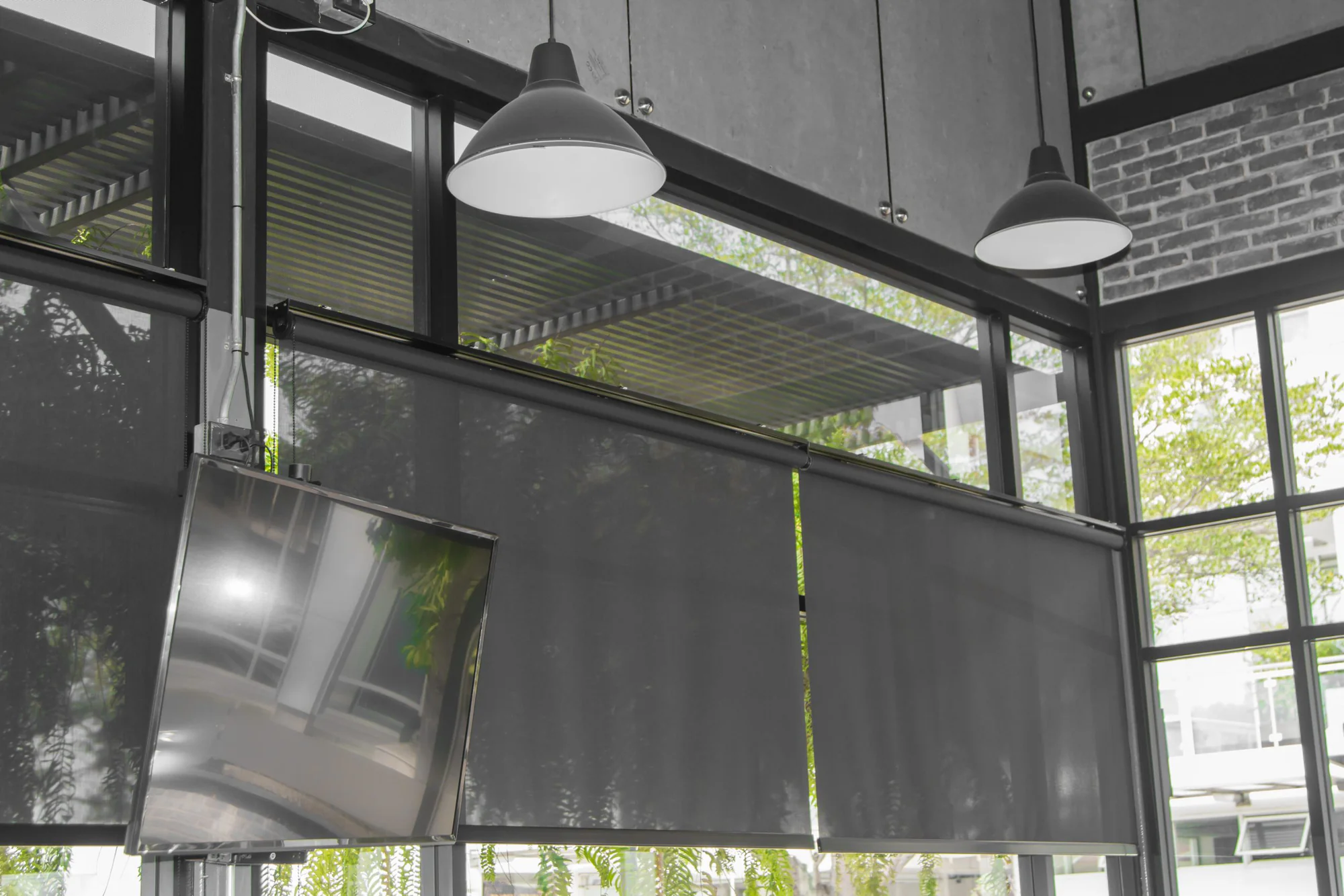
Motorized roller shades are available across all fabric types and are especially practical for the architectural windows common throughout Porters Neck — tall windows, transoms, and large glass walls that are simply not manageable with a manual cord. Every shade is custom-measured, custom-fabricated, and professionally installed. No building permit is required for interior roller shade installation under New Hanover County guidelines, so there’s nothing on the administrative side to slow things down.

For homes along the Intracoastal Waterway or with direct water views in Porters Neck, solar roller shades with a lower openness percentage — typically 1% to 5% — offer the strongest UV protection and heat reduction while still allowing a softened view of the water. The reason this matters specifically in Porters Neck is that reflected sunlight off the ICW amplifies UV intensity beyond what standard window orientation calculations account for. You’re not just dealing with direct sunlight — you’re dealing with light bouncing off the water at angles that hit your floors and furniture from below the normal shade line.
Beyond the solar fabric itself, the hardware matters just as much in a coastal environment. Moisture-resistant fabrics and corrosion-resistant brackets hold up to the humidity and salt air that come with waterfront living in New Hanover County. Standard hardware can corrode or warp within a few seasons in this environment. Choosing the right material from the start is significantly cheaper than replacing shades that weren’t built for where you live.
The honest answer is that most homes need both, just in different rooms. Blackout roller shades belong in bedrooms — specifically any bedroom that faces east or has significant morning light exposure. In Porters Neck, east-facing bedrooms toward the Intracoastal Waterway get early, intense morning sun, and a properly installed blackout shade with full edge coverage is the only window treatment that genuinely keeps the room dark. If you’ve tried standard curtains or blinds and still wake up with light in the room, the issue is usually light gaps at the edges — something a correctly mounted blackout roller shade eliminates.
Light filtering roller shades are the better choice for living rooms, kitchens, offices, and any room where you want to manage glare without blocking daylight entirely. They soften the light coming through the window, reduce eye strain from afternoon sun, and maintain privacy during the day without making the room feel closed off. For rooms that overlook the golf course in Porters Neck Plantation, a light filtering fabric is usually the right balance — you keep the view, you just stop squinting at it.
For most Porters Neck homes, yes — and the reason is architectural. Homes throughout Porters Neck Plantation, Wild Dunes, and the surrounding communities frequently feature soaring ceilings, transom windows, and large glass walls designed to bring the landscape indoors. Those windows are stunning, but they’re often impossible to operate manually without a ladder or a reaching pole, and manual cords on tall windows are awkward at best and a safety concern in homes with grandchildren visiting.
Motorized roller shades solve that problem cleanly. A single remote, a smartphone app, or a voice command raises or lowers every shade in the room simultaneously — no cords, no effort, no ladder. They’re also a practical upgrade for the demographic that defines Porters Neck: homeowners in their 50s and 60s who want their home to function as effortlessly as it looks. The added cost over manual shades is real, but for windows that are difficult to reach or rooms where you’re adjusting shades multiple times a day, the convenience pays for itself quickly in daily quality of life.
Custom roller shade pricing depends on fabric type, window size, the number of windows, and whether you’re adding motorization. For a standard manual roller shade in a light filtering or solar fabric, you’re generally looking at $150 to $400 per window for custom-fabricated and professionally installed work. Blackout roller shades fall in a similar range depending on fabric and mount type. Motorized roller shades add to that cost — typically $300 to $600 per window depending on the motor system and whether you’re integrating with a smart home platform.
For a full home in Porters Neck — where homes regularly have 15 to 25 windows and often include oversized or architectural windows that require larger fabric panels — the total investment can range from $2,500 to $8,000 or more depending on the scope. That’s a wide range, which is exactly why the in-home consultation exists. Sal gives you pricing on the spot during the visit, so you’re not waiting on a quote and you’re not surprised by numbers later. The consultation is free, and professional installation is included in every custom purchase — there’s no separate labor charge added at the end.
From the initial consultation to completed installation, most Porters Neck customers are looking at approximately three weeks. That timeline covers the in-home consultation, the custom fabrication of your shades to your exact window dimensions, and the installation appointment. It’s faster than most people expect for fully custom work, and it’s a timeline that our Porters Neck customers have consistently reported in their reviews.
The three-week window assumes standard fabric selections from the available library. If you’re requesting a specialty fabric or a more complex motorized system with smart home integration, it’s worth asking during the consultation whether that affects the timeline. The best time to get the process started in Porters Neck is late winter or early spring — before the coastal NC summer heat peaks and before the wave of new residents moving into the area in spring creates longer scheduling windows. If you’re moving into a new home in Porters Neck Plantation or one of the surrounding communities, getting the consultation scheduled early means your shades are in place before you’re fully settled, not after.
For interior roller shades, HOA guidelines in most Porters Neck communities — including Porters Neck Plantation and Wild Dunes — don’t typically restrict your choices. Interior window treatments are generally outside the scope of HOA architectural review, which tends to focus on exterior modifications. That said, some HOA agreements do address the exterior appearance of window treatments visible through glass, particularly fabric color or liner color as seen from the street or common areas.
The practical step is to check your specific HOA’s architectural standards before finalizing your fabric selection, particularly if your home faces a common area, the golf course, or a shared waterway view. This is something worth mentioning during your consultation — we’ve worked in gated communities throughout the Porters Neck area and are familiar with the kinds of questions that come up in these neighborhoods. In most cases, the liner color on the exterior-facing side of a roller shade is the only variable that ever comes into play, and there are neutral options that satisfy virtually any HOA standard without limiting your interior fabric choices.
Other Services we provide in Porters Neck