







Hear from Our Customers

That west-facing living room in your new build that turns into a furnace by 3pm? That’s not a design flaw — it’s a window treatment problem. Solar roller shades block up to 60% of heat gain and 99% of UV rays, which means your floors stop fading, your AC runs less, and the room actually becomes usable in the afternoon. For homeowners in Parsons Mill Farms or River Bluffs who’ve invested serious money into their interiors, that protection matters more than most people realize until something fades.
If you’re along the Northeast Cape Fear River corridor, the challenge is a little different. You didn’t buy a River Bluffs home to stare at a shade — you bought it for the view. Light-filtering roller shades let you keep that connection to the water and the tree line while cutting the glare that makes you squint at your own windows. It’s not about blocking the outside. It’s about controlling how it comes in.
And for bedrooms, especially in a community as quiet and wooded as Skippers Corner, early morning light hits harder than people expect. Blackout roller shades in the right rooms mean your kids actually sleep in, and you stop waking up at sunrise whether you wanted to or not.
We’ve been serving New Hanover County since 2017 — not from a showroom you have to drive to, but from your living room, your bedroom, your kitchen. The shop-at-home model exists because choosing a fabric under showroom lighting and choosing it against your actual walls are two completely different experiences. One of them leads to regret. The other doesn’t.
When we visit your home in Skippers Corner — whether that’s a newer build off Castle Hayne Road or a Craftsman home in Parsons Mill Farms — you see every sample in your real light, against your real finishes. You get your complete price before we leave. No follow-up emails, no waiting three days for a quote that doesn’t fit your budget.
Installation is included at no additional charge on every custom purchase. That’s not a limited-time offer. That’s just how we work.

It starts with a phone call or a quick online booking. You pick a time, and we come to your home in Skippers Corner with a full library of fabric samples. The whole thing runs like a real conversation — not a sales pitch. We’ll look at your window orientations, your light conditions, your room finishes, and what you’re actually trying to solve. Heat? Glare? Privacy? Sleep? Usually it’s a combination, and different rooms need different answers.
From there, you’ll see exactly which fabrics work for each space. For newer construction homes with high ceilings or hard-to-reach windows — common in developments like Sidbury Station and River Bluffs — motorized roller shades come up naturally, because manually operating a shade twelve feet off the ground isn’t a real solution. We’ll walk you through those options without making it feel like an upsell.
Once you decide, your shades are custom-made to your exact window dimensions and installed by our professional team. New Hanover County’s humidity is real, and the fabrics we recommend are chosen for that environment — not for a dry climate where moisture isn’t a factor. Most customers are looking at a three-week window from order to installation, and the whole process from first call to finished install typically requires nothing more than two visits.

Ready to get started?
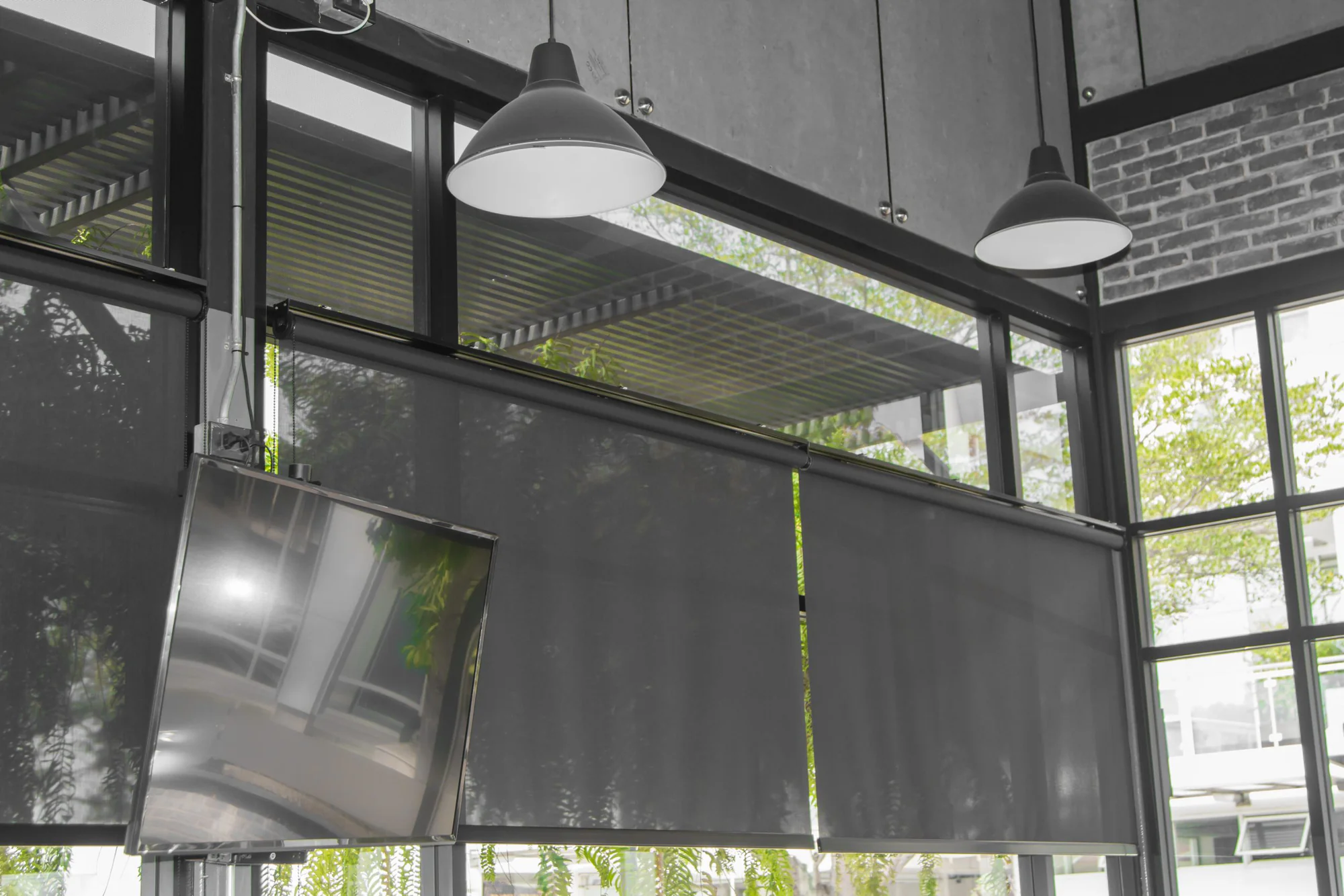
Roller shades aren’t one product — they’re a category, and the right choice depends entirely on the room, the window, and what you need it to do. Solar shades are the most common starting point for Skippers Corner’s newer open-plan homes, where large south- and west-facing windows create real heat and glare problems during summer. A 3%–5% openness solar fabric gives you UV protection and glare control without turning your river view into a wall. Go tighter and you get more privacy and heat reduction. Go more open and you preserve more of the view — our consultant will help you find that balance based on your specific window orientation.
Blackout roller shades are the right call for bedrooms, especially in homes with east-facing windows that catch early morning light along the Northeast Cape Fear River corridor. The key detail most people miss is the mount type — an inside mount blackout shade that isn’t installed correctly will still let light in around the edges, which defeats the whole purpose. Professional installation handles that.
Motorized roller shades integrate with most smart home systems and are particularly practical in the newer builds throughout Skippers Corner, where high ceilings and architectural window banks make manual operation genuinely inconvenient. Cordless options are available across all fabric types and are the standard recommendation for any home with young children or pets. Every custom roller shade purchase includes professional installation — no subcontractors, no surprise fees, no second invoice.

New Hanover County humidity regularly sits above 70%, and that’s not a coastal exaggeration — it’s a year-round reality that affects how window treatment materials perform over time. Fabrics that aren’t rated for high-moisture environments can warp, discolor, or develop mildew over time, especially in rooms with poor air circulation or windows that stay open during the warmer months.
For Skippers Corner homes, we recommend a UV-stable, moisture-resistant solar or light-filtering fabric — the kind designed for coastal and near-coastal climates rather than dry interior markets. During your in-home consultation, we’ll ask about the specific rooms, how they’re used, and whether any windows face the Northeast Cape Fear River or get consistent morning moisture. The fabric choice follows from that conversation, not from a generic product catalog.
This is one of the most common questions from homeowners along the river corridor in Skippers Corner, and the answer is solar roller shades with a low openness percentage — typically 3% to 5%. At that range, the fabric cuts the harsh afternoon glare and blocks the majority of UV heat gain, but it doesn’t eliminate your view. You can still see the river, the tree line, and the natural setting that made the property worth buying in the first place.
The difference between a 3% and a 10% openness fabric is visible and meaningful — more openness means more view, but also more heat and less privacy from the outside looking in. During your in-home visit, we’ll bring samples of both so you can hold them up to your actual windows and see the difference before you commit. That’s the only reliable way to make this decision, and it’s exactly why we operate on a shop-at-home model.
For most of the newer builds in Skippers Corner — particularly in River Bluffs and Sidbury Station, where open floor plans, high ceilings, and large window banks are standard — motorized roller shades are worth serious consideration. Manually operating a shade on a window that’s ten or twelve feet off the ground isn’t practical, and a cord loop that hangs down from a high window creates both a safety issue and an aesthetic problem in an otherwise clean interior.
Motorized shades connect to most smart home systems and can be scheduled to lower automatically during peak afternoon heat, which is a real energy benefit during North Carolina summers. The upfront cost is higher than manual options, but the convenience factor in a home designed around open, light-filled spaces is hard to overstate. We can show you the motorized options during the in-home visit and give you exact pricing on the spot so you can decide whether it fits your budget without any pressure.
Light-filtering roller shades soften and diffuse incoming light — they reduce glare and give you privacy without making the room feel dark during the day. They’re a good fit for living areas, kitchens, and home offices where you want natural light but not direct sun. For bedrooms, they typically aren’t enough if your goal is actual sleep quality, especially in east-facing rooms that catch early morning light.
Blackout roller shades block light completely when properly installed. The word “properly” matters here — the shade itself can be a true blackout fabric, but if it’s mounted incorrectly or the wrong size for the window frame, you’ll still get light gaps around the edges that wake you up at 6am. Professional installation accounts for this: the mount type, the bracket depth, and the deduction from the window frame dimensions are all part of getting a blackout shade to actually perform as advertised. For families with young children in Skippers Corner, this is usually the first question worth getting right.
Most customers are looking at roughly three weeks from the time they place their order to the day installation is complete. The in-home consultation itself typically takes an hour or less, depending on how many rooms and windows you’re covering. If you’re outfitting a new construction home in Parsons Mill Farms or Sidbury Station where every window is bare, the consultation will naturally take a bit longer — but that’s the point. One visit, the whole house, a complete plan and a complete price before we leave.
After the order is placed, your shades are custom-made to your exact measurements. Once they’re ready, installation is scheduled at a time that works for you. There’s no subcontracting involved — the same team that handled your consultation handles the install. For homeowners on a move-in timeline, it helps to book the consultation early in the process so the shades are ready when you are.
Yes, and it’s not a close call. Corded window treatments are a documented safety hazard in homes with young children, and most professional installers will steer you toward cordless or motorized options as the default in any room where kids or pets spend time. We follow the same approach — the recommendation during your consultation will factor in who’s in the house and how the rooms are used, not just what looks good in the catalog.
For pets, the durability question matters just as much as the safety one. Dogs that push against windows, cats that climb, and any animal that treats window treatments as a toy will wear out a poorly constructed shade quickly. The fabric weight, the bottom rail design, and the overall build quality of the shade all affect how well it holds up to daily contact. We’ve seen what works in real households and will point you toward options that are genuinely durable for your situation — not just what’s easiest to sell.
Other Services we provide in Skippers Corner