







Hear from Our Customers

The sun coming off the Atlantic isn’t the same as what you’d deal with inland. On Sunset Beach island, east and south-facing windows take direct morning light amplified by water reflection — and that kind of sustained UV exposure fades flooring, bleaches furniture, and drives up your cooling costs faster than most homeowners expect. The right roller shade fabric quietly handles all of that without turning your living room into a dark box.
If you’ve got an ocean view or a golf course view from Sea Trail, you don’t want to block it — you want to manage it. Solar roller shades with the right openness percentage let you cut the glare and the heat while keeping the view you paid for. That’s a specific balance, and it’s one worth getting right the first time.
For bedrooms facing the water in Sunset Beach, blackout roller shades are less of a luxury and more of a practical fix. The sunrise over the Atlantic is beautiful — until it’s waking you up at 6 a.m. through curtains that can’t keep up. A properly fitted blackout shade changes that completely, and it doesn’t have to compromise how the room looks.
Coastal Window Fashions NC is a locally owned, owner-operated business serving Sunset Beach, Ocean Isle Beach, and the broader Brunswick County area. When you schedule a consultation, Sal comes to your Sunset Beach home with a full library of fabric samples, measures every window on the spot, and gives you pricing before he leaves. No follow-up calls, no waiting on a quote, no surprises.
That model matters here. Whether you’re in a Sea Trail Plantation home, a rental cottage on Sunset Beach island, or a newer build on the mainland side of NC-904, the light conditions in your actual space are what determine which fabric works. Looking at samples under showroom lighting and then installing them in a south-facing room on Sunset Beach island are two very different experiences. We evaluate both at the same time — in your home, in your light.
Every custom roller shade purchase includes professional installation at no additional charge. That’s not a promotion — it’s just how we work.

It starts with a free in-home consultation. Sal comes to your Sunset Beach home, brings the full sample collection, and walks through each room with you. He’s not rushing through a checklist — he’s paying attention to how the light actually moves through your space, which direction your windows face, and what you’re trying to accomplish in each room. That conversation drives every recommendation.
Once you’ve landed on the right fabrics and styles, he measures every window precisely and gives you a complete price on the spot. Custom roller shades in Sunset Beach typically run a range depending on fabric type, motorization, and window count — but you’ll know your number before the consultation ends. For vacation rental owners who can’t always be on-site, we can coordinate with a property manager or caretaker to get the job done without requiring you to make the trip down.
Installation is scheduled at your convenience and completed in a single visit. Brackets, mount type, hardware — all selected for your specific walls and window conditions. Coastal homes have their quirks, and proper installation accounts for them. When Sal leaves, everything is level, operating correctly, and ready to use.

Ready to get started?
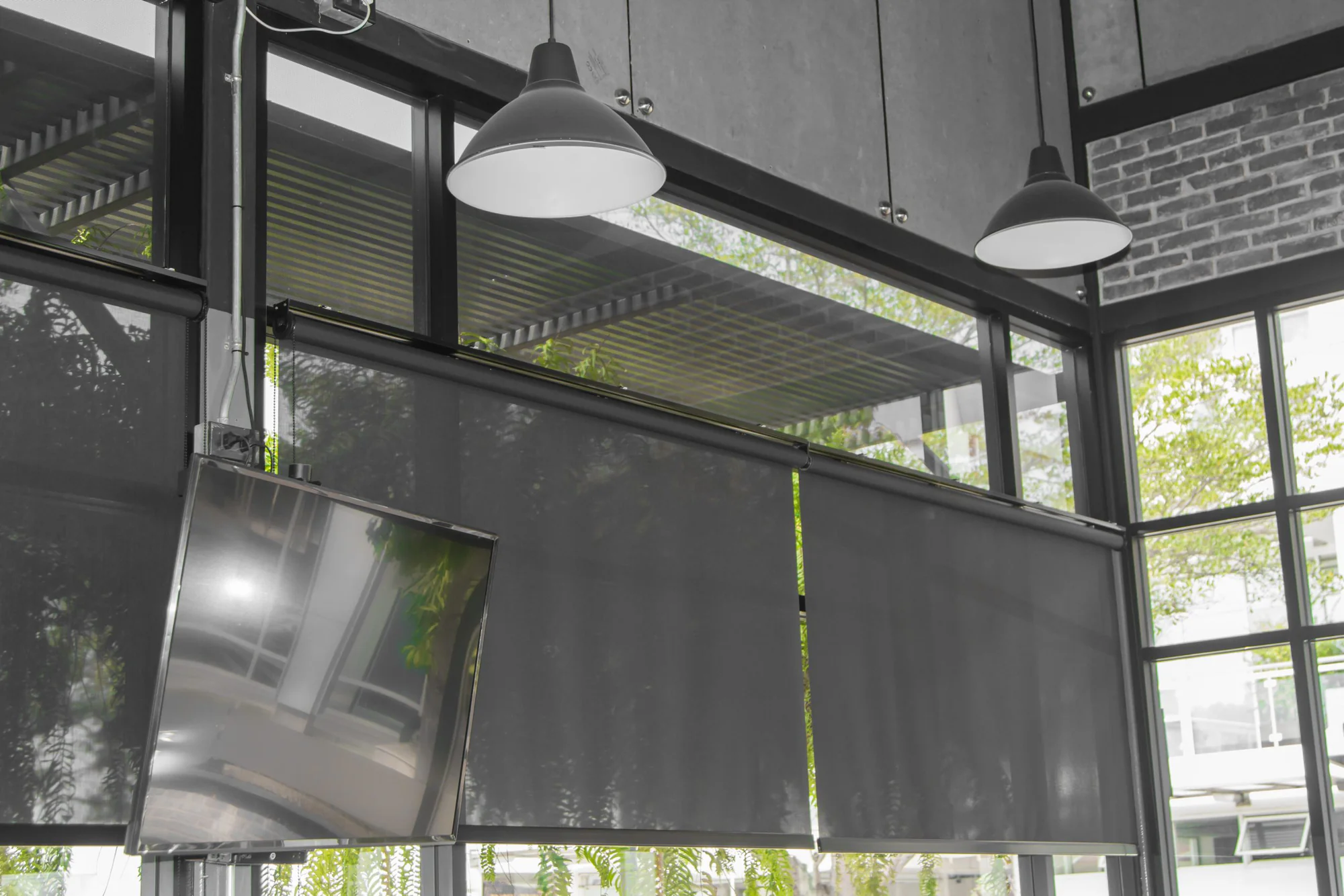
We carry the full range of roller shade options — solar, light filtering, blackout, and motorized — and the recommendation for each room is based on what that room actually needs, not what’s easiest to sell. Solar shades are the most common choice for living areas and rooms with water or golf course views in Sunset Beach, because they manage heat and glare without sacrificing sightlines. Light filtering shades work well in spaces where you want softened natural light without full darkness. Blackout roller shades are the right call for ocean-facing bedrooms where the morning sun comes in hard and early.
Motorized roller shades are worth a real conversation if you own a vacation rental on Sunset Beach island, split your time between the island and another home, or have tall windows that are difficult to reach manually. App and voice control let you manage your home’s light exposure remotely — useful when you’re not on the island but want shades closed to protect interiors between guest stays. Cordless and motorized options also eliminate the cord-related wear that tends to be the first failure point in high-turnover rental properties.
All fabrics are selected with the barrier island environment in mind — UV-stabilized, humidity-resistant, and paired with hardware that holds up in salt air. Interior roller shade installation does not require a permit under standard North Carolina residential guidelines, so there’s no additional red tape between the consultation and getting your Sunset Beach home finished.

The barrier island environment at Sunset Beach is harder on materials than most people expect before they’ve lived through a full coastal summer. Salt air accelerates corrosion on metal components, and sustained high humidity can degrade certain fabric coatings over time — especially anything with a natural fiber base or an untreated weave. For Sunset Beach homes, the most durable options are synthetic or coated polyester solar fabrics with UV-stabilized finishes and corrosion-resistant hardware.
The specific fabric weight and coating matters too. A fabric that performs well in a mainland coastal home may break down faster on Sunset Beach island, where the exposure is more direct and constant. During your in-home consultation, Sal walks through the fabric options with that distinction in mind — not just what looks good in a sample book, but what’s going to hold up in your specific Sunset Beach home’s conditions over multiple seasons.
Solar shades are designed to filter light and reduce glare and heat gain while maintaining outward visibility. They come in different openness factors — typically 1%, 3%, 5%, or 10% — and the higher the percentage, the more view you preserve but the less privacy and heat reduction you get. For living rooms and common areas in Sunset Beach homes with ocean or waterway views, a 5% to 10% openness solar shade is usually the right balance. You cut the glare significantly without losing what you’re looking at.
Blackout roller shades block essentially all light when properly installed. They’re the right choice for bedrooms — especially those facing east or south over the water in Sunset Beach, where the sunrise comes in bright and early and reflects off the Atlantic. The key with blackout shades is the installation: an inside mount with a small gap at the edges will still let light in. We measure and install with that in mind, so you actually get the darkness the shade is rated for, not just most of it.
For vacation rental properties on Sunset Beach island, motorized roller shades solve a specific and recurring problem: cords. Corded shades in high-turnover rental properties break faster than almost any other window treatment component — guests pull them incorrectly, cords tangle, and the mechanism wears out. Replacing corded shades repeatedly across a rental property adds up quickly, both in product cost and the coordination required to get someone out there between bookings.
Motorized or cordless roller shades eliminate that failure point entirely. Guests interact with a button or a simple remote rather than a pull cord, which means fewer maintenance calls and a cleaner guest experience. For property owners managing their Sunset Beach rental from Charlotte, Raleigh, or out of state, motorized shades with app control also let you close shades remotely between guest stays — protecting flooring and furniture from UV exposure when the property is sitting empty. The upfront cost is higher, but the reduced maintenance and extended lifespan typically make it the better long-term investment for rental properties specifically.
Openness percentage determines how much light, heat, and visibility passes through a solar shade. A 1% openness fabric blocks almost everything — minimal light, minimal view. A 10% openness fabric lets in significantly more light and keeps your view largely intact but provides less heat reduction and less privacy during daylight hours. There’s no universal right answer — it depends on the window’s orientation, what the room is used for, and whether view preservation matters in that specific space.
For Sunset Beach homes, south and west-facing windows typically need a lower openness percentage (1%–3%) to manage heat gain during peak afternoon sun. East-facing living areas that catch the morning light over the water can often go with a 5%–10% fabric since the morning sun is less intense than afternoon exposure. The in-home consultation is genuinely useful here because we evaluate each window individually rather than recommending a single fabric for the whole house — which is how most homeowners end up with a shade that works in one room and disappoints in another.
For most Sunset Beach homes, the full installation — measuring, mounting, and confirming operation of every shade — is completed in a single visit. The time varies depending on how many windows you’re covering and whether you’re mixing shade types across rooms, but a typical whole-home installation runs a few hours. We work through each window systematically, so you’re not left with half the job done and a return visit scheduled weeks out.
For vacation rental properties on the island where timing matters — you need everything done before a booking window opens — the scheduling process accounts for that. If you’re not able to be on-site, a property manager or trusted contact can be present for the installation. The consultation and installation can also be coordinated as back-to-back visits if your timeline is tight. Interior roller shade installation doesn’t require permits under standard North Carolina residential guidelines, so there’s no waiting on approvals between the order and the install date.
Yes — and the impact is more noticeable in a barrier island home than in most other settings. Sunset Beach sits at the southern end of the North Carolina coast, which means longer sun exposure hours, higher UV intensity, and heat gain that starts earlier in the season and runs later. Homes on the island with south and west-facing glass can see significant solar heat gain through unprotected windows, which puts real load on air conditioning systems that are already working hard from May through September.
Solar roller shade fabrics reduce solar heat gain by blocking a substantial portion of infrared radiation before it enters the room. The reduction in cooling load translates directly to lower energy bills during the months when those bills are highest. The exact savings depend on your window size, orientation, and current HVAC efficiency — but homeowners in coastal NC climates consistently report noticeable differences in how hard their systems run after installing quality solar shades on the sun-exposed sides of their homes. Over a full summer season in Sunset Beach, it adds up.
Other Services we provide in Sunset Beach