







Hear from Our Customers

The morning sun in Surf City doesn’t ease in — it comes off the Atlantic at a low angle and hits east-facing windows hard. Without the right shades, that means squinting at your own living room, watching floors and furniture fade faster than they should, and running your AC harder than necessary all summer. Solar roller shades with the right openness percentage cut glare and block up to 99% of UV rays while keeping your ocean or sound view completely intact. That’s not a compromise — that’s the whole point.
For vacation rental owners throughout Surf City, the math is straightforward. Guests who sleep in a properly blacked-out bedroom leave better reviews. Guests who can watch TV without fighting the afternoon sun off the Intracoastal stay longer and book again. Blackout and light-filtering roller shades are less of a home upgrade here and more of a business decision — one that shows up directly in your ratings and your calendar.
And because Surf City homes are built elevated with tall windows designed to maximize views, motorized roller shades aren’t a luxury add-on. They’re the practical answer to windows that are simply too high to operate manually without a step stool. One remote, one tap, or a voice command — and every shade in the room adjusts exactly where you need it.
Coastal Window Fashions NC has been serving Surf City and the coastal corridor since 2017, working in homes from Hampstead straight down NC-210 to Topsail Island. Our showroom sits on Highway 17 N — the same road Surf City residents already drive every time they head to the mainland. This isn’t a company with a service area page and a rep who visits once a month. We’re locally owned and owner-operated, and we understand what barrier island conditions do to window treatments and how to specify products that hold up.
Surf City spans both Pender and Onslow counties, and the homes here — whether you’re on the oceanfront along N New River Drive, soundside in a community like Osprey Cove, or in a newer build near the bridge — all have different light conditions, different window configurations, and different needs. That’s the kind of local detail that actually matters when you’re choosing fabrics and hardware for a coastal home, and it’s exactly what you get in a consultation with our team.

It starts with a free in-home consultation. Sal comes to your Surf City home with a full selection of fabric samples — not a brochure, not a website link, but actual materials you can hold up to your windows in your real light conditions. That matters more here than almost anywhere else, because the difference between a solar shade that works on an east-facing oceanfront room and one that doesn’t is something you can only evaluate in person. During that visit, every window gets measured precisely, fabric options get narrowed down based on your specific goals, and you receive full pricing before anyone leaves.
Once you approve the order, your custom roller shades are fabricated to the exact dimensions of your windows — no generic sizing, no gaps at the edges, no coverage failures on the non-standard window configurations that are common in Surf City’s three-story stilt homes and condo communities. For vacation rental owners managing a booking calendar, the approximately three-week turnaround from order to installation keeps your timeline realistic and your guests unaffected.
Installation is included at no additional charge. We handle every shade, every bracket, and every adjustment until the operation is smooth and the finish looks exactly right. You don’t need to coordinate a separate installer or add that cost to your budget — it’s part of what you’re already getting.

Ready to get started?
Roller shades in Surf City aren’t a one-size answer. The oceanfront bedroom that catches the Atlantic sunrise at 5:30am needs a true blackout roller shade — installed with an outside mount to close off the light gaps that a standard inside mount leaves open. The main living area with sliding glass doors facing the ocean needs a light-filtering roller shade in a 3–5% openness fabric that preserves the view while cutting glare to a workable level. The soundside room watching the Intracoastal Waterway in the afternoon needs something in between. Each room gets specified individually based on what it actually faces and what you need it to do.
For homes in communities like Serenity Bay or along the oceanfront corridor, motorized roller shades are increasingly the default choice — not because they’re a trend, but because manually operating a shade on a tall window in a three-story home isn’t practical for daily use or for guests who’ve never been in the space before. Motorized options integrate with remotes, wall switches, or smart home systems, and they’re especially well-suited to vacation rental properties where ease of use directly affects the guest experience.
All fabrics are selected with coastal durability in mind. Salt air and high humidity accelerate the degradation of materials that weren’t built for this environment. The hardware, fabric backing, and roller components we use in these installations are specified for coastal NC conditions — not just aesthetically appropriate, but genuinely built to last in a home that sits minutes from the waterline.

This is the right question to ask, and the honest answer is: it depends entirely on what you buy and how it’s specified. Off-the-shelf roller shades from a big-box retailer are not built for a barrier island environment. The hardware corrodes, the fabric degrades faster than it should, and the brackets can fail within a season or two when they’re exposed to the salt-laden air that rolls in off the Atlantic year-round in Surf City.
What makes the difference is product selection. The roller shade fabrics and hardware we use in coastal NC installations are chosen specifically for their performance in high-humidity, high-salt environments — including fabric coatings that resist moisture absorption, roller tubes and brackets that don’t corrode, and materials that hold their color and structure despite constant UV exposure. When you’re a short walk from the waterline in Surf City, this isn’t a minor detail. It’s the difference between a window treatment that looks good for years and one you’re replacing in two.
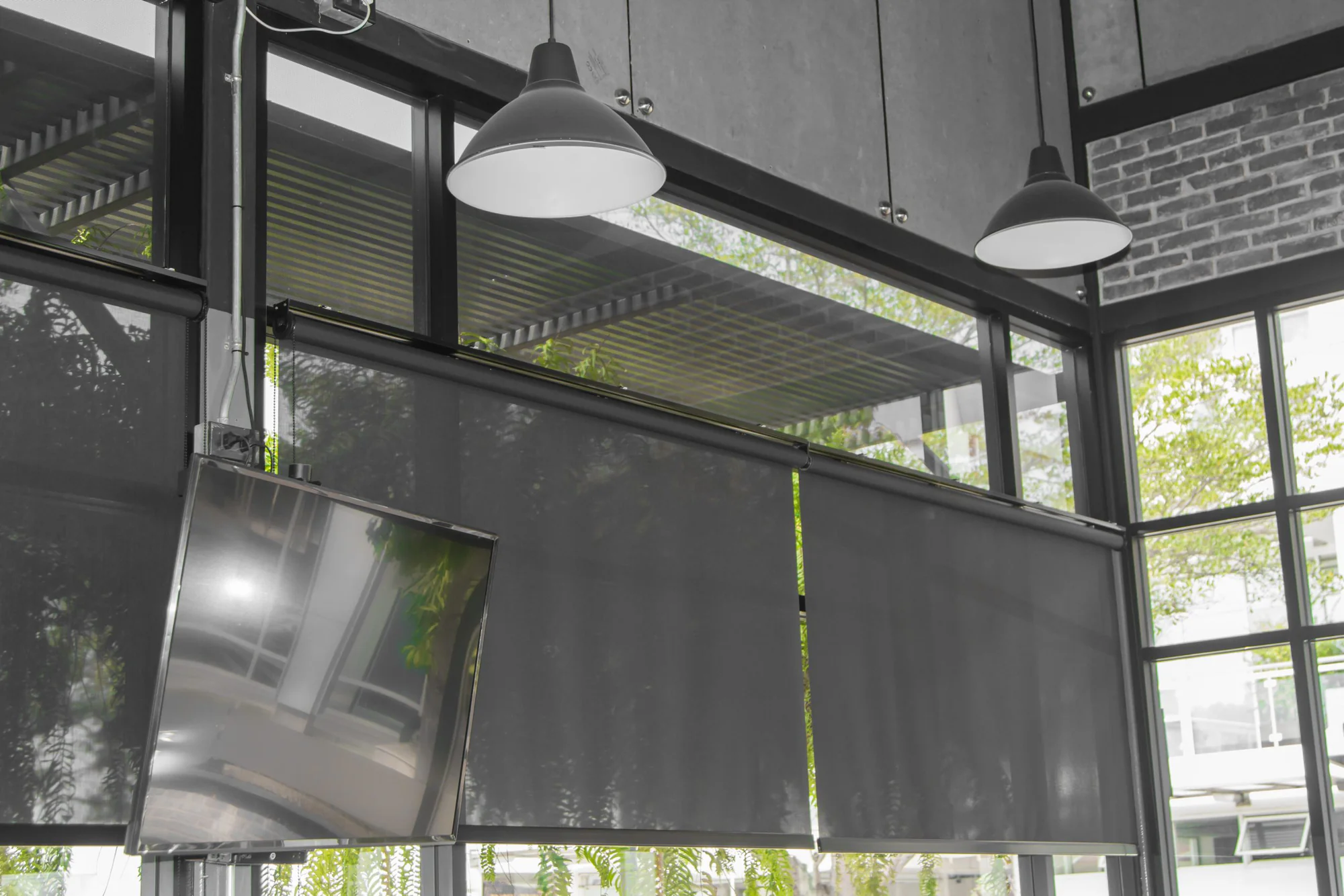
Solar roller shades are designed to filter light and block UV rays without eliminating your view. They come in different openness percentages — typically 1%, 3%, or 5% — which controls how much light and visibility passes through the fabric. A 3% openness fabric in a Surf City living room facing the ocean will cut the glare significantly while still letting you see the water clearly. It also blocks up to 99% of UV rays, which matters a great deal when the sun is reflecting off both the ocean and the sound and hitting your floors and furniture from multiple angles.
Blackout roller shades do the opposite — they block all incoming light when fully closed. They’re the right choice for bedrooms, especially east-facing rooms that catch the Atlantic sunrise early. For vacation rental owners in Surf City, blackout shades in every bedroom are effectively non-negotiable. Guests expect to sleep in when they’re on vacation, and a bedroom that floods with light at 5:30am is one of the most common complaints in coastal rental reviews. The two shade types work together across a home — solar in the living areas, blackout in the bedrooms — and getting that combination right makes a real difference in how the home feels and functions.
For most Surf City homes, yes — and the reason is purely practical. The dominant residential form on Topsail Island is the three-story stilt home, built elevated above the flood zone with tall windows designed to capture ocean and sound views. Those windows are often positioned high enough that operating a manual shade requires a step stool at minimum, and in some cases a ladder. That’s not a realistic daily routine, and it’s certainly not something you want vacation rental guests dealing with on their own.
Motorized roller shades eliminate that problem entirely. They operate via remote, wall switch, smartphone app, or voice assistant, and they can be programmed to adjust automatically at set times — which is particularly useful for rental properties that need to be ready for incoming guests without manual setup between stays. The upfront cost is higher than a manual shade, but the convenience, the longevity of the mechanism, and the guest experience value make it a straightforward decision for most Surf City homeowners and rental property owners who have tall or hard-to-reach windows.
The in-home consultation itself typically takes an hour or less, depending on how many windows you’re covering and how many fabric decisions need to be made. You’ll walk away from that visit with confirmed measurements, a fabric selection, and full pricing — no waiting for a quote to come back days later. For vacation rental owners in Surf City who are working around a booking calendar, that same-day pricing matters because it lets you make a decision and move forward without losing time.
From the point of order approval, the fabrication and installation timeline runs approximately three weeks. That’s the window from when your custom roller shades go into production to when they’re installed in your home. It’s worth scheduling your consultation with that lead time in mind — especially if you’re preparing a property for the summer rental season or trying to get settled before a specific move-in date. If your timeline is tighter than that, it’s worth mentioning during the consultation so we can work with you on the best available path forward.
They can, and the impact is more significant in Surf City than it is in most inland locations. Surf City summers are hot and run long — the kind of heat where air conditioning runs for six months straight in a home with large south- or west-facing windows. Solar roller shades reduce solar heat gain by up to 60%, which directly reduces the load on your AC system during those months. For a three-story beach house with multiple large windows facing the water, that’s a meaningful reduction in energy consumption, not a marginal one.
The UV protection component also has a financial dimension that’s easy to overlook. UV damage to hardwood floors, area rugs, and upholstered furniture in a Surf City home happens faster than in an inland property because the sun reflects off the water and hits your interiors from multiple angles at higher intensity. Replacing or refinishing those surfaces is expensive. Solar roller shades that block up to 99% of UV rays extend the life of your flooring and furnishings — which, in a home valued anywhere from $558,000 to $750,000 or more, is a real return on a relatively modest investment.
Absolutely, and rental properties make up a meaningful portion of the work we do in Surf City. With over 700 active short-term rental listings on the island, a lot of property owners here are thinking about window treatments the same way they think about any other guest-facing upgrade — what’s durable, what photographs well, what guests will actually use without breaking, and what holds up through high turnover without needing to be replaced every couple of seasons.
The consultation process is the same as it is for any home — Sal comes to the property, evaluates each room, brings fabric samples, and provides pricing before leaving. The difference is that the conversation for a rental property tends to focus more on blackout coverage in every bedroom, cordless or motorized operation for ease of guest use, and fabrics that are easy to wipe down and maintain between stays. If you’re managing multiple properties on Topsail Island or have a unit in a community like Serenity Bay or along the oceanfront corridor, that’s a conversation worth having — because the right window treatments in a rental are a direct investment in your reviews and your repeat booking rate.