







Hear from Our Customers

Bare or ill-fitting windows in St. Helena and across southeastern North Carolina aren’t just an aesthetic problem — they’re a utility bill problem. From May through October, the UV index in Pender County regularly hits high to very high levels, and summer heat index values push well past 100°F. Custom window shades with proper light-filtering or cellular construction can add meaningful insulation to your windows, reducing how hard your AC has to work and how much you spend keeping the house livable.
Beyond the energy side, there’s the fading. Hardwood floors, upholstery, furniture — unprotected windows let UV radiation do quiet, cumulative damage over time. Solar shades block up to 99% of UV rays when closed, which means the things you’ve invested in inside your home actually stay the way they looked when you bought them.
And then there’s the fit. St. Helena’s housing stock includes older homes with windows that simply don’t conform to what’s on the shelf at a big-box store. A 35.5-inch window gets a 35-inch shade with light gaps on both sides, or a 36-inch shade that forces the hardware. We fabricate custom window shades to your exact measurements — every window, every room — so nothing looks like an afterthought.
We’re based in Hampstead, right here in Pender County, and we serve St. Helena and the surrounding communities. I handle every consultation, every measurement, and every installation personally — no subcontractors, no crews you’ve never met, no gap between the person who sold you the shades and the person who hung them. That’s not a policy written on a website. It’s what customers across HomeAdvisor, Angi, and Google have confirmed repeatedly in their own words.
St. Helena is a small, close-knit community. Who comes to your house matters here. The fact that you’ll get the same person from the first phone call to the finished install isn’t just a convenience — it’s accountability that franchise models and larger companies genuinely can’t offer.
We’re also an authorized Graber dealer, which means the products are professional-grade and backed by manufacturer warranties — not the same inventory you’d find at a home improvement store. Fair pricing, fast turnaround, and a track record that speaks for itself across every review platform.

It starts with a home visit. I come to your home in St. Helena, look at your actual windows, and walk through the options with you — not from a catalog, but in the context of your real rooms, your real light, and what you’re actually trying to accomplish. Whether that’s blocking afternoon heat on the west-facing side of the house, adding privacy to a bedroom, or just finishing a room that’s felt incomplete without proper window treatments, the consultation is where that gets sorted out.
From there, you get a quote on the spot. Not in a few days, not after a follow-up call — before I leave your home. You’ll know exactly what it costs, what you’re getting, and when it’ll be done. For most jobs, the window from consultation to completed installation runs about 10 days. Installation itself typically takes less than an hour for a standard room.
No permits are required for interior window treatment installation in St. Helena or anywhere in Pender County — it’s a straightforward interior improvement. And because the same person who measured your windows is the one installing the shades, the fit is right the first time. There’s no back-and-forth, no remeasure visits, no waiting on a third party to schedule around.

Ready to get started?
The shade that works in a living room facing NC-53 is not the same shade that belongs in a bedroom or a home office. We carry the full range — roller shades, cellular and honeycomb shades, Roman shades, solar shades, woven wood and bamboo shades, and motorized options — so the recommendation you get is based on what actually fits your situation, not what’s easiest to sell.
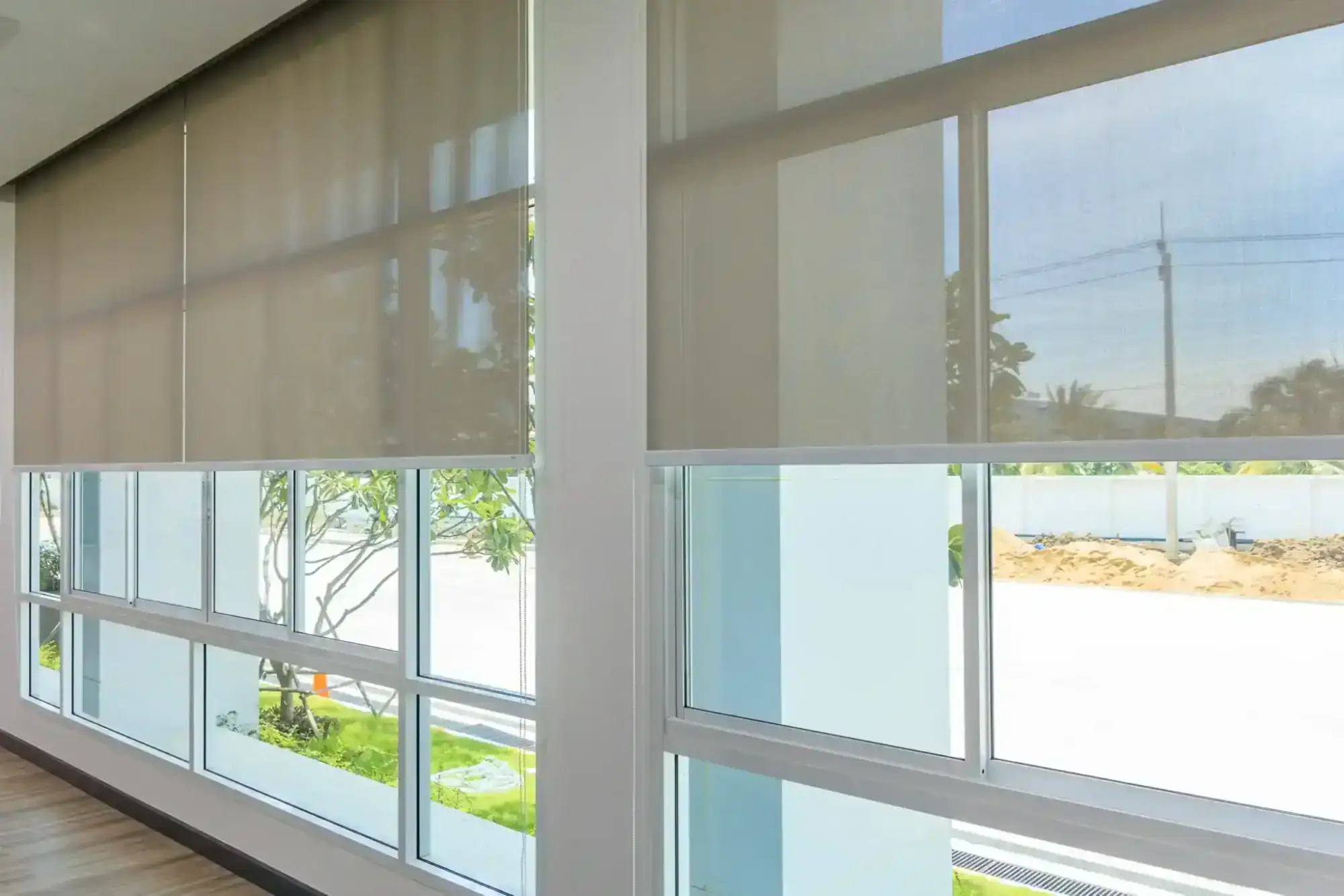
For St. Helena homes dealing with intense summer sun, solar shades and light filtering shades are often the right call for main living areas — they cut glare and heat gain without making the room feel closed off. Cellular shades are particularly well-suited for Pender County’s climate because the honeycomb structure traps air and adds insulation value in both directions, helping in summer heat and during the occasional cold snap in winter. For bedrooms, blackout shades give you full light control — useful whether you’re a shift worker, a light sleeper, or just done waking up at 6am because the curtains aren’t doing the job.
Older homes in the 28425 zip code often have non-standard window dimensions where off-the-shelf sizing simply doesn’t work. We fabricate every shade to your exact measurements, which means the fit is clean, the coverage is complete, and it looks like it was always supposed to be there.

The honest answer is that it depends on the number of windows, the type of shade, and the specific product line — but the range for a typical room runs roughly $150 to $400 per window for professionally fabricated and installed custom shades. A whole-home project can vary significantly based on scope.
What’s worth knowing is that we quote on the spot during the in-home consultation, so you won’t be left waiting days for a number. Customers have also consistently noted that our pricing comes in well below what larger or franchise-based competitors quote for the same work. One customer specifically noted that a competitor quoted over $900 for a job we completed for just over $300. In a community like St. Helena where the cost of living runs below the national average, getting a fair price for professional-grade work matters — and that’s what the review record consistently reflects.
Light filtering shades soften and diffuse incoming light without blocking it entirely. They reduce glare, cut UV exposure, and give you daytime privacy without making the room feel dark. For main living areas in St. Helena homes — especially rooms that get direct afternoon sun through the summer months — light filtering shades are often the right balance between comfort and openness.
Blackout shades block light almost completely. They’re the right call for bedrooms, nurseries, home offices where screen glare is a problem, or any room where you need real darkness during daylight hours. If you’re a shift worker commuting to Burgaw or Wilmington and sleeping during the day, blackout shades aren’t optional — they’re the difference between actual rest and not. The good news is you don’t have to choose one or the other for the whole house. Most homes end up with a mix, and the in-home consultation is exactly where that gets figured out based on your specific rooms and how you use them.
For a lot of windows in St. Helena, yes — and the reason is fit. Standard retail shades come in fixed increments: 35 inches, 36 inches, 48 inches. If your window is 35.5 inches wide, you’re choosing between a shade that leaves light gaps on both sides or one that doesn’t mount cleanly. That problem compounds across an older home where window dimensions vary room to room.
Custom shades are fabricated to your exact measurements, so the coverage is complete and the look is clean. Beyond fit, the materials we offer through our professional dealer relationship with Graber — an authorized Graber dealer — are a different category than what’s on a big-box shelf. The fabrics, the hardware, the operating mechanisms are built to last, which matters when you’re factoring in Pender County’s year-round humidity. A shade that warps, swells, or fails within a few years because it wasn’t built for this climate isn’t actually a savings. Custom, properly specified shades are a one-time investment that holds up.
No. Interior window treatment installation does not require a building permit in St. Helena or anywhere in Pender County. It’s a straightforward interior home improvement — no inspections, no filings, no coordination with the county required. You schedule the consultation, I come out, you get a quote, and the installation happens within about 10 days. That’s the entire process.
This is worth mentioning because some homeowners assume any contractor work triggers a permit requirement, especially in a municipality like St. Helena that has its own village government. It doesn’t apply here. The only thing you need to do is make sure the measurements are accurate — which is exactly why the in-home visit matters. Measuring your own windows and ordering online is where most DIY window treatment projects go sideways. Having someone come out, measure correctly, and install correctly eliminates that risk entirely.
From the initial consultation to completed installation, the typical timeline is around 10 days. That includes the in-home visit, fabrication of your custom shades, and the installation appointment. The installation itself — for a standard room — usually takes less than an hour.
For St. Helena homeowners who’ve dealt with contractors that go quiet after the first call or take weeks between steps, that timeline tends to come as a genuine surprise. It’s not a promotional number — it’s what customers have documented across multiple independent reviews. I answer the phone, show up on time, and move the project forward without the back-and-forth that makes most home improvement work frustrating. If you’re furnishing a recently purchased home in the Burgaw–St. Helena corridor or finally finishing rooms that have had bare windows since you moved in, 10 days is a realistic window from decision to done.
Humidity is the variable most people underestimate when choosing window treatments in southeastern North Carolina. Real wood blinds and untreated wood shades can warp, swell, and eventually fail in environments where relative humidity regularly exceeds 80 to 90 percent — which is most of the summer in Pender County. For rooms with higher moisture exposure, faux wood, cellular shades, and PVC-based roller shades hold up significantly better over time.
For heat and UV management specifically, solar shades are built for exactly this climate. They block a high percentage of UV radiation while still allowing outward visibility, which makes them practical for living areas where you don’t want to feel closed in. Cellular honeycomb shades add insulation value in both directions — reducing heat gain in summer and helping retain warmth during Pender County’s occasional winter cold snaps. The right answer depends on the specific room, the window orientation, and how you use the space — all of which gets worked out during the in-home consultation before any decisions are made.