Summary:
Every summer in Brunswick County, the same thing happens. The sun comes up, it starts hammering through your windows, and by early afternoon your thermostat is fighting a losing battle. You turn the AC down. The bill goes up. And you start wondering if there’s something you’re missing.
There is. Most homeowners don’t realize how much work their windows — and their window treatments — are doing against them. The good news is you don’t need new windows to fix it. The right window coverings can dramatically reduce the heat entering your home, protect your floors and furniture from UV damage, and put a real dent in your Duke Energy bill. Here’s how.
Window Treatments for Energy Efficiency in Coastal Homes
The core problem is solar heat gain — sunlight passing through glass and converting to heat inside your home. According to the U.S. Department of Energy, 76% of sunlight that passes through a standard double-pane window becomes heat. In a beach house on Oak Island or a newer build in Leland with large south- or west-facing windows, that adds up fast.
Energy efficient window treatments work by interrupting that process. Depending on the product, they create an insulating air barrier, reflect solar radiation before it enters the room, or absorb and diffuse light so it doesn’t convert to heat at the same rate. The right treatment — properly fitted and installed — can reduce solar heat gain through your windows by up to 60% in summer months.
Insulating Window Treatments: What Makes Cellular Shades So Effective

When it comes to pure thermal performance, cellular shades — also called honeycomb shades — are consistently the top-rated option. The reason is straightforward: they’re built with hollow air pockets that sit between the window glass and your living space, acting as a buffer against both heat and cold. A double-cell cellular shade on a double-pane window creates a window system with an R-value between 5.0 and 7.0. For context, that’s comparable to a thin insulated wall.
Single-cell shades provide a baseline level of insulation, but if you’re dealing with serious summer heat — and in Brunswick County, you are — double-cell construction makes a meaningful difference. The DOE estimates that properly installed cellular shades can reduce solar heat gain through windows by up to 60% in cooling seasons, and cut heat loss by 40% or more in winter. For a home with 15 to 20 windows, medium-performance cellular shades translate to roughly $100–$180 in annual energy savings.
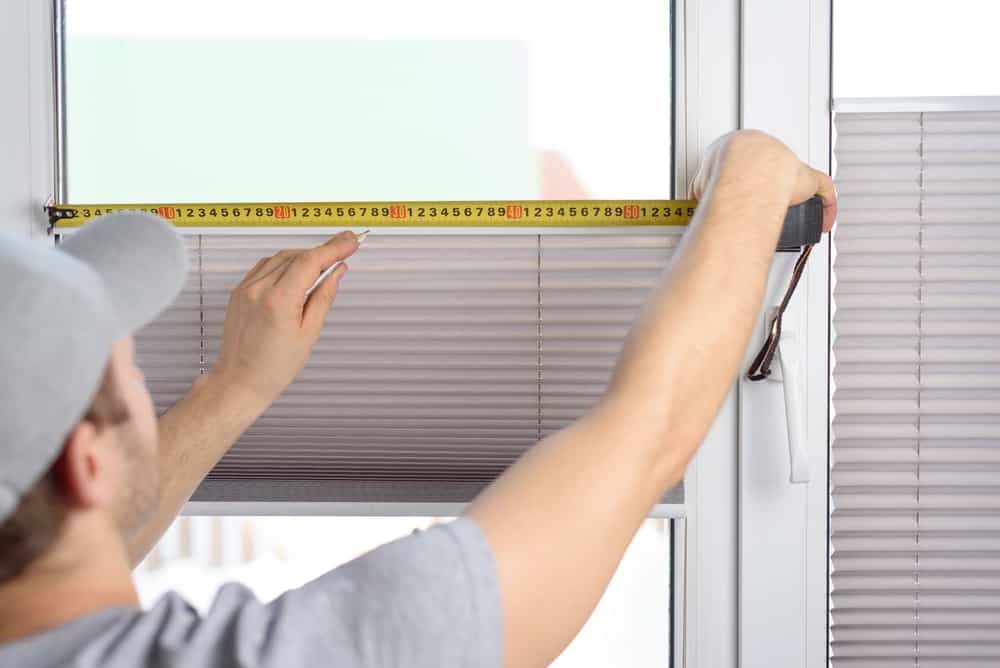
The word “properly installed” matters more than most people realize. Gaps of even a few millimeters around the edges of a shade create convective loops — essentially, a path for warm air to flow in around the treatment and undercut its insulating properties. That’s why custom-measured, professionally installed shades consistently outperform off-the-shelf options, even when the materials are technically similar. A shade that fits the window precisely, with minimal air leakage at the edges, performs the way the manufacturer’s specs say it should.
Features like top-down/bottom-up operation also add practical value here. You can let natural light in from the top of the window while keeping the lower half — where direct sun hits hardest — fully covered. It’s a small thing, but it gives you real control over heat management throughout the day without sacrificing all your natural light.
UV Protection Window Treatments: The Hidden Cost of Coastal Sun
Heat is the obvious problem, but UV damage is the slow one — and it costs real money over time. Coastal environments like Brunswick County have higher UV exposure than inland areas. Sunlight reflects off the water and sand, there’s less tree canopy to filter it, and on clear summer days the intensity is significant. Over one to three years of unprotected exposure, hardwood floors fade, upholstered furniture loses its color, area rugs go patchy, and beach-house décor that you paid good money for starts looking worn.
Solar shades are the most targeted solution for UV protection. They’re rated by Solar Heat Gain Coefficient (SHGC) — the lower the number, the less solar heat and UV radiation passes through. A solar shade with an SHGC of 0.25 blocks 75% of solar heat gain. Some high-performance solar fabrics block 99% of UV rays while still allowing a filtered view of the outside. For rooms with large ocean-facing windows or direct afternoon sun, solar shades can protect your furnishings while keeping the space bright and open-feeling.
It’s worth understanding the difference between light-filtering and UV-blocking, because they’re not the same thing. A light-filtering shade softens and diffuses incoming light — it makes the room feel comfortable, but it doesn’t necessarily stop UV radiation. A UV-blocking solar shade is specifically engineered to intercept UV wavelengths before they reach your floors and furniture. For vacation rental properties on Ocean Isle Beach or Holden Beach, where furnishings take heavy seasonal use and UV exposure is relentless, this distinction is worth paying attention to.
Plantation shutters are another strong option for UV and heat control, particularly in coastal homes. When the louvers are closed, they block direct sun effectively. Because shutters are custom-fitted to the window frame with minimal gaps, they also reduce air infiltration better than many shade alternatives. In Brunswick County’s climate — where the humidity off the Atlantic is as much of a factor as the heat — shutters made from poly or composite materials hold up far better than real wood, which warps, swells, and degrades in salt air environments within a few years.
What Energy-Efficient Window Treatments Actually Cost — and What They Save
The honest answer is that quality window treatments are an investment, and the payback depends on what you’re replacing, how many windows you have, and how efficiently your home is already running. That said, the numbers are favorable. Homeowners who upgrade to properly fitted, energy-efficient treatments typically see a 15–25% reduction in heating and cooling costs, with a payback period of three to five years for mid-range products.
There’s also a federal tax credit worth knowing about. Under the Inflation Reduction Act, AERC-certified and ENERGY STAR-certified window attachments — including qualifying cellular shades — may be eligible for a tax credit of up to 30% of the product cost, capped at $600 per year, through 2032. That materially reduces the net cost of upgrading, and it’s a point most local competitors aren’t talking about.
How Smart Home Integration Makes Window Treatments Work Harder
Here’s a statistic that’s easy to overlook: the Department of Energy found that 75% of residential window coverings stay in the same position every day. Most homeowners set them once and forget them. That means the energy benefits of even well-chosen treatments are never fully realized, because no one is adjusting them to track the sun’s movement throughout the day.
Motorized and automated window treatments solve this directly. Systems like Hunter Douglas PowerView allow you to program your shades to close during peak afternoon sun hours — typically between noon and 4 p.m. in a south- or west-facing room — and open again in the evening when the sun moves off the glass. You can set schedules, control individual rooms, or integrate with smart home platforms. For vacation rental properties in Oak Island or Holden Beach, this is particularly valuable: guests aren’t expected to manage the treatments, the home runs efficiently regardless, and you’re not relying on anyone to remember to close the shades at the right time.
The energy impact of automated operation is real. A cellular shade that’s actually closing during peak sun hours performs exactly as its R-value and SHGC ratings promise. One that sits open all afternoon because no one remembered to close it performs like any other window. Motorization bridges that gap. It’s not a luxury feature — it’s the difference between a treatment that earns back its cost and one that looks nice but doesn’t do much.
For homeowners in Leland, Shallotte, or anywhere in Brunswick County who are furnishing a new home or replacing aging treatments, it’s worth having a conversation about automation early in the process. Adding motorization at the time of installation is significantly less expensive than retrofitting it later.
Coastal Materials Matter: Why Standard Window Treatments Fail in Brunswick County
This is the part most national guides skip entirely — and it’s one of the most important considerations for anyone buying window treatments along the Brunswick County coast.
Standard wood blinds are one of the most popular window treatment choices in the country. They’re also one of the worst choices for a coastal home. Salt air accelerates corrosion and surface degradation. High humidity causes real wood to swell, warp, and eventually crack. In an inland home, a quality wood blind might last ten years or more. In a beach house on Holden Beach or a waterfront property near the Intracoastal Waterway, the same blind might look rough in two years and need replacing in three.
Faux wood blinds, poly shutters, and vinyl materials are engineered for exactly these conditions. They don’t absorb moisture, they don’t react to salt air the way natural wood does, and they hold their shape and finish in high-humidity environments. For coastal homes in Brunswick County, these aren’t the budget alternative to real wood — they’re the correct choice. They’ll outlast natural wood in this climate by years, and they maintain their appearance without the warping or peeling that makes real wood treatments look neglected after a few seasons.
For homeowners who love the look of plantation shutters — which are a genuinely strong option for heat control and UV management — poly shutters deliver the same visual result as wood shutters with far better longevity in coastal conditions. The louvers operate the same way, the custom fit is the same, and the energy performance is comparable. The difference shows up two or three years later, when the poly shutters still look exactly as they did on installation day.
This is particularly relevant for vacation rental owners in Ocean Isle Beach, Oak Island, and Sunset Beach, where treatments are used heavily by rotating guests and exposed to ocean air year-round. Durable, moisture-resistant materials reduce replacement frequency and maintenance costs — which directly affects the bottom line on an investment property.
Ready to Cut Your Cooling Costs in Brunswick County, NC?
The right window treatments don’t just change how a room looks — they change how it performs. In a climate like Brunswick County’s, where summers are long, the sun is relentless, and the humidity doesn’t give you much relief, that performance difference shows up on your energy bill every month from May through September.
Double-cell cellular shades, solar shades with low SHGC ratings, and custom-fitted poly shutters are all proven tools for reducing heat gain, protecting your home’s interior from UV damage, and lowering what you spend on cooling. Add motorized operation, and you get treatments that actually work as intended — not just when someone remembers to close them.
If you’re in Brunswick County and want to see what’s possible in your specific home, we bring samples directly to you, measure every window, and handle the installation personally. No subcontractors, no guesswork — just a straightforward conversation about what will actually work for your space and your budget.