Summary:
Understanding the Basic Differences Between Blinds, Shades, and Curtains
People often use “shades” and “blinds” interchangeably, but these are two distinct types of window treatments. Blinds are classified as “hard” window coverings composed of individual slats or vanes that can be adjusted independently, while shades are “soft” window treatments made from continuous materials that cover the entire window opening in one piece.
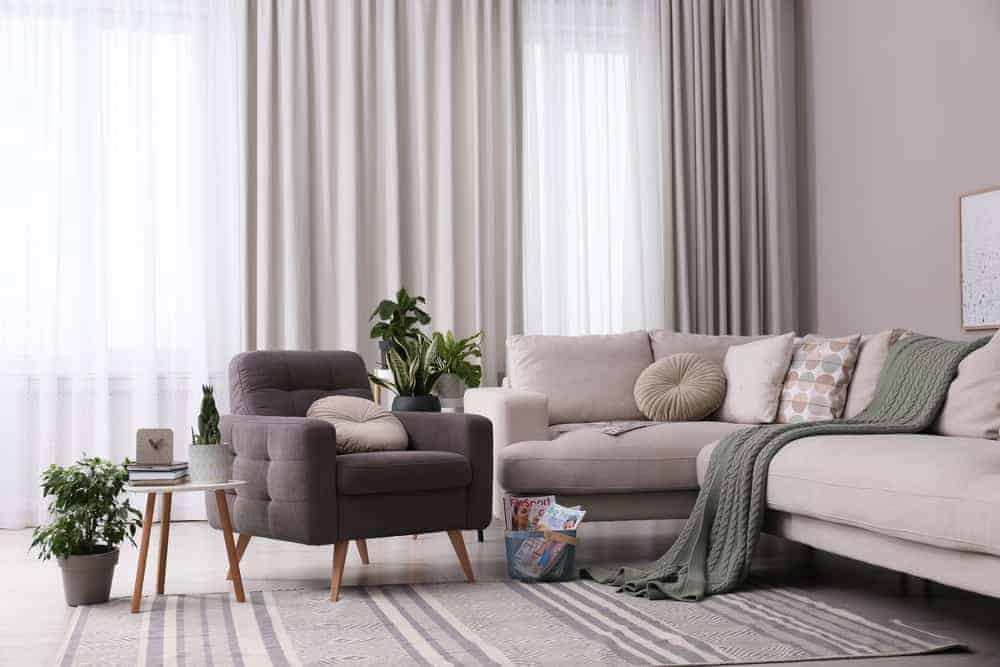
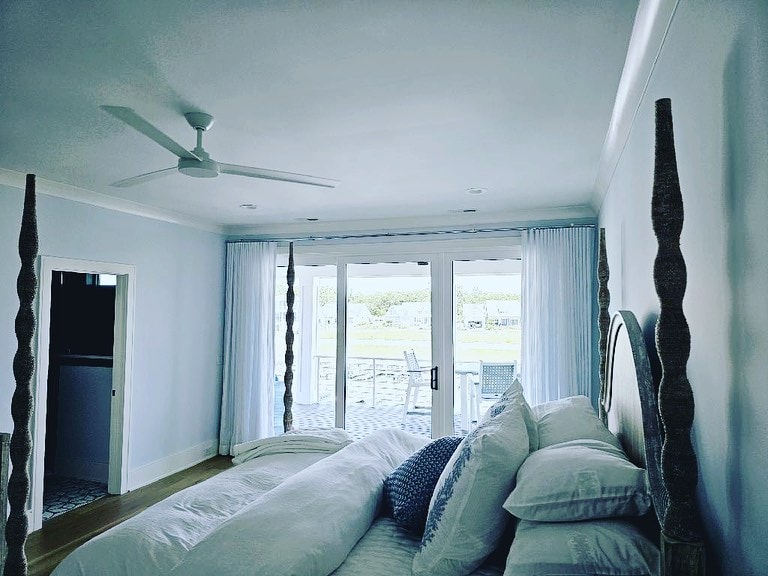
Curtains are drapery made of woven fabric and are hung on both sides of a window, opening and closing by moving along a curtain rod, either manually or guided by a control wand. The function of a curtain is determined primarily by the fabric it is made from, with sheer curtains gently filtering light while providing an elegant look.
Each type gives you different levels of control, style options, and maintenance requirements. Understanding these basics helps you match the right treatment to each room’s specific needs.
How Blinds Work for Light Control and Privacy
Blinds excel in providing precise light control through their adjustable slat system, allowing you to tilt the slats at various angles to filter light while maintaining privacy, or close them completely for maximum light blockage. This flexibility makes them incredibly practical for rooms where your lighting needs change throughout the day.
Because they’re made from rigid materials, blinds tend to better withstand wear and tear than shades. If your window treatments are in a high traffic area, or you have pets and kids who make a mess, blinds are a better choice because they’re made from hard materials like wood, PVC and aluminum that hold up to wear and tear better than shades.
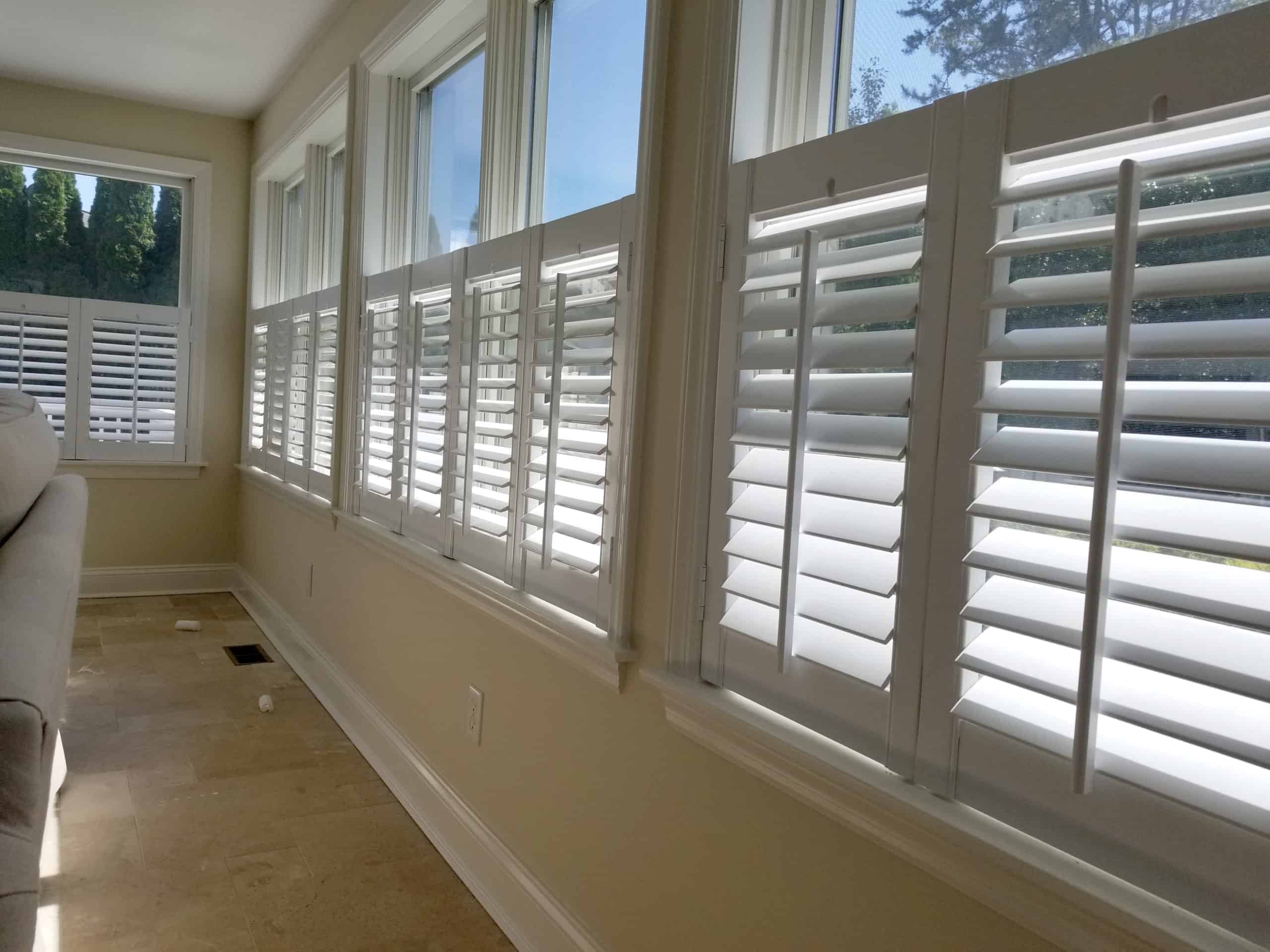
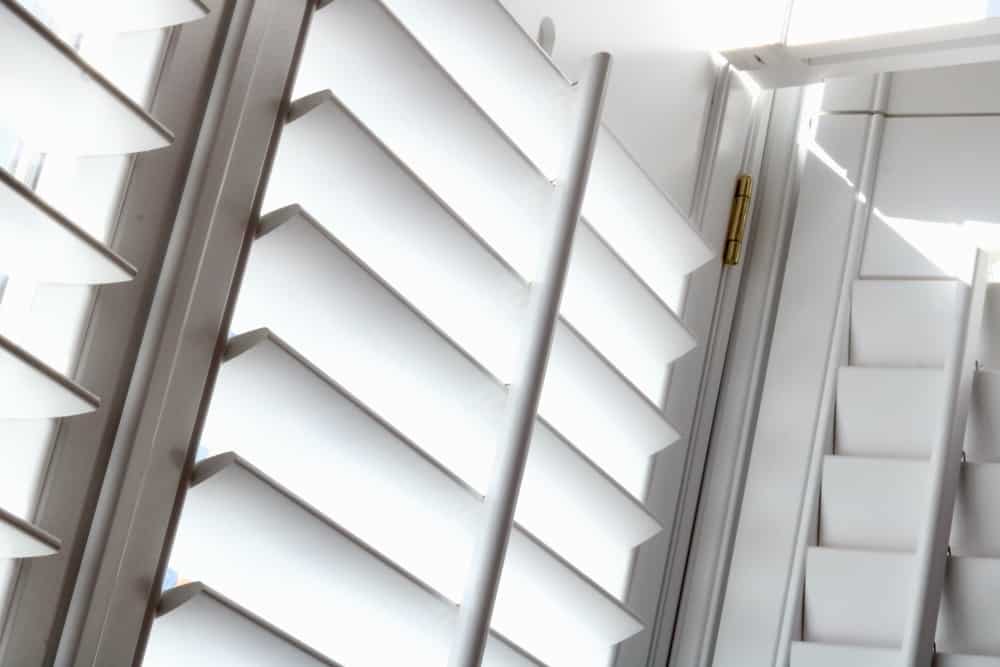
For coastal homes in Pender County, this durability matters even more. Faux wood blinds or faux wood plantation shutters shrug off moisture, keeping your window treatment free from mold, corrosion, and bad odors. Blinds can stand up to years of daily use and are extremely versatile, with operating blinds being simple, requiring just a twist of the control wand to change the tilt of the slats for the full range of light control.
The downside? Blinds are known to collect dust but are relatively easy to clean when down and closed, with using a microfiber duster being the most efficient method, and because most blind materials are plastic, you can use an all-purpose cleaner for wiping off any stains. While they cannot offer a full blackout experience on their own, blinds can allow in a range of light, depending on the angle of the slats.
When Shades Make More Sense Than Blinds
Shades are generally opaque window coverings that darken a room more effectively than blinds, being versatile and stylish window treatments that fold into themselves and are installed on the inside frame or outside drywall of a window. Shades are much more customizable than blinds, available with upgraded fabric collections, fabric wrapped valances to cover hardware, fabric fold styles, fabric liners and lift systems like top-down/bottom-up, cordless or motorized.
Shades have a sleeker, more luxurious appearance than blinds and offer a wider range of light filtration, coming in solar options that protect your interior from the sun. Shades are ideal for those who want light control without the fuss of curtains or drapes, being easy to install and quickly adjusted to control the light level, making them especially suited for rooms like kitchens and bathrooms.
For coastal living, certain types of shades work particularly well. Solar shades are designed to beat heat and glare, making them ideal coastal shades that provide UV protection while maintaining your view to the outside, available in a variety of openness factors depending on how much light and UV rays can filter through. Honeycomb shades are excellent for providing insulation in beach homes, featuring a unique honeycomb structure that creates air pockets acting as natural insulators, helping to prevent heat loss in winter and heat gain in summer.
The main limitation with shades is flexibility. Shades are an either-or in terms of light control – while you can choose fabric and lining that is more sheer or opaque, there are only two shade positions: up or down. Because they are one sheet of fabric or material, shades tend to collect less dust, but fabric shades cannot be cleaned with an all-purpose cleaner and may require fabric-specific cleaning solutions like steam-cleaning or detergent.
Matching Window Treatments to Specific Room Functions
Different rooms in your home may require different types of window treatments based on their function – bedrooms may need blackout shades or blinds to ensure complete darkness for sleeping, while living rooms may benefit from light-filtering options that allow natural light while maintaining privacy, and kitchens and bathrooms often require durable, moisture-resistant treatments like vinyl or aluminum blinds.
If you’re installing or replacing window treatments on all windows in your home, first determine which windows need a specific type of covering, then see if you can find a way for those treatments to work together cohesively with a common element. The key is balancing each room’s practical requirements with your overall design vision.
Your coastal location in Pender County adds another consideration layer. Beach houses face unique challenges for selecting suitable window treatments such as humidity and salt exposure, with coastal environments characterized by high humidity and salt-laden air, making it essential to choose materials that can withstand these conditions without warping, rusting, or fading.
Bedroom and Living Room Window Treatment Choices
If you need the best blackout light control and privacy, such as in a bedroom, go for blackout drapery, however, if easy control of your light and privacy is preferred, and you don’t require the best room darkening effect, blinds can be a good choice as their tiltable slats make control a breeze. For children’s rooms, consider room darkening shades and stick with neutral colors since they can grow with the room as your child gets older.
If you’re looking to make a visual impact and add luxurious elegance to a more formal room like the dining room or living room, drapery is your best bet. If you’re decorating a formal living or dining room, try stained wood blinds or roman shades in a luxurious fabric.
For coastal living rooms, layering various types of window treatments brings texture, depth, and added function to coastal home interiors, with methods that might combine shutters with curtains offering flexible control over light and privacy, suiting the varying weather and lighting needs while letting homeowners mix and match different materials and colors.
Draperies can often tie the windows to the rest of the décor in a room, offering a way to customize the windows in each room while sticking with a base window covering throughout the house – for example, you could opt for wood blinds in the same finish for every window, but add lined drape panels to bedroom windows to block out ambient light.
Kitchen and Bathroom Window Treatment Solutions
Bathrooms can get very humid, which is why we recommend faux wood or vinyl blinds and shutters for this room, as each of these materials will stand up well to moisture without peeling, fading, or wilting, and depending on where your bathroom’s windows are located, you should also make privacy a priority. Fabric roman shades are a good option for privacy in a bathroom, as are roller shades.
Kitchens tend to be one of the busiest rooms in your house, so your coverings should serve multiple purposes – if your window sits over the sink, near the stove, or by the table, you should consider something that’s easy to clean, water-resistant, and warp-proof, like vinyl roller shades, faux wood blinds, or solar shades, and if your kitchen has large windows that let in a lot of sunlight, solar shades may be ideal because they filter sunlight while providing good privacy.
In Pender County’s coastal environment, these moisture considerations become even more critical. You need to be thoughtful about the type of shade you choose according to the room – natural shades are gorgeous but aren’t suitable for a room with high levels of humidity such as bathrooms or laundry rooms because moisture may cause them to warp.
Rooms like the bathroom, basement or kitchen where moisture and activity levels are their highest are best suited for blinds, and if you’re decided on drapery but still need good performance, opt for a synthetic fabric like Sunbrella which resists dirt and mildew and is easy to clean. The key is choosing materials that can handle daily use, cleaning, and the inevitable spills and splashes that happen in these active spaces.
Making the Right Choice for Your Pender County Home
There’s no one-size-fits-all answer to this question. Your choice between blinds, shades, and curtains depends on each room’s specific needs, your coastal environment, and your personal style preferences. Your choice should be based on your specific needs, considering factors like light control requirements, privacy needs, moisture exposure, and maintenance preferences.
Living in Pender County means choosing materials specifically for their strength and ease of upkeep, essential in the coast’s moist and salty air, selecting window treatments that can handle the coastal environment’s challenges and stay beautiful over time, showing that people living along the coast value decor that is both eco-friendly and durable. The right window treatments enhance your home’s beauty while standing up to coastal conditions.
For expert guidance on choosing the perfect window treatments for your specific rooms and coastal lifestyle, we bring decades of experience directly to your home. We understand Pender County’s unique challenges and can help you make choices that combine style, function, and durability for years of satisfaction.