Summary:
Living on the North Carolina coast means making decisions that inland homeowners never have to think about. Salt air, high humidity, UV exposure, and the very real possibility of a named storm bearing down on your street — these aren’t hypotheticals. They’re just part of life in Brunswick County.
So when it comes to window shutters, the stakes are higher here than most places. And the confusion between hurricane shutters and plantation shutters is one of the most common — and costly — mistakes homeowners make. They look related. They’re not. Understanding the difference could be the thing that protects your home when it matters most.
Hurricane Shutter Installation: What It Actually Does
Hurricane shutter installation is the process of fitting your home’s windows and doors with impact-rated, wind-load-tested protective systems designed to withstand the force of a major storm. These are exterior systems — accordion panels, rolldown shutters, Bahama shutters, colonial shutters, or storm panels — that physically shield your glass from wind-driven debris and pressure changes during a hurricane or tropical storm.
The key word is rated. A hurricane shutter that meets code isn’t just a piece of metal over a window. It’s a product that has been tested to specific wind-load standards, often referencing Miami-Dade County product approval — the national benchmark for impact-resistant building products. In Brunswick County, where homes in high-wind zones face real code requirements, that rating matters.
Do Hurricane Shutters Lower Your Insurance in North Carolina?
This comes up constantly, and the short answer is yes — in most cases. North Carolina insurance carriers do offer premium discounts for homes equipped with approved hurricane shutter systems. For primary homeowners in Brunswick County, that can mean meaningful annual savings. For vacation rental owners in places like Holden Beach, Ocean Isle Beach, or Sunset Beach, where insurance costs are already elevated due to coastal exposure, those savings can add up to a real return on the installation investment over time.
The catch is that not every shutter system qualifies. The product has to meet your carrier’s specific approval criteria, which is why professional installation by someone who understands what’s code-compliant in coastal North Carolina matters more than it might seem upfront. A shutter that was installed incorrectly, or that doesn’t carry the right impact rating, may not trigger the discount at all.
There’s also the timing issue. NOAA is direct about this: don’t wait until a hurricane watch is issued for your area. Accordion and rolldown hurricane shutters are permanently installed systems — they’re not something you put up the afternoon before a storm. If your shutters aren’t already in place when the season starts, they won’t be there when you need them. The homeowners who scramble to find an installer in late August are the ones who end up without options.
For Brunswick County residents — especially those with waterfront or near-beach properties along the Intracoastal Waterway or on the barrier islands — getting hurricane shutters installed before June 1 is the right move. It’s not about being overly cautious. It’s about not being caught flat-footed when a storm tracks up the Cape Fear coast, the way Dorian did in 2019 or Fran did in 1996.
Which Types of Hurricane Shutters Work Best for Coastal North Carolina?
There’s more than one way to protect a window, and the right choice depends on your home’s construction, your budget, and how you use the property. Accordion shutters fold back neatly against the wall when not in use and deploy in seconds — a popular choice for vacation rental owners who aren’t always on-site when a storm approaches. Rolldown shutters offer similar convenience with a cleaner look, and can be motorized for ease of use. Bahama shutters and colonial shutters serve a dual purpose — they provide storm protection while also functioning as decorative exterior elements that complement coastal architectural styles, which matters if you’re in a community like St. James where aesthetics are part of the equation.
Storm panels are the most budget-friendly option and are effective, but they require manual installation before each storm, which means someone needs to be there to put them up. For a primary residence in Leland or Southport, that’s manageable. For a rental property in Calabash that you manage remotely, it’s a real limitation worth thinking through before you decide.
Material matters here too, and this is where Brunswick County is different from most markets. Salt air accelerates corrosion on metal components, UV exposure degrades cheaper materials faster than you’d expect, and the humidity levels along the coast are sustained year-round — not just in summer. Any hurricane shutter system installed here needs to be specified for that environment. Powder-coated aluminum, marine-grade hardware, and UV-stabilized materials are not upsells. They’re what makes the difference between a system that works in year ten and one that’s already showing its age by year three.
We’ve completed over 4,000 window treatment installations across Brunswick, New Hanover, and Pender Counties, and the pattern is consistent: homeowners who invest in the right materials upfront spend far less over the life of the product than those who cut corners on coastal-grade specifications.
Plantation Shutter Installation: What It Is and What It Isn't
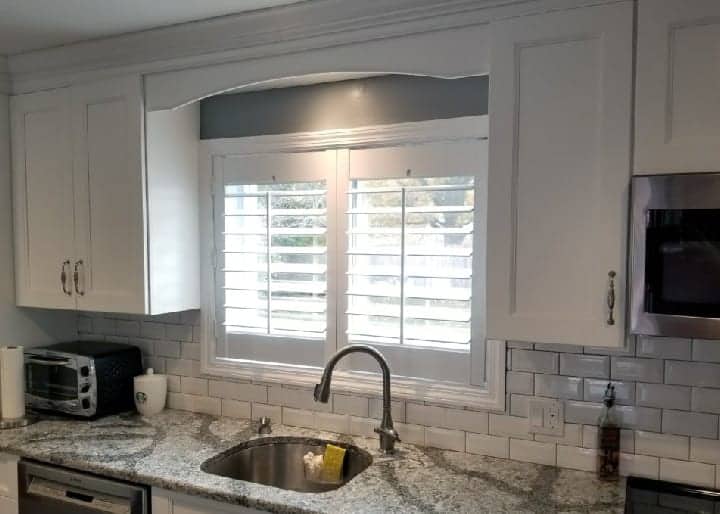
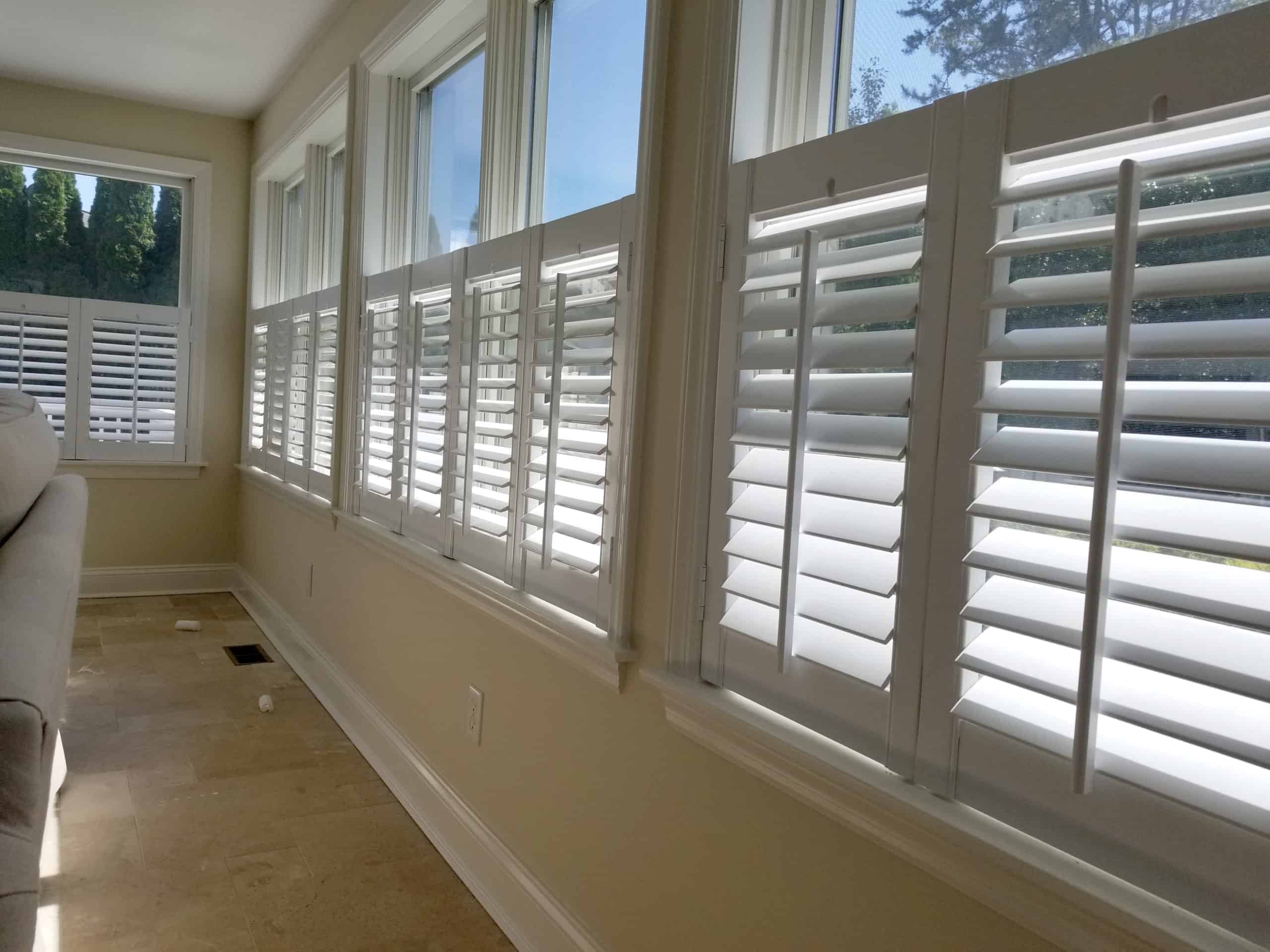
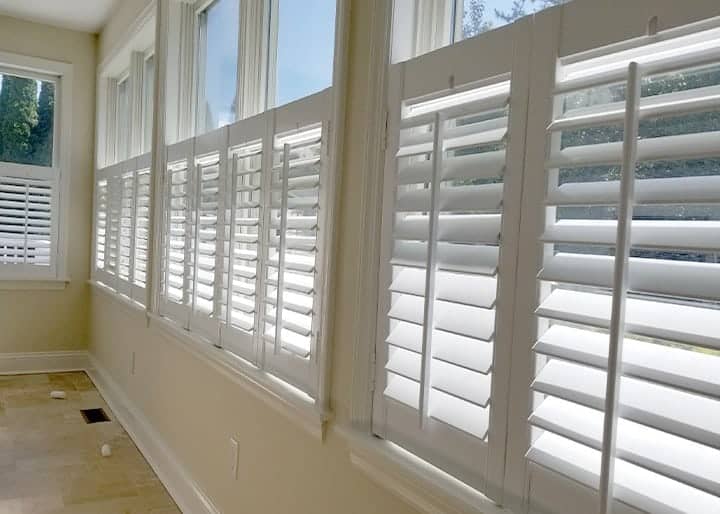
Plantation shutters are interior window treatments. They’re mounted inside your home on or around the window frame, and they’re designed for light control, privacy, and aesthetics. The wide louvers — typically 2.5, 3.5, or 4.5 inches — let you adjust how much light and airflow comes through, and they give a home a clean, finished look that works especially well in coastal interiors where the goal is bright, open, and uncluttered.
What plantation shutters are not is storm protection. Closing your interior plantation shutters before a hurricane does nothing to protect your windows from impact debris or the pressure differentials a major storm creates. This is the most important thing to understand before making any decisions about your home’s window situation.
Why Faux Wood and Poly Shutters Are the Right Call for Brunswick County Homes
Real wood plantation shutters are beautiful. They’re also a poor choice for most homes within a mile of the Atlantic coast, and a questionable choice for anything in Brunswick County’s humid, salt-adjacent environment. Wood absorbs moisture. It warps. It cracks. The finish peels. What looks pristine in a Charlotte showroom starts showing its age fast on a home in Oak Island or Holden Beach, where the air itself carries a salt load year-round.
Faux wood and poly shutters — sometimes called polywood shutters — are engineered specifically for environments like this. They don’t absorb moisture, they won’t warp or crack in coastal humidity, and they hold up against UV exposure without fading or degrading the way natural materials do. For a vacation rental property where you’re not there every week to check on things, that durability isn’t a luxury — it’s a practical necessity.
The finish options on poly and faux wood shutters have come a long way. They look like real wood. They paint and stain convincingly. And they carry manufacturer warranties that real wood products often can’t match for coastal applications. When we bring samples to your home for a consultation, we’ll show you the difference side by side — because it’s one of those things that’s much clearer in person than in a product description.
For homes in communities like Carolina Shores or St. James, where HOA guidelines may govern exterior and interior aesthetics, poly shutters also tend to check the right boxes. They’re consistent in appearance, available in a range of colors and finishes, and don’t require the kind of ongoing maintenance that wood shutters demand to keep looking sharp. That matters whether you’re living there full-time or managing the property from out of state.
Can the Same Home Have Both Hurricane Shutters and Plantation Shutters?
Yes — and for many Brunswick County homeowners, that’s exactly the right answer. These two products operate in completely different spaces. Hurricane shutters live on the exterior of your home and only come into play during storm season or when a storm is approaching. Plantation shutters are interior treatments that you interact with every day — adjusting the light in your living room, adding privacy to a bedroom, giving your coastal home the finished, intentional look that bare windows or generic blinds never quite achieve.
Having both isn’t redundant. It’s the complete solution. Your plantation shutters handle the everyday — the aesthetics, the light, the coastal interior feel you’re going for. Your hurricane shutters handle the one thing plantation shutters were never built to do: protect your home when a storm makes landfall.
This is a distinction that gets lost when homeowners are shopping around and talking to providers who only do one or the other. A company that specializes exclusively in storm shutters isn’t going to help you think through your interior design. A company that only does decorative window treatments may not be equipped to advise you on impact ratings and building code compliance for your specific zone in Brunswick County. We do both, which means we can look at your home as a whole — what it needs to look great every day and what it needs to survive storm season.
The process works the same way regardless of which product you’re adding. We come to you with samples, measure every window, and give you a quote the same day. Custom orders typically take ten to twenty-one days to manufacture, which is why starting the conversation before hurricane season — not during it — gives you the most options and the least stress. Whether you’re in a new construction home in Leland, a beachfront property on Sunset Beach, or a rental cottage in Calabash, the approach is the same: figure out what your specific home actually needs, and build from there.
Choosing the Right Window Shutter Installation for Your Brunswick County Home
The bottom line is straightforward. Hurricane shutters protect your home from storms. Plantation shutters make your home look and feel the way you want it to every other day of the year. They’re different products built for different jobs, and the coastal environment in Brunswick County makes getting both decisions right more important than it would be almost anywhere else.
If you’re still working out which direction makes sense for your home — or whether you need both — that’s exactly the kind of conversation worth having before you commit to anything. Every home is different. A barrier island rental in Ocean Isle Beach has different needs than a new build in Leland or a waterfront home in Southport.
We’ve been doing this work across Brunswick, New Hanover, and Pender Counties long enough to know what holds up here and what doesn’t. Reach out and we’ll come to you — samples in hand, ready to measure and give you a real answer.