Summary:
If your blinds look fine in the morning and somehow worse by fall, you’re not imagining it. Salt air does real damage — faster than most people realize, and often in ways you can’t see until the hardware is already corroding or the slats are warped beyond adjustment. In Brunswick County’s coastal climate, window treatments face genuine challenges that inland homes simply don’t encounter. This page covers what’s actually happening to your window treatments, how to build a realistic maintenance routine, and how to tell the difference between a quick fix and a replacement. No fluff — just what you need to know.
Window Treatment Maintenance in a Coastal Climate: What's Different Here
Most window treatment care guides are written for average indoor environments — moderate humidity, no salt exposure, predictable conditions. Brunswick County is none of those things. From Sunset Beach to Southport, homes here deal with salt-laden air that travels miles inland, relative humidity that regularly climbs above the 50% threshold where mold and warping become real concerns, and UV exposure that fades fabrics and weakens materials faster than you’d expect.
The result is that standard mini blinds — the kind you’d grab at any big-box store — often last only two to four years in our coastal conditions. Fabric shades that might hold up seven years inland can deteriorate noticeably faster here without the right care. The materials matter, but so does what you do after installation. Maintenance isn’t optional in this environment. It’s what separates a window treatment that lasts a decade from one that needs replacing after a couple of summers.
What Salt Air Actually Does to Blinds, Shutters, and Hardware

Salt particles don’t just sit on the surface of your blinds. They work their way into the mechanisms — the tilt rods, the cord locks, the mounting brackets — and once moisture is added, which happens every single day in coastal NC, corrosion starts. The visible signs come later: rust streaks on slats, stiff or jammed mechanisms, hardware that no longer holds the treatment level. By the time you notice those things, the damage has usually been building for months.
Fabric treatments face a different problem. Salt deposits embed in the weave of the material and, combined with humidity, create the conditions mold needs to take hold. You might notice a faint musty smell before you see anything, or small dark spots near the bottom hem where moisture collects. Roman shades, woven wood shades, and fabric roller shades are all vulnerable in this way — especially in rooms with less airflow, like bathrooms, laundry rooms, or north-facing bedrooms.
Wood blinds and real wood shutters have their own set of issues. Wood absorbs moisture, swells, and warps — sometimes enough that the slats won’t tilt properly or the shutter panels won’t close flush. This is exactly why we recommend faux wood, composite, and poly materials to our Brunswick County clients. They look nearly identical to real wood, but they don’t absorb moisture, they don’t warp, and they hold up in conditions that would ruin a natural wood product within a few seasons.
The good news is that none of this is inevitable. Salt air damage is largely preventable with the right materials and a maintenance habit that doesn’t require much time — just consistency.
Salt Air Damage Prevention: A Realistic Monthly Routine
The single most effective thing you can do for your window treatments in Brunswick County is also the simplest: wipe them down once a month. A damp cloth with a small amount of mild dish soap removes salt film from slat surfaces and surrounding hardware before it has a chance to embed and begin the corrosion cycle. For most treatments, this takes under ten minutes per window. That’s it. That’s the habit that separates treatments that last fifteen years from ones that look rough after three.
Beyond the monthly wipe-down, a few other habits make a meaningful difference. Dusting weekly — even just with a microfiber cloth or a feather duster — keeps salt particles from accumulating between deeper cleanings. A silicone-based lubricant applied to tracks and moving parts every few months keeps mechanisms operating smoothly and creates a light barrier against moisture. And keeping indoor humidity below 50% with a dehumidifier or proper ventilation slows the mold and warp risk considerably.
For vacation rental owners on Holden Beach or Ocean Isle Beach, the maintenance calculus is a little different. Treatments in rental properties see more handling, more exposure from open windows and doors, and less consistent care between guest stays. That means more frequent inspection — ideally at the start and end of each rental season — and a stronger reason to choose materials that are genuinely built for the environment. A treatment that looks bad in a rental listing photo affects bookings. It’s worth treating the selection and maintenance of window treatments in a rental the same way you’d treat any other aspect of the property that guests interact with directly.
One thing worth knowing: you can clean most treatments yourself without causing damage, as long as you’re using the right approach for the material. The mistake most people make is reaching for a household cleaner that’s too harsh — bleach, ammonia-based products, or abrasive sprays can discolor or weaken synthetic materials and strip the finish from hardware. Mild soap and water handles the vast majority of routine cleaning needs without any risk.
Blind Cleaning for Coastal Homes: What Changes by Material
Not all window treatments clean the same way, and using the wrong method on the wrong material is one of the most common ways homeowners accidentally shorten the lifespan of their treatments. The good news is that once you know what you’re working with, the process is straightforward.
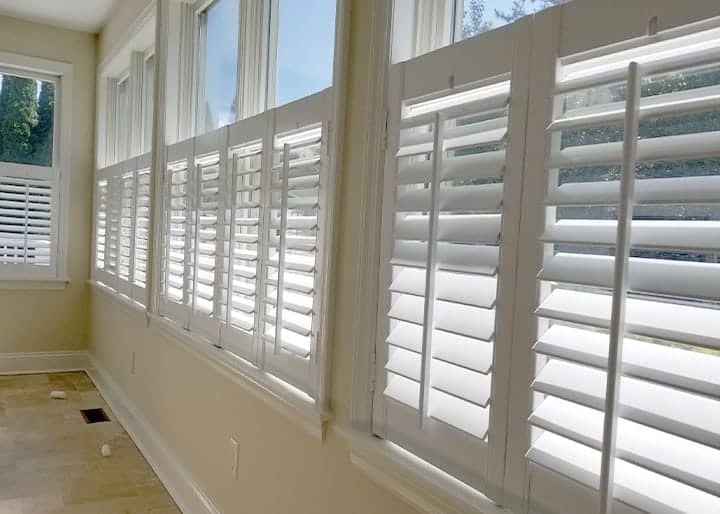
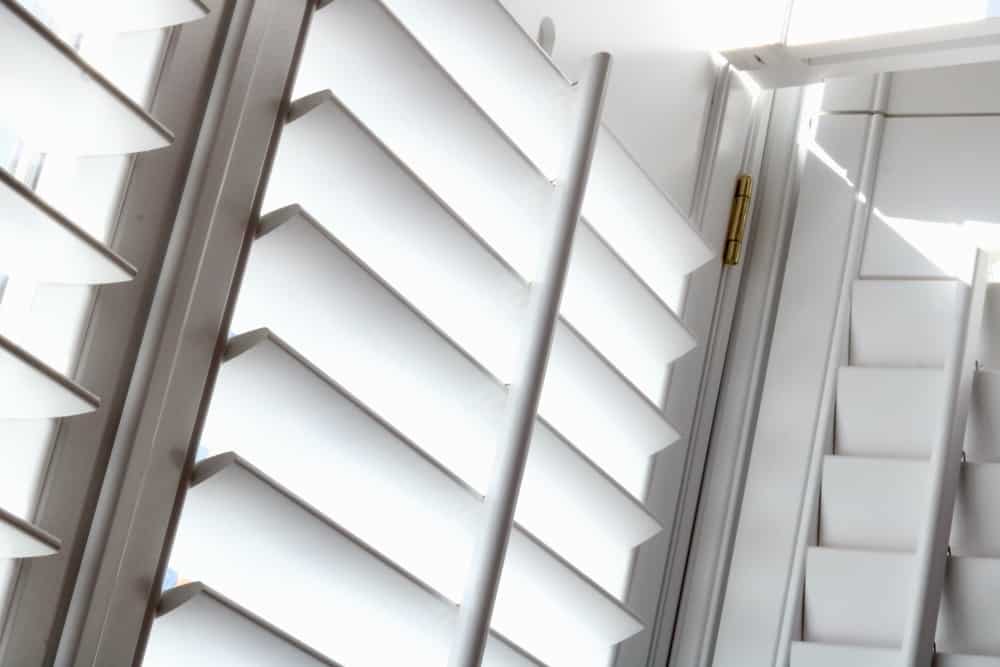
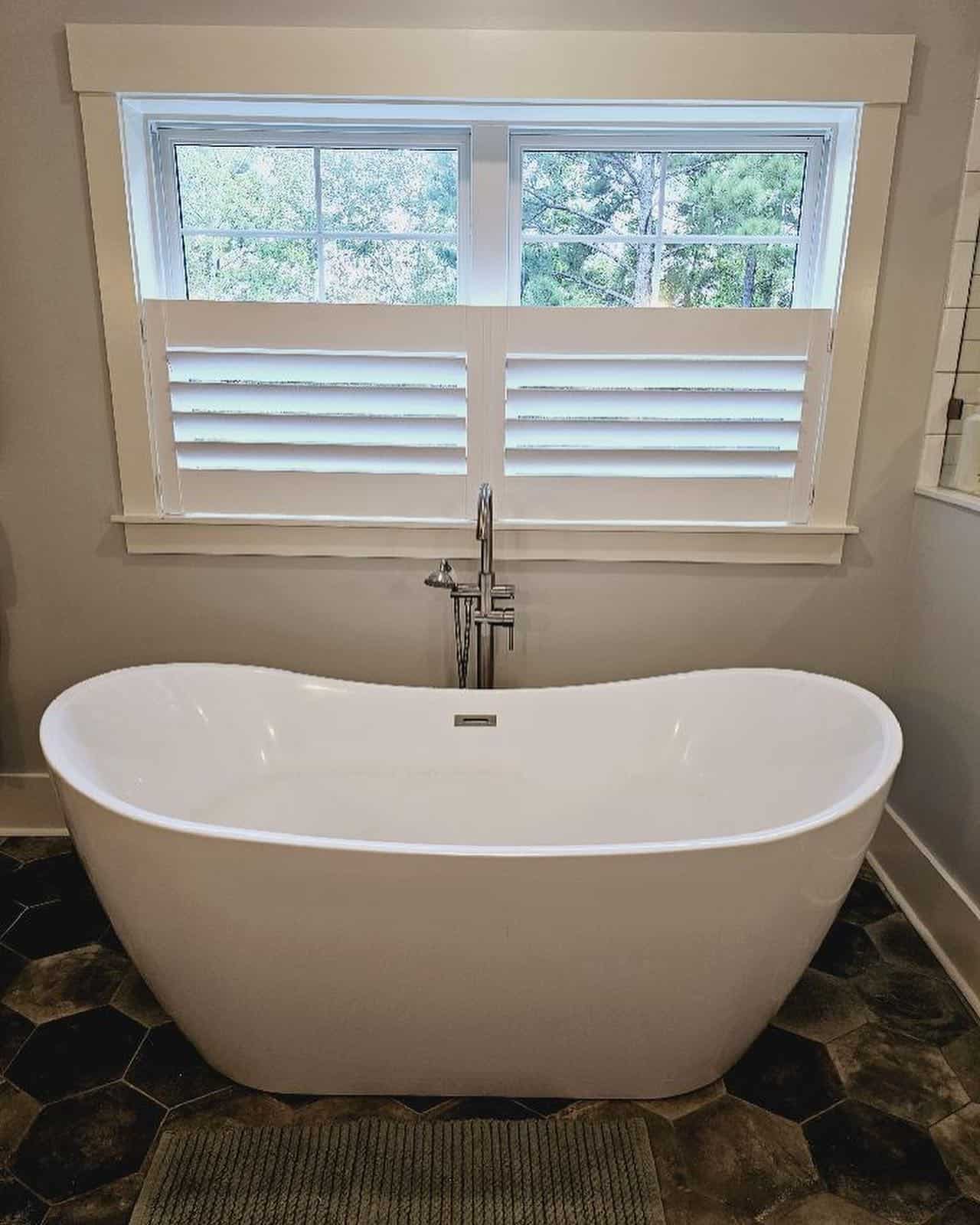
Faux wood and composite blinds — the materials we most commonly recommend for Brunswick County homes — are the most forgiving. They can handle a damp cloth, mild soap, and even a gentle rinse without any risk of warping or discoloration. Fabric shades require more care: spot cleaning with a damp cloth works for surface salt deposits, but deeper cleaning usually means removing the shade and either hand-washing or taking it to a professional cleaner, depending on the fabric. Plantation shutters made from poly or composite material can be wiped down directly on the panel, including the louvers, without removing them from the frame.
How Often Should You Clean Window Treatments in a Coastal Home?
The honest answer is more often than you probably are right now. In a standard inland home, deep cleaning window treatments once or twice a year is reasonable. In Brunswick County — especially in communities within a mile or two of the water, like Caswell Beach, Bald Head Island, or the oceanfront side of Oak Island — the salt deposit rate is high enough that monthly light cleaning and quarterly deeper cleaning is a more appropriate schedule.
Here’s a practical way to think about it by season. Spring, specifically March through May, is the best time for a thorough cleaning and inspection before the summer rental season and before peak humidity arrives. Check hardware for early signs of corrosion, lubricate moving parts, and assess whether any treatments are showing wear that might become a problem by August. Summer is the most damaging season — high UV, maximum humidity, peak salt air activity — so keeping up with monthly wipe-downs during these months matters more than any other time of year. Fall is a good time for another round of deep cleaning after the summer season, and it’s when we’d recommend having a professional take a look at any treatments that seem off — stiff mechanisms, uneven hanging, or visible hardware wear. Winter is lower intensity but not maintenance-free; salt air doesn’t stop in January.
For homeowners who moved to Brunswick County recently from somewhere inland — and our region has seen significant growth in new arrivals — this level of maintenance attention might feel like a lot. It’s genuinely more than you’d need in most places. But the coastal environment here is real, and the difference between treatments that last five years and treatments that last fifteen often comes down to whether someone built a simple routine early on.
When to Call a Professional Instead of Handling It Yourself
DIY maintenance handles a lot. Routine dusting, monthly wipe-downs, and even basic spot cleaning are all well within what most homeowners can manage without any special tools or experience. But there are situations where calling us in is the smarter move — not because the task is beyond you, but because catching a problem early is almost always cheaper than dealing with it after it’s progressed.
The clearest signal that it’s time for a professional look is a mechanism that’s stopped working correctly. If a blind won’t tilt evenly, a shade won’t retract smoothly, or a shutter panel won’t close flush, that usually points to hardware corrosion or a mounting issue — neither of which gets better on its own. Trying to force a mechanism that’s seized up with salt corrosion can snap a cord or crack a component that would otherwise be repairable.
Visible rust on mounting hardware is another one. Surface rust on slats is cosmetic. Rust on the brackets, the mounting rail, or the cord lock hardware is structural — it affects how the treatment is held in place and how reliably it operates. That’s a professional assessment, not a wipe-down situation.
Annual inspections are worth scheduling regardless of how well your treatments appear to be holding up. An experienced eye can spot early corrosion, identify hardware that’s close to failure, and catch mold in fabric treatments before it spreads. We’ve seen treatments in homes near Holden Beach and Sunset Beach that looked perfectly fine from across the room but had significant hardware deterioration that the homeowner had no idea about. The annual check is low-cost insurance against a much more expensive replacement down the road.
If you’re not sure whether what you’re seeing is a maintenance issue or a replacement issue, that’s exactly the kind of question worth asking before assuming the worst. Sometimes a treatment that looks rough just needs a proper cleaning and a hardware adjustment. Sometimes it’s genuinely at the end of its useful life. Knowing the difference saves money either way.
Keeping Your Brunswick County Window Treatments in Good Shape Long-Term
The coastal environment in Brunswick County is hard on a lot of things — and window treatments are near the top of that list. But the damage is largely manageable if you start with the right materials, build a simple maintenance routine, and know when to get a professional involved before a small problem becomes an expensive one.
The core takeaways are straightforward: choose moisture-resistant materials, clean monthly, inspect seasonally, and don’t wait until something stops working to have it looked at. Those habits alone will extend the life of your treatments significantly — often doubling how long they last compared to treatments that get no attention at all.
If you’re unsure where to start, or if you’ve moved to the area recently and want an honest assessment of what you’re working with, we offer free in-home consultations across Brunswick County and the surrounding coastal communities. We bring samples directly to your home, evaluate your specific situation, and give you a straight answer on what makes sense — no pressure, no guesswork.