
Summary:
How Voice-Controlled Shades Actually Work
Voice-controlled shades aren’t magic. They’re motorized window treatments connected to your home’s WiFi network through a smart hub. That hub translates commands from Alexa, Google Home, or Apple HomeKit into actions your shades understand.
The setup is straightforward. You install the motorized shades, connect them to a compatible smart hub, and link that hub to your voice assistant through an app. From there, you can say things like “Alexa, close the living room blinds” or “Hey Google, open the bedroom shades to 50%”—and they respond instantly.
What makes this different from a standard remote-controlled shade is the integration. Voice-controlled systems let you create routines, set schedules based on sunrise and sunset, and control multiple windows at once. You’re not just automating one task. You’re building a system that adapts to how you actually live.
What You Need to Connect Shades to Alexa or Google Home

Getting your shades to respond to voice commands requires three things: motorized window treatments, a compatible smart hub, and a voice assistant device you already own.
The motorized shades themselves come with built-in motors powered by rechargeable batteries, plug-in adapters, or hardwired connections. Most homeowners in coastal North Carolina prefer rechargeable battery options because they keep the look clean and avoid the hassle of visible cords or outlets. These batteries typically last several months between charges depending on how often you use the shades.
The smart hub is the bridge between your shades and your voice assistant. Popular options include systems from Lutron, Hunter Douglas PowerView, and universal hubs that work across multiple brands. The hub connects to your home WiFi and communicates with both your shades and your Alexa or Google Home device. You only need one hub per home in most cases, though larger properties might benefit from a second hub or a signal repeater to ensure reliable coverage.
Your voice assistant—whether that’s an Echo Dot, Google Nest Mini, or any other Alexa or Google-enabled device—sends your spoken commands to the hub through your WiFi network. The hub then tells your shades what to do. It all happens in under a second, so it feels instant.
Setup typically takes less than an hour. You’ll download the manufacturer’s app, connect the hub to your WiFi, pair your shades to the hub, and then link the hub to your Alexa or Google Home account. Most systems walk you through each step with prompts, and once it’s done, you won’t need to touch it again unless you’re adding new shades or creating custom routines.
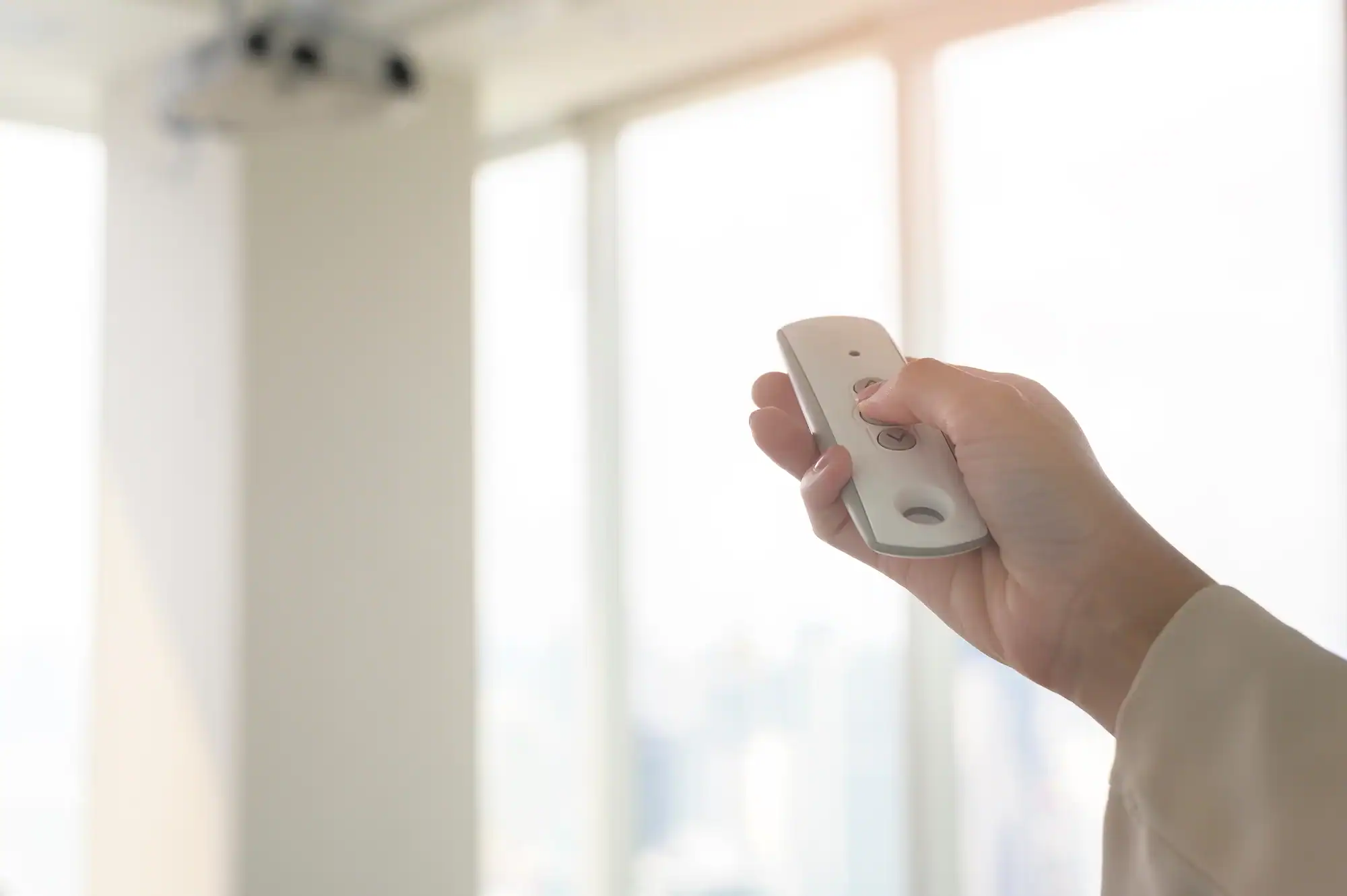
One thing worth noting: you do need a stable internet connection for voice control and remote access to work. If your WiFi goes down temporarily, you can still operate the shades using the manufacturer’s app via Bluetooth (if supported) or with a handheld remote that comes with most systems. So you’re never truly locked out of controlling your windows.
Voice Commands and Automation Routines That Actually Save You Time
The real value of voice-controlled shades shows up in how you use them day to day. Basic voice commands are simple and intuitive. You can say “Alexa, open the kitchen blinds,” “Google, close all the shades,” or “Alexa, set the bedroom shades to 25%.” The system recognizes the shade names you assigned during setup, so you can control individual windows, entire rooms, or your whole house with a single phrase.
But where things get interesting is with automation routines. These let you program your shades to move automatically based on time, weather, or other smart home triggers. For example, you can create a “Good Morning” routine that gradually opens your bedroom shades at sunrise, giving you natural light to wake up to without any manual effort. Or set an “Away Mode” that randomly opens and closes shades throughout the day to make it look like someone’s home—a simple but effective security measure when you’re traveling.
In coastal areas like Wilmington, Oak Island, or Jacksonville, managing sunlight becomes especially important during summer months when intense UV exposure can heat your home and fade your furniture. You can program your shades to automatically close on south-facing windows during peak afternoon sun, reducing the load on your air conditioning and protecting your interiors from damage. Then have them reopen in the evening when temperatures drop and you want to enjoy the view.
Integration with other smart devices takes this even further. Pair your shades with smart thermostats, and they can work together to optimize your home’s temperature. When your thermostat detects the house is getting too warm, it can trigger your shades to close. When it’s winter and you want passive solar heating, your shades can open automatically to let sunlight warm your rooms naturally, reducing heating costs.
You can also layer multiple actions into a single routine. A “Movie Time” scene might close all your living room shades, dim the lights, and turn on your TV with one voice command. A “Bedtime” routine could close every shade in your house, lock your smart locks, arm your security system, and adjust your thermostat—all triggered by saying “Alexa, goodnight.”
The flexibility here is what makes voice-controlled shades worth the investment. You’re not just getting remote control. You’re getting a system that learns your patterns, responds to your environment, and removes dozens of small tasks from your daily routine.
Choosing Smart Shades That Survive Coastal North Carolina
Not all voice-controlled shades are built the same, and that matters more in coastal environments where salt air, humidity, and intense sunlight create challenges standard window treatments weren’t designed to handle.
When you’re selecting motorized shades for homes in Brunswick County, New Hanover County, Onslow County, or Pender County, you need to think about durability first. Coastal conditions accelerate wear on materials. Salt air doesn’t just corrode metal components—it penetrates fabrics and breaks down fibers faster than you’d see inland. Humidity levels that regularly exceed 70% create environments where mold, mildew, and warping become real concerns if you choose the wrong materials.
That’s why many coastal homeowners opt for cellular shades, solar shades, or roller shades made with marine-grade or UV-resistant fabrics. These materials hold up better against the elements while still offering the light control and insulation properties you want. Motorized systems also reduce the physical stress on your shades since you’re not constantly pulling cords or adjusting slats by hand, which extends their lifespan even further in challenging conditions.

Comparing Motorized Roller Shades, Cellular Shades, and Drapery Systems
Motorized roller shades are the most popular choice for smart home integration because they’re sleek, versatile, and work with nearly any décor style. They consist of a single piece of fabric that rolls up into a compact cassette when raised. You can choose from sheer fabrics that filter light while maintaining your view, light-filtering options that reduce glare without total darkness, or blackout materials that block light completely—ideal for bedrooms or media rooms.
The benefit of roller shades in a voice-controlled setup is their simplicity and reliability. Fewer moving parts mean less that can go wrong, and the motors are typically very quiet. They’re also one of the more affordable motorized options, making them a good entry point if you’re automating multiple windows at once. For coastal homes, choosing roller shades with UV-resistant or moisture-resistant fabrics ensures they’ll perform well even in humid or sun-intense environments.
Cellular shades, also called honeycomb shades, offer superior energy efficiency thanks to their unique construction. The fabric forms pockets of air that act as insulation, helping keep your home cooler in summer and warmer in winter. This makes them particularly valuable in coastal North Carolina, where air conditioning costs can climb during humid summers. When you automate cellular shades and program them to close during peak heat, you’re actively reducing the strain on your HVAC system and lowering your energy bills.
Motorized cellular shades also excel at light control. You can choose single-cell or double-cell construction, with double-cell providing even better insulation. They’re available in light-filtering and blackout options, and many models offer top-down/bottom-up functionality, meaning you can lower the shade from the top or raise it from the bottom for privacy while still letting light in. When motorized, this feature becomes even more useful since you can adjust both positions with voice commands or app control.
Motorized drapery systems bring a different aesthetic—one that’s more traditional and elegant. These systems use a motorized track that opens and closes your drapes smoothly and silently. They’re ideal for large windows, sliding glass doors, or spaces where you want a softer, more luxurious look. Motorized draperies can be layered with sheer panels for daytime privacy and heavier fabrics for nighttime blackout, giving you maximum flexibility.
The advantage of motorized drapery in a smart home is the dramatic effect. Watching floor-to-ceiling drapes glide open with a voice command creates an impressive experience, and it’s especially practical for hard-to-reach windows or doors where manually pulling heavy fabric would be cumbersome. For coastal homes with expansive ocean views, motorized drapes let you frame those views beautifully during the day and close them effortlessly for privacy at night.
Each option works seamlessly with Alexa compatible blinds, Google Home shades, and Apple HomeKit when paired with the right smart hub. The choice comes down to your priorities—whether that’s energy efficiency, aesthetic preference, light control needs, or budget. Many homeowners mix and match, using roller shades in high-traffic areas, cellular shades in bedrooms for insulation and blackout, and motorized drapes in living spaces for style.
What to Expect for Cost, Installation, and Long-Term Performance
The cost of voice-controlled shades varies based on window size, fabric choice, and the level of smart home integration you want. On average, motorized window treatments run between $300 and $800 per window, including the motor and basic remote control. Adding a smart hub for Alexa or Google Home compatibility typically costs another $150 to $300, but you only need one hub for your entire home in most cases.
For a typical home with 10 to 15 windows, you’re looking at an investment of $4,000 to $10,000 for a full smart shading system. That might sound steep upfront, but the return comes through energy savings, convenience, and the increased value smart home features add to your property. Homes with integrated automation systems tend to sell faster and command higher prices, especially in growing markets like Brunswick County and New Hanover County where buyers expect modern amenities.
Installation is straightforward but benefits from professional expertise, particularly when you’re integrating multiple windows into a cohesive system. We measure each window precisely, ensure motors are properly calibrated, program your smart hub, and walk you through how to use voice commands and app controls. This typically takes a few hours to a full day depending on how many windows you’re automating. The advantage of professional installation is peace of mind—you know everything will work correctly from day one, and you’ll have support if you need adjustments later.
If you’re handy and comfortable with smart home tech, some systems are designed for DIY installation. Brands like IKEA’s FYRTUR and KADRILJ offer more affordable motorized options that you can install yourself, though they may have fewer advanced features than premium systems. DIY can save you money on labor, but you’ll want to be confident in your ability to mount hardware securely, pair devices with your smart hub, and troubleshoot any connectivity issues that arise.
Maintenance for motorized shades is minimal. The most common task is recharging batteries, which typically need charging every 4 to 6 months depending on usage. Some systems offer solar panel charging accessories that extend battery life even further by using natural light to keep them topped off. If you opt for plug-in or hardwired motors, you eliminate battery maintenance entirely.
The shades themselves require the same basic care as any window treatment—occasional dusting or vacuuming to keep fabric clean. Avoid using harsh chemicals, especially on UV-resistant or moisture-resistant materials, as these can break down protective coatings. Most motorized systems are built to last 10 to 15 years with normal use, and the motors themselves often come with warranties ranging from 3 to 5 years.
One consideration specific to coastal homes: salt air can affect electronic components over time. Choosing systems with sealed motors and corrosion-resistant parts helps extend lifespan. Regular cleaning to remove salt buildup from window frames and tracks also prevents mechanical issues. It’s a small amount of extra attention that pays off in long-term reliability.
The long-term value of voice-controlled shades isn’t just about the product—it’s about how they change your daily experience. You save time, reduce energy costs, improve comfort, and gain the flexibility to control your home’s environment from anywhere. For homeowners in coastal North Carolina who are building smart homes or upgrading existing properties, motorized shading with hands-free window coverings is one of the most impactful investments you can make.
Making the Switch to Voice-Controlled Window Treatments
Voice-controlled shades aren’t a luxury anymore. They’re a practical upgrade that makes your home more comfortable, more efficient, and easier to manage. Whether you’re dealing with hard-to-reach windows, looking to cut energy costs, or simply want the convenience of controlling your entire home with your voice, smart window automation delivers real value.
The technology is proven, the setup is straightforward, and the long-term benefits—from energy savings to enhanced security—make it a smart investment for coastal North Carolina homeowners. You’re not just adding a feature. You’re improving how your home works for you every single day.
If you’re ready to explore voice-controlled shading for your home in Brunswick County, New Hanover County, Onslow County, or Pender County, we can walk you through your options, recommend the right systems for your space, and handle professional installation from start to finish.