
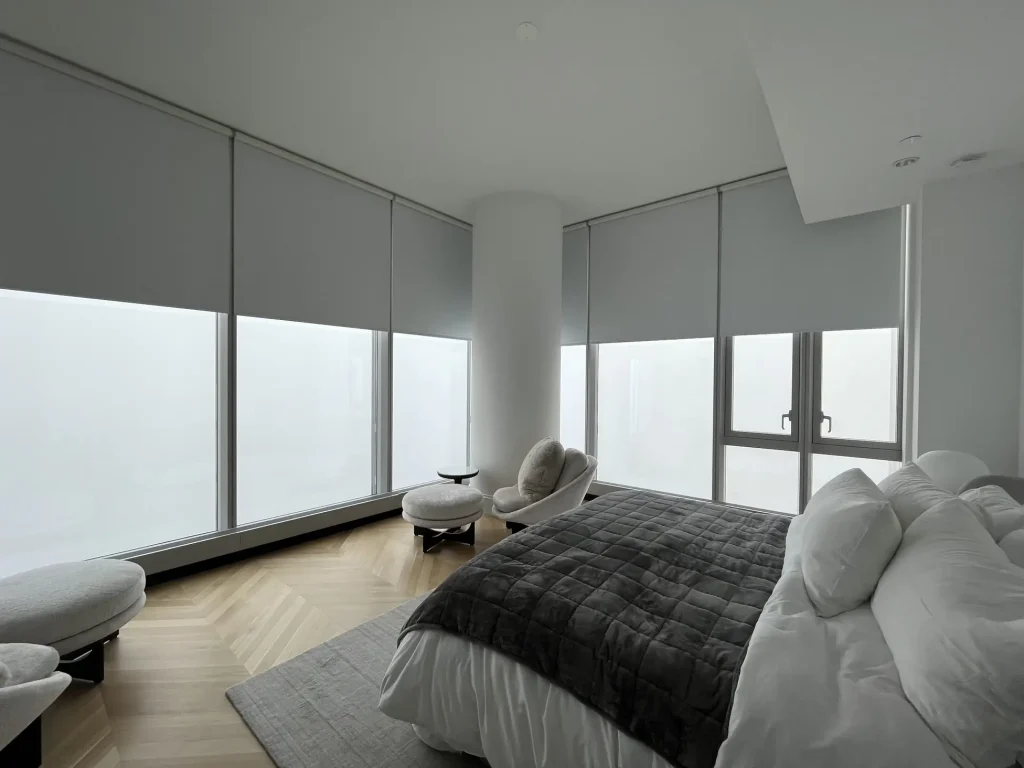
Summary:
If you live anywhere from Leland to Oak Island, you already know what June through September feels like. The AC runs constantly, the west-facing rooms are nearly unusable by 3 p.m., and your Duke Energy or BEMC bill tells the whole story. What most homeowners don’t realize is that their windows — not their HVAC system — are often the biggest factor driving those costs up. The U.S. Department of Energy estimates that windows account for 25 to 30 percent of residential heating and cooling energy use. The good news is you don’t need new windows to fix it. The right window treatments can do most of the heavy lifting — and do it faster and for far less money than a window replacement ever could.
Energy Efficient Window Treatments: What Actually Reduces Heat and Cooling Costs
Not all window treatments are created equal when it comes to energy performance. Some are decorative. Some offer modest light control. And a few — the right ones, installed correctly — can meaningfully reduce the heat coming into your home and take real pressure off your air conditioning system.
The three product types that consistently deliver the best results are cellular shades, solar shades, and plantation shutters. Each works differently, and the best choice depends on your window orientation, how much natural light you want to keep, and whether you’re dealing with a primary residence, a vacation rental, or a newly built home in one of Brunswick County’s fast-growing communities.
Insulating Window Treatments: How Cellular Shades Block Heat at the Glass

Cellular shades — sometimes called honeycomb shades — are the most effective insulating window treatment available. The name comes from their structure: rows of hexagonal cells that trap air between the fabric and the glass, creating a thermal buffer that slows heat transfer in both directions. In summer, that means less solar heat pushing into your living space. In winter, it means less warmth escaping through the glass.
The performance numbers are real. Our Graber cellular shades are documented to reduce heat transfer by up to 74 percent. Industry data suggests that consistent use of cellular shades can reduce overall heating and cooling costs by up to 20 percent. For a Brunswick County home running its AC from May through October — a full six-month cooling season — that adds up to meaningful savings on every bill.
Double-cell construction outperforms single-cell because it creates two layers of trapped air instead of one. If your home has large south- or west-facing windows, or if you’re in a community like Holden Beach or Ocean Isle Beach where tree coverage is minimal and the afternoon sun hits the glass hard, double-cell cellular shades are worth the modest additional investment.
One thing worth understanding: cellular shades work best when they’re sized and mounted precisely. A shade that doesn’t fit the window frame correctly leaves gaps where heat sneaks in around the edges, which undercuts the insulating effect entirely. This is why professional measurement matters more than most people expect — it’s not just about aesthetics.
Summer Window Treatments: Blocking UV Without Losing Your View
Solar shades take a different approach. Instead of insulating, they filter. A solar shade is made from an open-weave fabric that blocks a specific percentage of sunlight based on its openness factor — the tighter the weave, the more light and heat it stops. A shade with a one to three percent openness factor can block 95 to 99 percent of UV rays while still allowing a view through the fabric, especially at night when interior lights are on.
For coastal homes across Brunswick County with water views, marsh views, or even just well-landscaped yards, this matters. You don’t want to black out a window that cost you something to look through. Solar shades let you keep the view while dramatically reducing the solar heat gain that makes a room uncomfortable and drives up your cooling load.
The UV protection side of this is worth taking seriously. UV radiation is responsible for roughly 40 percent of furniture fading. If you’ve ever noticed a couch cushion or hardwood floor that’s noticeably lighter near a sunny window, that’s the cumulative effect of unfiltered UV exposure over months and years. Solar shades address that directly — protecting furniture, flooring, rugs, and artwork without requiring you to keep the blinds closed all day.
For Brunswick County homes that double as vacation rentals on Oak Island or Sunset Beach, this is an investment with a clear return. Guests notice worn, faded interiors. Owners who protect their furnishings spend less replacing them and maintain higher rental ratings over time. Solar shades are a practical, low-maintenance way to extend the life of everything inside the home while keeping it comfortable for guests during peak summer season.
Choosing the Right Materials for Brunswick County's Coastal Climate
Energy efficiency is only part of the equation here. Brunswick County’s coastal environment introduces a challenge that doesn’t come up in most window treatment guides: salt air and humidity will destroy the wrong materials over time.
Real wood blinds and shutters absorb moisture, warp, swell, and eventually fail in homes within ten to twenty miles of the coast. This is the entire county — from Leland and Shallotte to every beach community along the Brunswick shore. If you’ve ordered real wood treatments online or bought them from a big-box store without this context, you may already know what that looks like.
Why Faux Wood and Poly Shutters Are the Smart Choice for Coastal NC Homes
Faux wood blinds and poly composite shutters are engineered to perform in exactly the environment Brunswick County delivers. They don’t absorb moisture, they don’t warp in the humidity, and they don’t degrade from salt air exposure. Visually, a quality faux wood blind or poly shutter is indistinguishable from real wood — the difference shows up years later, when the real wood version has swelled shut or cracked and the composite version still operates smoothly.
We’ve seen this play out in coastal homes across the county. A new homeowner relocating from Ohio or New Jersey, unfamiliar with what the coastal climate does to materials, orders real wood shutters online. Two summers later, they’re warped and won’t close properly. The replacement cost is the same as if they’d done it right the first time — except now they’ve also lost two years of energy performance and had to deal with the hassle.
Poly shutters also add insulating value in a way that soft treatments can’t. The solid panel construction creates a dead air space between the shutter and the window glass, which functions as an additional thermal layer. This reduces heat gain in summer and heat loss in winter — a year-round benefit that makes plantation shutters one of the better long-term investments for any Brunswick County home, primary residence or rental property.
For vacation rental owners in communities like Holden Beach, Sunset Beach, and Ocean Isle Beach, poly shutters are particularly practical. They’re durable enough to handle high guest turnover, easy to clean, and they look sharp in listing photos — which matters when you’re competing for bookings.
Motorized Window Treatments: Automating Energy Savings During Peak Hours
If you’re already thinking about energy efficiency, motorized window treatments are worth understanding — not as a luxury upgrade, but as an energy management tool.
The logic is straightforward. The hours between 10 a.m. and 4 p.m. are when solar heat gain is highest, when your AC is working hardest, and when your energy costs are accumulating fastest. If your treatments are closed during those hours on your south- and west-facing windows, your cooling load drops. If they’re open because nobody’s home to close them, you’re paying for it all afternoon.
Motorized shades from brands like Hunter Douglas can be programmed to close automatically during peak sun hours and reopen in the evening — with no manual effort required. For households where people are out during the day, this is genuinely useful. For vacation rentals where guests may not think about it at all, it’s even more valuable. You’re not relying on anyone to remember.
The energy benefit compounds over a full Brunswick County summer. Six months of automated peak-hour management across multiple south- and west-facing windows adds up to a measurable reduction in cooling costs. When you factor in that motorized treatments also protect furniture from UV exposure during those same peak hours, the case gets stronger.
One thing worth noting: motorized treatments are only as effective as their installation. The programming needs to account for your specific window orientation, your local sun angle, and seasonal variation. This is one of those situations where having someone who knows the product — and who installs it personally — makes a real difference in whether you get the performance you paid for.
Getting the Most Out of Window Treatments in Brunswick County, NC
The right window treatments won’t replace your HVAC system — but they will take meaningful pressure off it, month after month, across a cooling season that runs nearly half the year here. Whether you’re dealing with a sun-drenched living room in Leland, a vacation rental on Oak Island that needs durable and low-maintenance solutions, or a new construction home in Shallotte where every window still needs a treatment, the fundamentals are the same: match the product to the performance need, and match the material to the environment.
Cellular shades for insulation, solar shades for UV control, poly shutters for durability and year-round thermal performance, motorized options for hands-off energy management — none of these are complicated once you understand what each one does and why it matters in a coastal climate specifically.
We offer free in-home consultations across Brunswick County. We bring samples directly to your home so you can see how each treatment looks in your actual light — and we’ll tell you honestly what makes sense for your windows, your budget, and how you use the space.

