Summary:
Child Safety: Why Cordless and Motorized Blinds Eliminate Dangerous Cord Hazards
Nine children under age five die every year from window covering cord strangulation. That’s not a scare tactic—it’s data from the Consumer Product Safety Commission. Strangulation can happen in less than a minute, often while a parent is nearby.
Since 1973, at least 440 children ages 8 and under have died this way. The cords on traditional blinds create loops that curious toddlers can’t escape from once entangled. It happens during naps, playtime, or those brief moments when you step out of the room.
Cordless and motorized window treatments remove this risk entirely. There are no dangling cords, no loops, no hazards. If you have young children, grandchildren who visit, or you’re planning to start a family, this isn’t just a nice feature. It’s the feature that matters most.
How Cordless Lift Systems and Smart Lift Technology Work Without Cords

You might wonder if cordless means complicated. It doesn’t.
Cordless blinds and shades use spring-loaded mechanisms or smart lift technology that responds to simple touch or remote control. Push up on the bottom rail to raise them. Pull down to lower them. The tension system holds them in place at whatever height you choose.
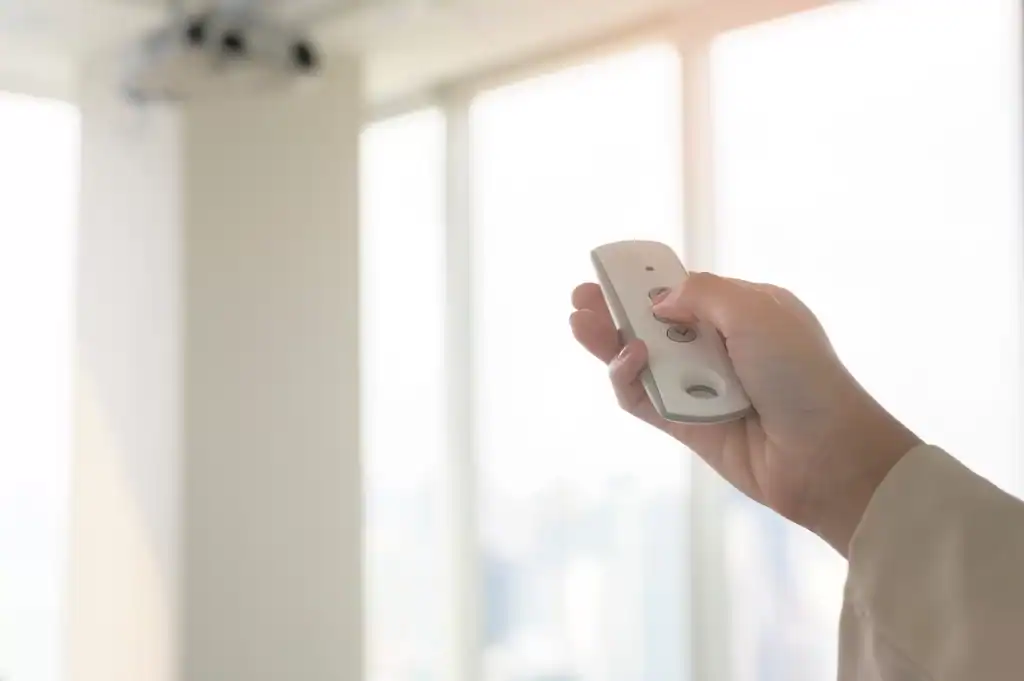
For motorized options, you’re looking at even more simplicity. Press a button on a remote, tap your phone, or use voice commands through Alexa or Google Home. The motor does the work. You get precise positioning without touching the window at all.
This matters in coastal homes where you’re adjusting treatments multiple times daily as the sun moves. High windows, skylights, and those hard-to-reach spots above furniture become manageable. You’re not climbing on furniture or struggling with pull cords that corrode in salt air.
The technology has evolved significantly. Modern motors run quietly—you barely hear them operating. Battery-powered blinds extend 4-6 months between charges for most systems. Some use solar power, eliminating battery concerns entirely. Hardwired options provide continuous power without any maintenance.
The mechanisms are designed for coastal conditions too. Quality motorized systems use corrosion-resistant components that handle humidity and salt exposure better than traditional cord-and-pulley systems. That means fewer repairs and longer functional life in Brunswick County, NC, New Hanover County, NC, Onslow County, NC, and Pender County, NC homes.
Installation matters here. Professional installation ensures proper mounting and tension adjustment, especially important in coastal environments where humidity affects how materials perform. When installed correctly, cordless and motorized systems operate smoothly for 15-20 years.
What Parents Need to Know About Child-Safe Window Blinds Standards in 2026
The window covering industry didn’t always prioritize safety. For decades, corded blinds were standard despite mounting evidence of child deaths. That changed in December 2022 when new mandatory standards took effect.
The ANSI/WCMA A100.1-2022 standard now requires stock blinds sold in stores to be cordless or have inaccessible cords. Operating cords on stock products must be 8 inches or shorter when the blind is fully lowered. Custom blinds follow different rules but must include safety features like tension devices and warning labels.
These regulations exist because voluntary standards failed. Even with warnings and free repair kits available, children kept dying. Nearly half of all incidents with kids and corded window coverings resulted in death—not injury, death.
If you’re shopping for window treatments now, you need to know what to look for. The safest options are completely cordless or motorized. If you’re considering custom treatments that include cords, ask about safety features. Tension devices should keep cords taut against walls. Cord cleats need positioning at least 60 inches from floors.
For homes with existing corded blinds, replacement is the only way to eliminate the hazard completely. Safety devices and retrofit kits reduce risk but don’t eliminate it. If you can’t replace all treatments immediately, start with rooms where children spend the most time—bedrooms, playrooms, and living areas.
The statistics are sobering. About 17,000 children under six were treated in emergency departments for window blind injuries over a 26-year study period. Most serious injuries occurred while a child was under a parent’s care, left alone for less than 10 minutes. The dangers peak between ages 1-4 when toddlers gain mobility but can’t recognize danger or free themselves once entangled.
Maryland is the only state that banned corded blinds in daycares and foster homes. Canada has moved toward banning all corded products. The U.S. hasn’t gone that far, but the message is clear: child-safe window blinds are the standard for homes with children.
If you’re in Brunswick County, NC, New Hanover County, NC, Onslow County, NC, or Pender County, NC and concerned about cord safety, we can help. We understand which products meet safety standards and perform well in coastal conditions. We can show you options that protect children without compromising the durability you need for salt air and humidity.
Energy Efficiency: How Motorized Shades Reduce Heating and Cooling Costs
Your windows are costing you money. Not because they’re broken—because they’re not managed properly throughout the day.
Heat gain through windows accounts for a significant portion of cooling costs in coastal North Carolina summers. Heat loss through those same windows drives up heating bills in winter. Motorized window treatments address both problems through window treatment automation and smart home integration.
Studies show properly managed motorized blinds can reduce heating and cooling costs by 15-20%. That’s real money back in your pocket, month after month. The savings come from precise control over when treatments open and close based on sunlight, temperature, and time of day.

Automated Scheduling That Optimizes Natural Light and Reduces HVAC Strain
Manual blinds require you to remember to close them before the afternoon sun heats up your living room. You have to be home. You have to notice. You have to take action.
Most people don’t, and their air conditioning runs harder to compensate.
Motorized treatments eliminate that problem. You program them once, and they adjust automatically based on the schedule you set. Close during peak sun hours to block heat. Open during cooler times to let in natural light and reduce the need for artificial lighting.
Smart scheduling goes beyond simple timers. Modern systems integrate with temperature sensors and sunlight detectors. When sensors detect your home getting too warm, shades close automatically before your air conditioning kicks on. When indoor temperature drops below your preferred level, shades open to let in solar warmth.
This matters significantly in coastal homes with large windows and water views. Those beautiful expanses of glass create thermal challenges. South-facing windows gain heat rapidly on sunny days. North-facing windows lose heat in winter. East-facing windows flood rooms with intense morning sun. West-facing windows bake interiors during afternoon hours.
Motorized treatments with remote control window coverings capability address each exposure differently. Program east-facing shades to close after morning light passes. Set west-facing treatments to lower before afternoon heat arrives. Adjust south-facing coverings based on seasonal sun angles.
The energy savings compound over time. Cellular shades with motorization offer R-values up to 5.0, creating insulating air pockets that reduce thermal transfer through windows. When properly scheduled, these treatments maintain stable indoor temperatures with less HVAC cycling.
Your heating and cooling systems work less, consume less energy, and last longer. The reduced strain means fewer repairs and delayed replacement costs. The initial investment in motorization pays back through lower utility bills—typically within 3-5 years depending on your home’s window area and sun exposure.
For Brunswick County, NC, New Hanover County, NC, Onslow County, NC, and Pender County, NC homes, this benefit is amplified by coastal conditions. High humidity makes cooling systems work harder. Salt air corrodes HVAC components faster. Any reduction in system strain extends equipment life while cutting energy costs.
Smart Home Integration with Thermostats and Voice Control for Automated Home Privacy
Motorized window treatments become even more powerful when connected to your smart home ecosystem. Integration with thermostats, lighting systems, and weather sensors creates a coordinated approach to energy management that manual blinds can’t match.
Here’s how it works in practice. Your smart thermostat detects your home is warming above your preferred temperature. Instead of immediately running air conditioning, it signals your motorized shades to close on sun-facing windows. The shades block solar heat gain, often preventing the need to cool at all.
The reverse happens in winter. Your thermostat senses cooling indoor temperatures. Before activating heat, it opens shades on sunny windows to capture solar warmth. This passive heating reduces how often your furnace runs.
Integration with lighting systems adds another layer of efficiency. When shades open to let in natural light, smart bulbs dim or turn off automatically. You’re using free sunlight instead of electricity. When shades close for automated home privacy or heat control, lighting adjusts to maintain comfortable illumination levels without wasting energy.
Voice control through Alexa, Google Assistant, or Apple HomeKit makes adjustments effortless. Tell your system you’re watching a movie, and shades close while lights dim. Say you’re working from home, and shades adjust to reduce screen glare while maintaining natural light.
Geofencing takes automation further. Your phone’s location triggers actions. When you leave home, shades close to protect furniture from UV damage and reduce cooling costs. When you return, they open to welcome you with natural light. You never think about it—the system handles everything based on your patterns.
Weather integration adds predictive capability. Forecast data tells your system when storms approach. Shades close to protect treatments and reduce wind load. When temperatures will spike, treatments adjust proactively rather than reactively.
The data integration is seamless. Modern motorized systems use Wi-Fi or Z-Wave protocols that communicate with other smart devices without complex setup. Most homeowners complete integration through mobile apps in minutes. We can handle more sophisticated configurations that coordinate multiple zones and treatment types.
For coastal North Carolina homes, this integration addresses specific challenges. High humidity affects how HVAC systems operate. Motorized treatments that respond to humidity sensors help maintain comfortable indoor conditions without overworking dehumidification systems. Salt air corrosion concerns make remote operation valuable—you’re not constantly touching mechanisms that can corrode.
The long-term value extends beyond energy savings. Homes with integrated smart systems command higher resale values. Buyers expect automation and energy efficiency in modern homes. Installing motorized treatments now positions your property competitively when you eventually sell.
Energy efficiency isn’t just about saving money—it’s about comfortable living that doesn’t require constant attention. Motorized window treatments integrated with smart home systems deliver both. Your home maintains ideal conditions automatically while consuming less energy and reducing your environmental footprint.
Making the Switch to Motorized and Cordless Window Treatments in Coastal NC
Cordless and motorized window treatments solve real problems for coastal North Carolina homeowners. They eliminate child safety hazards that cause preventable deaths. They reduce energy bills through automated scheduling and smart integration. They handle hard-to-reach windows effortlessly. They protect your home from coastal elements better than traditional corded systems.
The technology has matured. What felt like a luxury five years ago is now standard in modern homes. Prices have become more accessible. Installation is straightforward with professional help. The long-term value—through energy savings, safety, and increased home value—justifies the investment.
If you’re in Brunswick County, NC, New Hanover County, NC, Onslow County, NC, or Pender County, NC and ready to explore options, we understand the unique challenges of coastal living. With 50 years of experience and over 4,000 successful installations, we know which solutions perform well in salt air and humidity while delivering the safety, efficiency, and convenience you need.