Summary:
After a storm rolls through Brunswick County, the to-do list gets long fast. Roof, gutters, yard debris — the obvious stuff gets handled first. Window treatments rarely make the list until something stops working or starts smelling. By then, what could have been a quick clean or a minor adjustment has turned into a full replacement.
Salt air, wind-driven rain, and high humidity do real damage to blinds, shades, and shutters — even when everything looks fine from across the room. This guide covers what to inspect, how to clean each material type, and what to do before winter weather arrives. If you’re in Oak Island, Holden Beach, Leland, or anywhere along the Brunswick County coast, this is worth reading before the season gets away from you.
Blind Maintenance Tips After a Coastal Storm
Most post-storm blind damage isn’t dramatic. You’re not usually looking at shredded fabric or shattered slats — you’re looking at bent slats, stiff cords, dislodged mounting brackets, and a fine layer of salt residue that dries clear and sits there quietly degrading your hardware. That’s the stuff that gets missed.
The first thing to do after a storm passes is a slow, deliberate walkthrough of every room. Test each treatment — raise it, lower it, tilt it. A mechanism that’s slightly off now will be completely stuck in six months. Check the mounting brackets at the top of each blind and the hardware anchored into the wall. Salt air accelerates corrosion on metal components faster than most homeowners expect, especially within a mile or two of the water.
Window Covering Care: What to Clean and How to Clean It
The right cleaning method depends entirely on what your treatments are made of. Using the wrong product — even something as basic as a harsh all-purpose cleaner — can strip protective coatings, fade fabric, or warp materials that would otherwise last for years. Here’s how to approach each type.
Faux wood blinds are one of the most common choices in coastal homes for good reason — they resist moisture and humidity far better than real wood. To clean them, wipe each slat with a damp microfiber cloth and a small amount of mild detergent. Work from top to bottom, close the slats flat, wipe one side, then tilt them the other way and do the other side. Don’t soak them. Don’t use anything abrasive. After a storm, pay particular attention to the tilt rod and cord hardware — those are the first places you’ll see corrosion beginning.
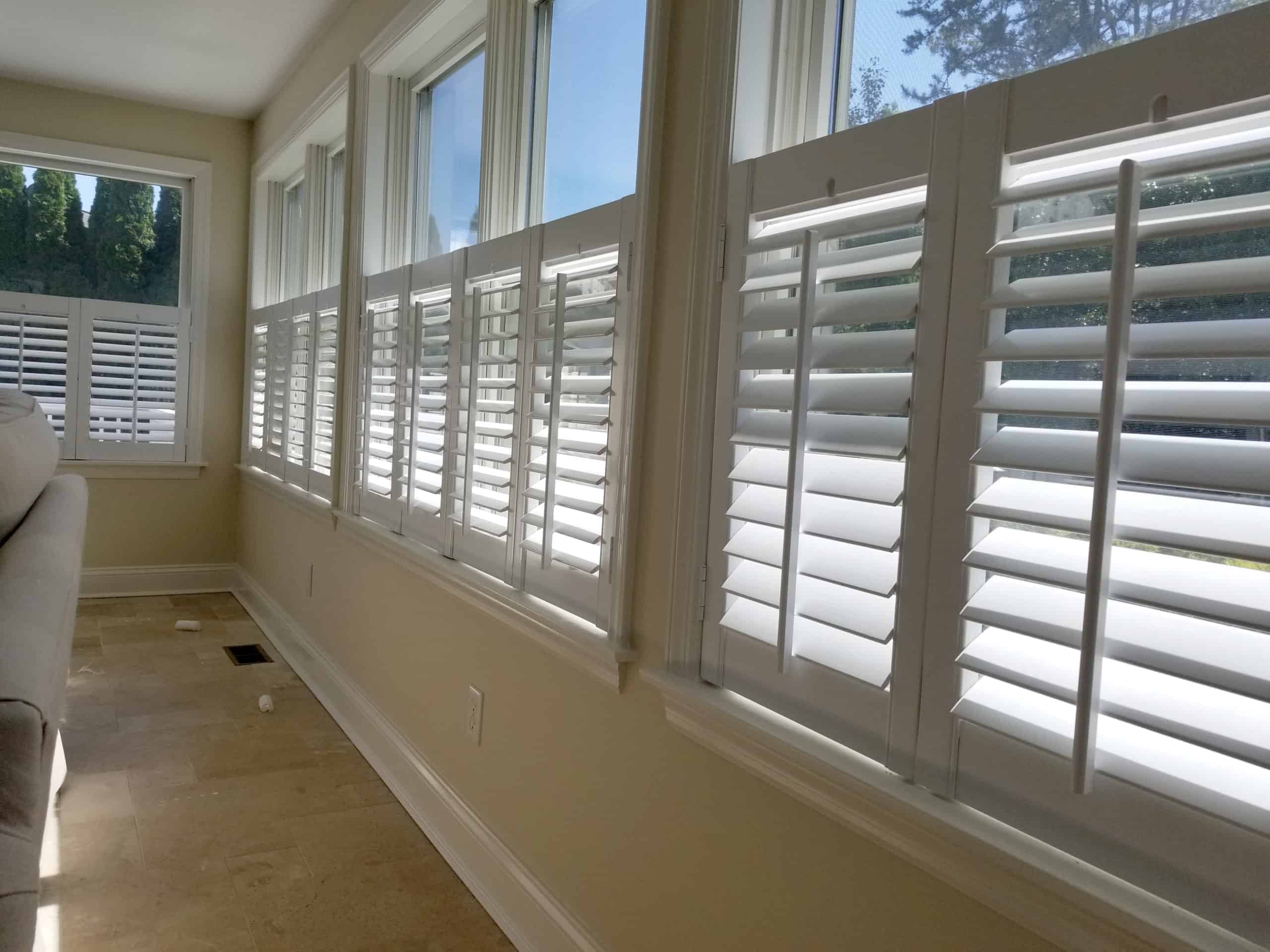
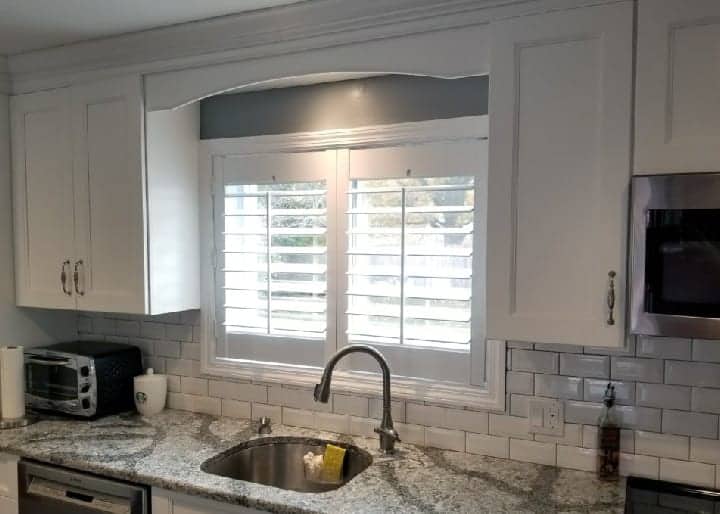
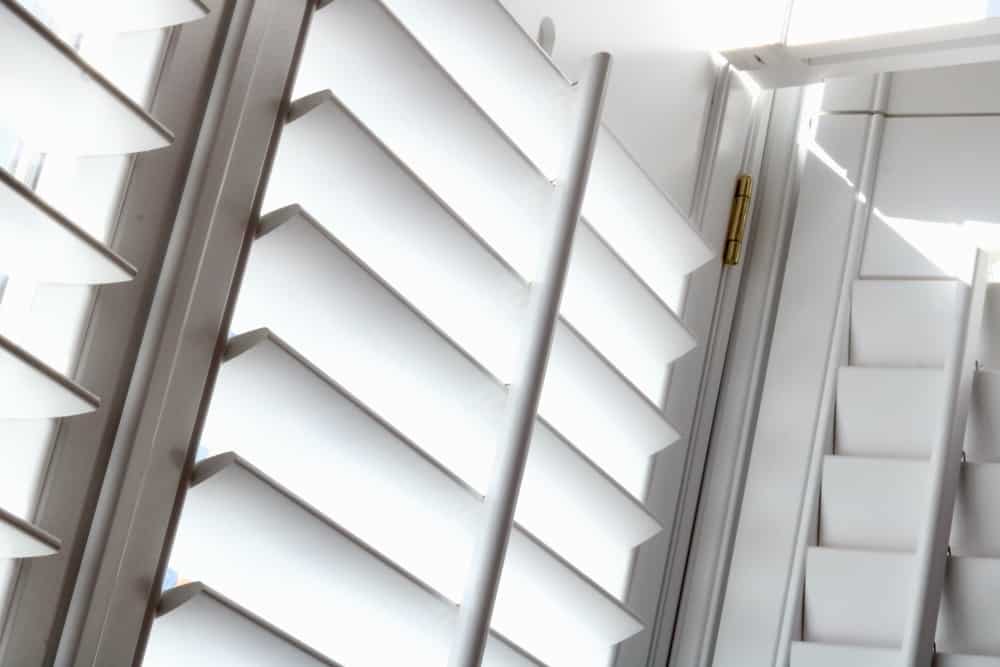
Poly shutters and plantation shutters can handle a damp cloth without issue. For post-storm cleaning, a mild soap and water solution works well. What you’re really looking for beyond surface dirt is any warping in the frame or stiffness in the louver hinges. Poly shutters — the kind we recommend for homes close to the water — can last 30 years or more with basic care. Real wood shutters are more vulnerable; if yours have been exposed to significant moisture, check the joints and frame edges carefully for swelling.
Fabric shades — Roman shades, cellular shades, roller shades — need the most attention after a storm. These materials hold moisture, and in Brunswick County’s humidity, that means mold and mildew can take hold faster than you’d think. If your shades got wet, don’t roll them back up until they’re completely dry. Spot-clean with a mild upholstery cleaner or a diluted white vinegar solution for mildew. If the smell persists after cleaning, that’s usually a sign the damage has gone deeper than the surface.
For aluminum or metal blinds, the main concern in a coastal environment is corrosion on the hardware — not the slats themselves. Wipe down the slats with a damp cloth, but spend extra time on the headrail, brackets, and any exposed metal components. A light application of a dry lubricant on moving parts after cleaning can extend the life of the mechanism significantly.
Seasonal Window Treatment Care: Fall Prep Before Winter Hits
Brunswick County doesn’t get the same winter as the Piedmont or the mountains, but it’s not mild either. Nor’easters push wind-driven rain horizontally into window frames. Temperatures drop enough to cause condensation issues around older window seals. And the humidity never really goes away. Fall is the right time to get ahead of all of it.
Start with a hardware inspection across every window treatment in the house. Tighten any loose mounting screws — vibration from wind and the general movement of the house over a storm season can work them loose gradually. Check cords and chains for fraying. A frayed cord doesn’t just mean a blind that won’t lift properly; it’s also a safety concern, especially in homes with children or pets. If you have cordless or motorized systems, this is a good time to test every single one.
For motorized treatments specifically, fall maintenance matters more than most people realize. If your motorized shades or blinds use batteries, check the charge and replace them before winter. Battery-operated systems tend to respond sluggishly in cold weather when the batteries are low, and a system that barely worked in October will likely stop working entirely by January. If you have hardwired motorized systems and they’re behaving oddly after the storm season — slow response, partial movement, no response at all — that’s a job for a professional, not a YouTube tutorial.
Fabric-based treatments benefit from a light application of fabric protector spray in the fall, particularly if they’re in rooms with significant sun exposure. UV damage along the Brunswick County coast is more intense than most people expect — the reflection off water and sand amplifies it. Treating the fabric before winter extends the color and structural integrity of the material heading into the following year.
One thing that often gets overlooked: if you have screened porch shades or outdoor roller shades, they’ve taken the brunt of the storm season. Inspect the roller mechanism, check the fabric for tears along the edges (that’s where wind stress concentrates), and make sure the mounting hardware is still secure. These treatments live outdoors and need more frequent attention than interior window coverings.
When Brunswick County Window Treatments Need More Than a Cleaning
There’s a point where maintenance stops being the right answer and replacement becomes the smarter call. Knowing the difference saves you from pouring time and money into treatments that are past their useful life — and from replacing things that just needed a good cleaning and a hardware adjustment.
Bent slats that snap back into shape are a maintenance issue. Slats that are creased, cracked, or won’t hold their position are a replacement signal. Cords that are stiff but intact can often be cleaned and lubricated. Cords that are frayed or have broken internal mechanisms need replacing. Mold that wipes off is a cleaning problem. Mold that’s embedded in the fabric or has spread to the backing is a replacement problem.

How Long Should Window Treatments Last in a Coastal Home?
Lifespan varies significantly by material, and in a coastal environment like Brunswick County, the gap between the right material and the wrong one is wider than most people expect.
Faux wood blinds, when properly maintained, typically last seven to ten years. They hold up well in humidity and resist warping, but they will fade with prolonged UV exposure if they’re in a south- or west-facing room without UV film on the glass. Real wood blinds in a salt-air environment are a different story — they absorb moisture, swell, and warp faster, especially in homes close to the water. If you’ve gone through two sets of real wood blinds in five years, the material is the problem, not the maintenance.
Poly shutters are in a category of their own. With basic care, they can last 30 years or more. They don’t warp, they don’t corrode, and they don’t absorb moisture. For homeowners on Holden Beach, Ocean Isle Beach, or Sunset Beach — places where the salt air is constant and the humidity is relentless — poly shutters are often the most cost-effective long-term choice even when the upfront price is higher. The math is simple: budget blinds that need replacing every two to three years cost roughly $750 per window over 15 years. A set of quality poly shutters installed once can outlast the mortgage.
Cellular shades average four to five years, which is shorter than most people expect. They’re energy-efficient and look great, but the fabric and the honeycomb structure are vulnerable to moisture and humidity over time. In a coastal home, they need more frequent inspection and a shorter replacement timeline than the same product would in an inland environment.
If your treatments were installed when the house was built and you’re not sure how old they are, that’s a good reason to schedule a professional look. A lot of Brunswick County homes — especially in the communities that grew quickly over the last decade — have builder-grade treatments that were never designed for long-term coastal use.
Vacation Rental and Beach House Window Treatment Maintenance in Brunswick County
If you own a rental property on the Brunswick County coast, window treatment maintenance looks a little different than it does for a primary residence. Tenant turnover, heavier use, and the fact that you’re often not there to catch small problems before they become big ones — all of that changes the calculus.
The most important thing you can do for a rental property is choose the right materials from the start. Faux wood and poly-based treatments are more forgiving of the kind of daily contact that comes with short-term rentals. They wipe clean easily, they don’t dent the way aluminum does, and they don’t absorb odors or moisture the way fabric shades can. Motorized systems are popular in vacation rentals because guests find them easy to use, but they do require more intentional maintenance — particularly battery checks between guest stays and a post-season inspection before the next rental cycle begins.
For beach houses that sit empty for part of the year, the fall transition is the most important maintenance window. Before you close up the house for the off-season, make sure every treatment is clean and dry, all hardware is tight, and any motorized systems are fully functional. Treatments left in a partially raised or lowered position over a long period can develop permanent creases or stress the cord mechanism. Lower everything fully or raise everything fully before you leave — don’t leave them stuck in the middle.
We work with a lot of investment property owners across Holden Beach, Ocean Isle Beach, and Sunset Beach, and the pattern we see most often is deferred maintenance catching up all at once. A treatment that needed a $40 hardware adjustment in October becomes a full replacement job in March when the rental season is about to start. Staying ahead of it — even just a once-a-year professional walkthrough — is almost always the more affordable path.
Ready to Get Your Brunswick County Home's Window Treatments Storm-Ready?
Post-hurricane season is the best time to take stock of what held up and what didn’t. The treatments that look fine might have hardware that’s quietly corroding. The fabric shades that smell a little off might have mold working its way into the backing. Catching it now — before winter weather adds another layer of stress — is almost always cheaper and easier than dealing with it later.
Routine cleaning is something you can handle yourself. But when it comes to material selection for coastal environments, post-storm damage assessment, or anything involving motorized systems, having someone who actually knows the Brunswick County coast makes a real difference. We’ve completed over 4,000 window treatment jobs across this area — we know what holds up here and what doesn’t, and we’ll tell you straight which way to go. If you’re ready for a fresh set of eyes on your window treatments, reach out for a free in-home consultation.